
Food Safety Crises and Consumer Goods Sector Volatility: Navigating Risks and Opportunities in Dairy and Packaged Food Stocks


 Aime Summary
Short-Term Risks: Brand Trust Erosion and Regulatory Scrutiny
The shredded cheese recall, , has already triggered consumer backlash. Retailers like WalmartWMT--, TargetTGT--, and Aldi face immediate challenges in managing customer trust, as 31 U.S. states and Puerto Rico were affected. According to a report by the Public Interest Research Group, cases linked to 2024 recalls-including listeria and E. , according to the report. Such data amplifies public anxiety, pushing consumers to avoid entire product categories or scrutinize labels obsessively, a trend dubbed "recall fatigue" by market analysts according to analysts.
Regulatory scrutiny is intensifying as well. according to FDA findings. For investors, this means heightened and operational risks for dairy producers, particularly those reliant on . The 2024 Rizo-Lopez Foods cotija cheese recall, , exemplifies how contamination at a single node can destabilize entire supply chains, leading to disposal costs, lost revenue, and reputational damage according to industry analysis.
Investor Sentiment and Market Volatility
The financial toll of recalls is stark. , driven by and cold chain failures according to the report. , with extending to downstream businesses, such as using recalled ingredients according to industry data. While no direct evidence of declining sales at major retailers like Kroger or CostcoCOST-- has emerged post-2025 recalls, has soured. Social media sentiment analysis reveals widespread frustration, with consumers blaming both the FDA and food companies for lapses in oversight according to a recent survey.
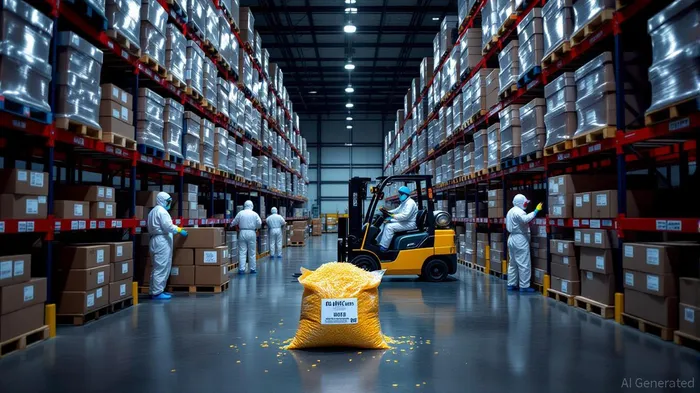
has followed. For instance, , according to market analysis. These trends highlight the sector's vulnerability to crisis events, particularly for companies with limited diversification or weak .
Long-Term Opportunities: Innovation and Resilience
Amid the chaos, opportunities are emerging for companies that prioritize . The , , according to industry projections. Startups like Ecotrace and FluiDect are pioneering , enabling faster recalls and minimizing economic fallout according to market reports. For investors, these technologies represent a hedge against , offering both cost savings and reputational safeguards.
and diversification are also gaining traction. The U.S. dairy sector is pivoting toward , such as and beef-on-dairy programs, to offset milk price volatility and according to industry analysis. A 3,500-cow California operation, for example, , according to financial data. Similarly, global dairy markets are shifting toward and plant-based alternatives, driven by consumer demand for according to market trends.
Strategic Outlook for Investors
For investors, the key lies in balancing caution with optimism. Short-term risks-such as regulatory penalties, , and recall-related costs-demand rigorous due diligence. However, long-term opportunities abound for companies that invest in , , and .
- Prioritize Food Safety Innovation: Companies adopting , , and are better positioned to mitigate recall risks and regain consumer trust.
- Diversify Revenue Streams: Dairy producers with (e.g., , ) demonstrate resilience against price fluctuations and recall-driven losses.
- Monitor Policy Shifts: and proposed cuts to federal nutrition programs could further strain the sector. Advocacy for stable trade policies and expanded may offer indirect support.
In conclusion, while food safety crises like the 2025 shredded cheese recall pose immediate challenges, they also catalyze innovation and structural reforms. For investors, the path forward lies in supporting companies that treat food safety not as a compliance burden but as a strategic imperative.

Delivering real-time insights and analysis on emerging financial trends and market movements.
Latest Articles
Stay ahead of the market.
Get curated U.S. market news, insights and key dates delivered to your inbox.
AInvest
PRO
AInvest
PRO



Comments
No comments yet