
Above Food and Palm Global: A Golden Opportunity in the Blockchain-Agriculture Convergence?
The merger between Above FoodABVE-- Ingredients Inc. and Palm Global Technologies Ltd., announced in July 2025, marks a bold pivot from traditional agriculture to blockchain-driven financial innovation. By combining Above Food's agritech expertise with Palm Global's advanced blockchain capabilities, the merged entity aims to dominate the stablecoin and asset tokenization markets. This strategic move positions the company at the intersection of two transformative sectors—agriculture and decentralized finance—but it also raises critical questions about execution risks and regulatory hurdles. Let's dissect the opportunities and pitfalls in this high-stakes convergence.
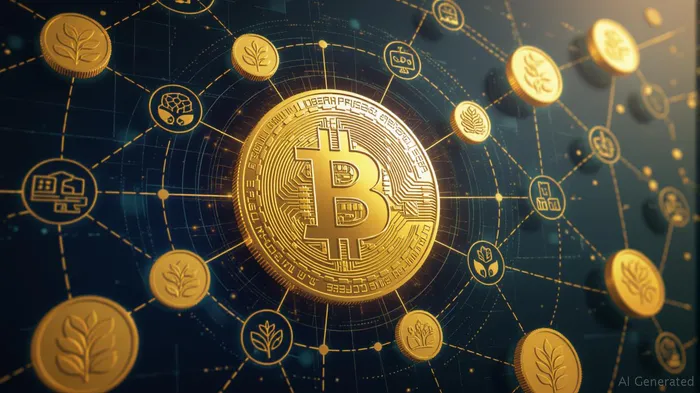
The Strategic Play: Leveraging Agriculture's Backing for Digital Assets
The merger's most compelling advantage lies in its asset-backed credibility. Above Food's balance sheet gains a 30% stake in Palm Promax Investments (PPI), which holds a $350 billion valuation of U.S. gold assets. This positions the company to issue stablecoins backed by tangible, high-quality collateral—a critical differentiator in an industry rife with volatility. Additionally, access to over $1.5 trillion in sovereign assets (rated AA-/AAA) opens doors to tokenizing real-world assets (RWAs), such as government bonds or infrastructure projects, creating recurring revenue streams.
The integration of Palm Global's AI-driven blockchain technology is equally pivotal. By merging this with Above Food's existing systems, the company can streamline processes for tokenization, reduce costs, and scale operations across sectors like agritech, fintech865201--, and edtech. The proposed super-app platform—spanning all three domains—could create cross-sector synergies, such as using blockchain for supply chain transparency in agriculture while monetizing data through tokenized services.
Leadership also signals ambition. The addition of Sheikh Mohammed Bin Maktoum (Dubai royalty), Muayad Kafesha (Palm Global founder), and Peter Knez (ex-BlackRock ETF leader) brings geopolitical clout, digital infrastructure expertise, and institutional credibility. Their vision to “redefine global finance through tokenization” suggests a long-term play for dominance in emerging markets, particularly in Asia, the Middle East, and Africa.
Regulatory Tailwinds—or Headwinds?
The timing of the merger aligns with strengthening global regulations, such as the U.S. GENIUS Act and EU's MiCA framework, which aim to standardize stablecoin issuance and protect investors. This regulatory clarity reduces uncertainty, allowing the company to operate within clear boundaries. Furthermore, PPI's role in developing CBDC frameworks for 15 sovereign nations could open direct partnerships with governments, a significant advantage in the race for institutional adoption.
However, regulatory risks remain. The merger's success hinges on securing approvals for its Nasdaq listing (Nasdaq: ABVE) and SEC registration. Delays here could stall revenue growth, especially if competitors like Circle (CRYPTO) or RippleXRP-- (XRP) outpace them in regulatory compliance.
The Risks: A Rocky Road Ahead
- Market Competition: The stablecoin space is crowded, with giants like Tether (USDT) and USD Coin (USDC) already capturing significant market share. Above Food's gold-backed stablecoins must prove they can attract investors seeking both yield and stability.
- Integration Challenges: Merging two distinct corporate cultures—agribusiness and tech—could strain operations. Execution failures in tech integration or asset tokenization could erode investor confidence.
- Geopolitical Uncertainties: Relying on sovereign partnerships introduces risks tied to political instability or shifting regulatory priorities in key regions like the Middle East.
Investment Considerations: A High-Reward, High-Risk Bet
For investors, the merger presents a compelling thesis if the company executes flawlessly:
- Upside: A first-mover advantage in tokenized RWA markets, combined with gold's enduring appeal, could yield multi-trillion-dollar opportunities. The super-app's cross-sector model might also unlock new revenue streams, from agri-data analytics to fintech services.
- Downside: Regulatory delays, integration missteps, or a prolonged crypto bear market could sink the stock.
Verdict: Proceed with Caution, but Stay Engaged
Above Food's pivot is a high-stakes gamble that could redefine its future—or become a cautionary tale. Investors should monitor three key metrics:
1. Regulatory approvals and SEC filings timeline.
2. Early adoption rates of its stablecoin products and tokenized funds.
3. Stock performance relative to blockchain peers during periods of regulatory clarity or volatility.
For risk-tolerant investors, a gradual allocation to ABVEABVE-- could be warranted, with a focus on long-term upside. However, given the execution risks, pairing this with exposure to diversified fintech ETFs (e.g., FTXN) might mitigate downside.
In the end, the merger's success hinges on whether Above Food can harness its agricultural roots and blockchain prowess to build trust in a market hungry for stability—and gold.

Delivering real-time insights and analysis on emerging financial trends and market movements.
Latest Articles
Stay ahead of the market.
Get curated U.S. market news, insights and key dates delivered to your inbox.
AInvest
PRO
AInvest
PRO



Comments
No comments yet