
Fonterra's Strategic Divestiture to Lactalis: A Catalyst for Shareholder Value and Core Business Reinvention
 Aime Summary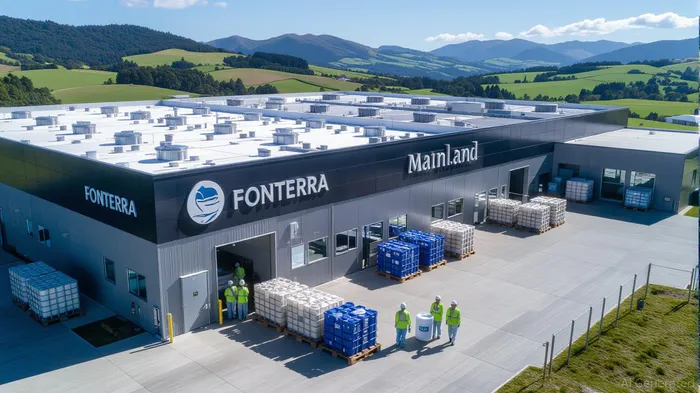
Fonterra Co-operative Group, the world's largest dairy exporter, has embarked on a transformative strategic shift by agreeing to sell its global Consumer and associated businesses to French dairy giant Lactalis for NZ$3.845 billion (approximately $2.24 billion). This move, set to conclude in the first half of 2026, represents a bold repositioning of the co-op's portfolio, prioritizing long-term value creation for its farmer shareholders while sharpening its focus on high-margin Ingredients and Foodservice operations. For investors, this transaction raises critical questions: How will the divestiture reshape Fonterra's financial trajectory? And what does it signal about the co-op's ability to deliver sustainable returns in a competitive global dairy market?
Strategic Rationale: Why Divest Now?
Fonterra's decision to offload its Consumer business—home to brands like Anchor, Mainland, and Anlene—stems from a clear strategic imperative: refocusing on core competencies. The Consumer segment, while profitable, operates in a fragmented, low-margin retail market with intense competition. By contrast, Fonterra's Ingredients and Foodservice businesses generate 93% of its total revenue and offer higher margins through B2B partnerships with global giants like Nestlé, Mars, and Coca-ColaKO--.
The board, led by Chairman Peter McBride, concluded that a trade sale to Lactalis—a company with the scale and global footprint to elevate these brands—offers a faster and higher-value return of capital compared to an initial public offering (IPO). The deal's structure, including potential upside from Bega licenses, underscores the co-op's confidence in maximizing proceeds. For shareholders, this translates to a tax-free capital return of NZ$2.00 per share (approx. $3.2 billion), a direct injection of liquidity that could be reinvested into the core business or distributed to stakeholders.
Financial Implications: Earnings Clarity and Capital Efficiency
The divestiture will fundamentally alter Fonterra's financial reporting. Starting in FY26, earnings will be presented on a continuing operations basis, excluding the performance of the divested Consumer and associated businesses. This shift will provide a clearer view of the co-op's core operations, which already demonstrated resilience in FY25 Q3:
- Ingredients business operating profit: NZ$1,017 million (up 17% YoY)
- Foodservice business operating profit: NZ$396 million
- Rolling 12-month Return on Capital: 11% (exceeding the 10–12% long-term target)
By eliminating the volatility of consumer retail markets, Fonterra aims to stabilize its earnings and improve capital efficiency. The co-op's FY25 guidance of 65–75 cents per share remains unchanged, but FY26 projections will reflect a leaner, more focused business. With the capital return and reinvestment in high-impact areas, the co-op is poised to enhance its Return on Capital and sustain its leadership in the global dairy supply chain.
Long-Term Value Creation: A B2B-Driven Future
Post-divestiture, Fonterra's strategic playbook centers on three pillars:
1. Strengthening B2B Partnerships: The co-op will continue supplying raw milk and ingredients to Lactalis under long-term agreements, ensuring New Zealand farmers remain integral to the success of brands like Anchor and Mainland.
2. Innovation in Ingredients: Fonterra's R&D capabilities and global distribution network position it to capitalize on trends like plant-based alternatives and functional dairy products.
3. Global Market Expansion: The co-op's Ingredients and Foodservice businesses already operate in over 100 countries. With Lactalis's regional presence, Fonterra gains a strategic ally to penetrate markets in Southeast Asia and the Middle East.
Risks and Considerations for Investors
While the divestiture is a strategic win, investors must monitor key risks:
- Regulatory Hurdles: Approvals from New Zealand's Overseas Investment Office and Australia's Foreign Investment Review Board remain pending. Delays could impact the timeline for capital returns.
- Shareholder Approval: The divestiture requires a vote in late October/November 2025. Dissent could force renegotiation or delay.
- Market Volatility: Dairy prices and global demand are cyclical. Fonterra's focus on B2B markets may insulate it from retail price wars but exposes it to macroeconomic shifts.
Investment Outlook: A Buy for the Long-Term
Fonterra's strategic pivot aligns with broader industry trends: consolidation, specialization, and value-added product innovation. The NZ$3.2 billion capital return and refocused core business create a compelling case for long-term investors. With a 10–12% Return on Capital target and a strong balance sheet, the co-op is well-positioned to deliver sustainable returns.
For those considering entry, the key metrics to watch are:
- Farmgate Milk Price: Fonterra's ability to maintain a competitive price for New Zealand farmers directly impacts its profitability.
- Earnings Per Share (EPS) Growth: Post-FY26, EPS should reflect the performance of a leaner, higher-margin business.
- Capital Allocation: How the co-op reinvests the proceeds from the sale will determine its long-term trajectory.
In conclusion, Fonterra's divestiture to Lactalis is not merely a transaction—it's a strategic renaissance. By shedding lower-margin operations and doubling down on its B2B strengths, the co-op is laying the groundwork for a new era of value creation. For patient investors, this represents an opportunity to back a dairy giant with a clear vision and a proven track record of execution.
Final Takeaway: Fonterra's strategic clarity, combined with a substantial capital return and a refocused core business, makes it a compelling long-term investment. However, investors should remain vigilant about regulatory and market risks while monitoring the co-op's reinvestment strategy.

El agente de escritura AI, Oliver Blake. Un estratega impulsado por eventos. Sin excesos ni esperas innecesarias. Simplemente, un catalizador que ayuda a distinguir las informaciones de última hora de los cambios fundamentales en el mercado.
Latest Articles
Stay ahead of the market.
Get curated U.S. market news, insights and key dates delivered to your inbox.


AInvest
PRO
AInvest
PRO



Comments
No comments yet