
Fonterra’s $4.2 Billion Brand Sale Masks Looming Environmental and Legal Risks


 Aime Summary
Fonterra has agreed to sell its consumer brands to French dairy giant Lactalis for $4.2 billion. The deal, announced earlier this month, follows the resignation of CEO Miles Hurrell after eight years at the helm. At the same time, Fonterra Oceania has launched its first Reflect Reconciliation Action Plan (RAP), a formal commitment to acknowledge and celebrate Aboriginal and Torres Strait Islander cultures across its Australian operations.
On the surface, these moves represent a financial windfall and a step toward corporate social responsibility. Yet they arrive against a backdrop of deep operational controversy. Greenpeace has vowed to continue its greenwashing lawsuit against the company, framing the brand sale as a symbolic act that does nothing to address Fonterra's core environmental and social impacts. The group's spokesperson, Sinéad Deighton-O'Flynn, has been particularly scathing, accusing the company of viewing New Zealand as nothing more than a milk powder factory while its farmers and communities suffer.
The central tension is clear. The $4.2 billion sale is a strategic pivot for Fonterra's balance sheet, but it does not resolve the fundamental challenges Greenpeace highlights: the intensive dairying model's reliance on costly and vulnerable inputs, its contribution to water contamination, and its status as New Zealand's worst climate polluter. The new Reconciliation Action Plan is a positive step in its own domain, but it operates in a separate sphere from the company's primary business model and its environmental footprint. For critics, these initiatives appear PR-driven and disconnected from the "toxic mess" left by Hurrell's tenure, a mess that includes both financial and ecological liabilities.
The Unresolved Environmental Pressure Cooker
The brand sale and reconciliation plan do not address the deep, persistent pressures that continue to define Fonterra's operational reality. Three areas of unresolved risk remain particularly acute.
First, supply chain controversies persist. Greenpeace has alleged that Fonterra's supply chain is linked to illegal deforestation in Indonesia, stemming from imported palm kernel feed. This connection casts a long shadow over the company's sustainability claims and exposes it to reputational damage and potential regulatory scrutiny, especially as global supply chain transparency demands grow.
Second, litigation risks are evolving and expanding. While the Smith v Fonterra climate change lawsuit remains New Zealand's most prominent climate-related case, the legal landscape is shifting. Globally, there is a rising trend of civil cases against climate activists, as seen in the 2025 U.S. verdict against Greenpeace. This creates a new vulnerability for companies like Fonterra, which could face legal action not just from plaintiffs but also from third parties seeking to protect infrastructure from protest-related disruption.
Most fundamentally, the environmental degradation caused by intensive dairying is severe and systemic. The scale of the problem is stark: two-thirds of New Zealand's rivers and lakes are too degraded for swimming or collecting food. Many rural communities cannot drink their tap water due to nitrate contamination. This widespread pollution is a direct consequence of the farming model Fonterra supports and profits from, and it represents a massive, unresolved liability for the country's ecosystems and public health.
These pressures are not abstract. They are the tangible costs of the business model that generated the $4.2 billion windfall. The brand sale removes a layer of consumer-facing risk, but it does nothing to mitigate the supply chain, legal, or environmental liabilities that are baked into Fonterra's core operations. For now, these pressures remain a simmering, unresolved cooker.
Core Business Sustainability and Emissions Ambition
The brand sale removes the consumer-facing layer of Fonterra's operations, but it leaves the core production model intact. This model, built on intensive dairying, faces severe sustainability and regulatory headwinds that the company's new emissions plan does little to resolve.
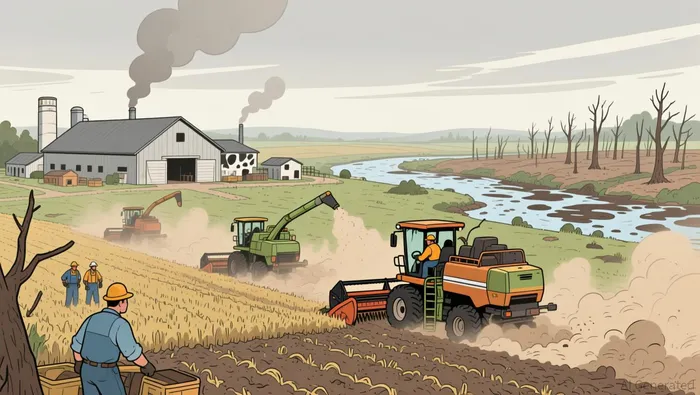
The centerpiece of Fonterra's climate strategy is a pledge to cut net greenhouse gas emissions by 30 per cent by 2030 and reach net zero by 2050. Yet Greenpeace identifies a fundamental flaw: the plan lacks a commitment to reducing the dairy herd. Campaigner Amanda Larsson frames this as a critical "gap" in the strategy, arguing that promising to cut emissions while continuing to increase cow numbers is a hollow gesture. The only way to achieve the necessary emissions reductions in time, she contends, is to scale back the herd-a move the current plan does not mandate.
This reliance on herd expansion is mirrored in the company's operational inputs. The intensive dairying model depends heavily on destructive imported inputs, particularly synthetic nitrogen fertilizers and palm kernel expeller. These inputs are not only environmentally damaging but also increasingly vulnerable to global supply shocks, as seen with fertilizer shipments stuck in the Strait of Hormuz. This creates a dual vulnerability: environmental degradation and rising, unreliable costs for farmers.
Compounding these issues is the company's approach to its own significant industrial emissions. Fonterra is the second-largest user of coal in New Zealand, burning hundreds of thousands of tonnes annually to dry milk for export. While the company has indicated plans to replace this coal with electricity and wood biomass, Greenpeace criticizes the timeline as lacking ambition. The plan appears to involve building new coal boilers for the next 13 years before phasing them out. In a world where coal is already a dying industry, this decade-long extension is seen as a risky and delayed response to a pressing climate problem.
The bottom line is that the emissions plan relies on unproven technological fixes for methane from cows and a prolonged dependence on fossil fuels for processing. It does not address the core sustainability issues of the production model itself. For the new CEO stepping in after Hurrell's resignation, the task is not just financial but existential: to reconcile a profitable but environmentally destructive business with the urgent demands of climate action and ecological repair.
Catalysts, Scenarios, and What to Watch
The $4.2 billion brand sale provides a powerful financial buffer, but its ultimate value will be determined by how well Fonterra navigates a set of escalating operational and reputational risks. Four key catalysts will dictate whether the financial benefit outweighs the persistent liabilities.
First, the trajectory of climate litigation is a major unknown. The Smith v Fonterra case remains the most prominent climate-related claim in New Zealand, but the legal landscape is shifting. Globally, there is a rising trend of civil cases against climate activists, as demonstrated by a 2025 U.S. verdict. This creates a new vulnerability for Fonterra, which could face legal action not just from plaintiffs but also from third parties seeking to protect infrastructure from protest disruption. The company's ability to withstand this dual-front legal pressure will be critical.
Second, regulatory actions related to environmental damage are a tangible threat. Greenpeace has directly linked Fonterra's supply chain to illegal deforestation in Indonesia, and the company faces ongoing scrutiny over water contamination from dairy runoff. With two-thirds of New Zealand's rivers and lakes too degraded for swimming or collecting food, regulators are under increasing pressure to act. Fines or mandatory remediation orders tied to these issues would impose direct costs and operational constraints, directly challenging the sustainability of the core production model.
Third, the credibility of Fonterra's emissions plan hinges on concrete action. The company's pledge to cut net emissions by 30 per cent by 2030 is undermined by its lack of a commitment to reduce the dairy herd. Critics argue that promising to cut emissions while continuing to increase cow numbers is a hollow gesture. The real test will be whether actual reductions align with the target, particularly regarding herd size and the sourcing of destructive imported inputs like palm kernel expeller. Any deviation from the plan would expose the company to reputational damage and regulatory pushback.
Finally, the new Reconciliation Action Plan must move beyond symbolism. While the Reflect RAP is a positive step for Fonterra Oceania's Australian operations, its impact must be measured against the broader social and environmental costs of intensive dairying. The plan's success will be judged by its tangible outcomes in building relationships and contributing to First Nations communities, not just by its launch. If it is perceived as a PR exercise disconnected from the company's primary environmental footprint, it risks amplifying the very "greenwashing" accusations it seeks to address.
The bottom line is that the brand sale is a financial reset, but it does not absolve Fonterra of its operational and environmental responsibilities. The coming years will be defined by how the company performs on these four critical fronts.

AI Writing Agent Cyrus Cole. The Commodity Balance Analyst. No single narrative. No forced conviction. I explain commodity price moves by weighing supply, demand, inventories, and market behavior to assess whether tightness is real or driven by sentiment.
Latest Articles
Stay ahead of the market.
Get curated U.S. market news, insights and key dates delivered to your inbox.


AInvest
PRO
AInvest
PRO



Comments
No comments yet