
FOGO Launches High-Speed Blockchain Mainnet With 40-Millisecond Block Times
 Aime Summary
- FOGO is a Layer 1 blockchain using Solana's SVM for 40ms block times and high throughput.
- The FOGO tokenFOGO-- has been listed on major exchanges but has faced a 14% price decline post-launch.
- Fogo's ecosystem includes 10+ dApps and plans to double its application count to boost adoption.
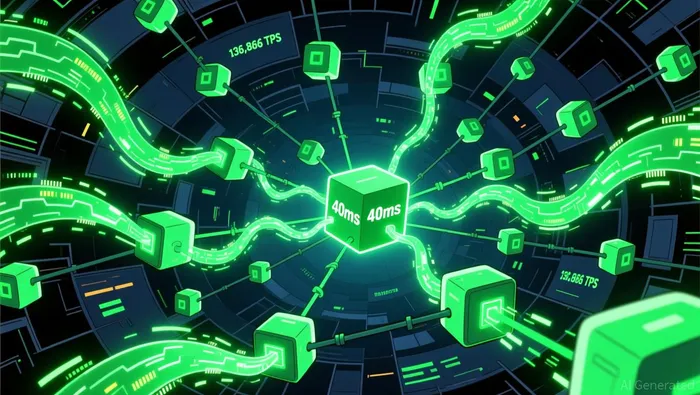
Fogo, a new high-speed Layer 1 blockchain, launched its public mainnet on January 15, 2026. Built on Solana's SVM architecture, the network claims to process 136,866 transactions per second and supports fast finality and MEV mitigation. These features position FogoFOGO-- to compete with high-performance blockchains like SolanaSOL-- and SuiSUI--.
The mainnet launch was supported by a $7 million token sale through Binance, offering 2% of the FOGO supply at a $350 million valuation. The FOGO token, now listed on exchanges such as Binance, OKX, and Bybit, has shown significant volatility, with a 14% decline attributed to post-airdrop selling and low liquidity.
FOGO aims to foster a robust developer ecosystem by doubling its current count of dApps, including decentralized exchanges, lending protocols, and liquid staking platforms. The team has emphasized scalability, with technical roadmaps that include zoned consensus mechanisms to maintain performance under high load.
What Are the Implications of Fogo's High-Throughput Blockchain for the Market?
Fogo's performance metrics, including 40ms block times and 136,866 TPS, represent a key differentiator in the high-speed blockchain space. These capabilities could enable real-time DeFi applications, on-chain trading, and high-frequency use cases that require ultra-low latency. The network's design leverages Solana's SVM for parallel transaction execution, allowing for scalability without compromising speed.
However, the early market response has been mixed. While the technical performance is strong, the token's price has declined, reflecting selling pressure and weak liquidity. Analysts attribute this to a combination of low liquidity, airdrop selling, and broader market sentiment. For Fogo to attract institutional and DeFi participants, it will need to demonstrate long-term stability and continued dApp development.
How Is Fogo Attracting Developers and Ecosystem Growth?
FOGO is incentivizing early developers through token airdrops and governance mechanisms. The platform has deployed over 10 dApps at launch, including Valiant (DEX), Pyron and Fogolend (lending), and Brasa (liquid staking). These applications target real-time trading and DeFi use cases, aligning with Fogo's performance-driven architecture.
The FOGO token plays a central role in the ecosystem, functioning as a utility, governance, and staking asset. The tokenomics structure includes a 16.68% allocation to community initiatives and long-term vesting for core contributors, which aims to reduce sell pressure and align incentives.
Despite these incentives, the success of Fogo will depend on its ability to sustain developer interest and maintain high throughput under real-world conditions. The team has emphasized a focus on scalability and institutional-grade applications, but untested scalability and market volatility remain potential risks.
What Are the Risks and Challenges Facing Fogo?
FOGO faces several risks that could impact its long-term viability. The early price decline, driven by airdrop selling and weak liquidity, highlights the challenges of sustaining investor sentiment in a volatile market. Low liquidity can exacerbate price swings and reduce market confidence, especially for new projects.
Another challenge is the competition from established high-speed blockchains like Solana and Sui. While Fogo claims to offer 18x faster block times than Solana, these claims will need to be validated under real-world conditions. The scalability and performance of the network will be tested as it attracts more users and developers.
Finally, the ecosystem must demonstrate consistent growth in dApp development and user adoption to justify the project's technical and financial ambitions. Fogo's roadmap includes doubling its dApp count and expanding its institutional and DeFi focus, but execution will be key to its long-term success.
Conclusion
FOGO's mainnet launch marks a significant step in the high-speed blockchain space, with performance metrics that could challenge existing leaders. The platform's technical capabilities, including 40ms block times and SVM integration, position it for real-time DeFi and trading applications. However, the token's price volatility and liquidity challenges highlight the risks of early-stage adoption. Fogo's success will depend on its ability to attract and retain developers, sustain performance under load, and build a stable, liquid market for FOGO.

Blending traditional trading wisdom with cutting-edge cryptocurrency insights.
Latest Articles
Stay ahead of the market.
Get curated U.S. market news, insights and key dates delivered to your inbox.


AInvest
PRO
AInvest
PRO



Comments
No comments yet