
Flying High or Grounded: Navigating European Industrials Amid U.S.-EU Trade Crosswinds
The simmering U.S.-EU trade war has reached a critical juncture, with aerospace and automotive sectors caught in the crossfire. While both industries face tariff-related pressures, their trajectories diverge sharply: aerospace giants like Airbus enjoy a protective shield, while luxury automakers such as FerrariRACE-- are left exposed. Investors must parse these disparities to navigate the sector-specific risks—and opportunities—emerging from the negotiations.
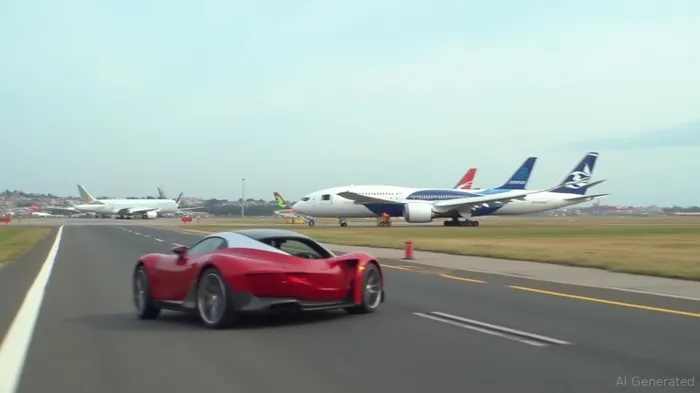
The Aerospace Sector: Airbus's Fortified Position
The EU's prioritization of aerospace in its trade negotiations has insulated Airbus from the worst of the tariff storm. Despite U.S. threats to hike aircraft tariffs to 50% by July 9, the EU's retaliatory measures—including a $10.5 billion list targeting BoeingBA-- products—have been delayed until a resolution is reached. This pause reflects the EU's strategic calculus: aerospace is too vital to its industrial base to risk destabilizing.
Airbus, which derives 80% of its commercial plane sales from Europe, benefits from the EU's leverage in the Boeing-Airbus subsidy dispute. Even if tariffs escalate, the EU's $5 billion insurance aid package for exporters and its WTO legal challenge to U.S. tariffs signal a resolve to protect its crown jewel. Meanwhile, Boeing's reliance on European sales (and vice versa) creates a mutual dependency that incentivizes compromise.
Automotive Sector: Ferrari's Vulnerability
Luxury automakers lack such protections. The U.S. maintains a 25% tariff on EU automobiles, and while some manufacturers like Mercedes-Benz have mitigated costs by shifting production to Alabama, Ferrari's high-end, European-centric business model leaves it exposed.
Ferrari's cars—priced at over €200,000 on average—have limited price elasticity, meaning tariffs could force steep cost hikes or reduced profit margins. The EU's retaliatory list, which includes $2 billion in automotive imports, further amplifies risks. Luxury brands also face indirect threats: the U.S. has targeted $10.3 billion in automotive parts, raising input costs for all European automakers.
Valuation Implications: The Divide Widens
The valuation gapGAP-- between shielded and exposed sectors is stark. Airbus trades at 12.5x forward earnings, a premium to its industrial peers, reflecting its strategic importance and tariff resilience. In contrast, Ferrari's P/E of 25x appears precarious given its reliance on discretionary spending and tariff-sensitive pricing.
Analysts warn that a failure to finalize a deal by July 9 could trigger a 0.7% U.S. GDP contraction, disproportionately hurting luxury goods. Bruegel estimates also highlight the EU's auto sector vulnerability, as its $198 billion goods trade surplus with the U.S. hinges partly on automotive exports.
Investment Strategy: Rotate to Tariff-Proof Industrials
The path forward is clear for investors: favor aerospace and EU-shielded industrials while avoiding luxury automotive stocks.
- Buy Airbus (EAD.PA): Its entrenched position in the EU's negotiating strategy makes it a safer bet. Even a partial deal to keep tariffs at 10% would stabilize its valuation.
- Hedge with U.S.-exposed manufacturers: Companies like General MotorsGM-- (GM), which have diversified supply chains and U.S.-based production, offer a buffer against European volatility.
- Avoid Ferrari (RACE): Its valuation assumes no margin pressure, but tariffs and retaliatory measures could force a reckoning. Luxury stocks tied to European exports (e.g., Kering, LVMH) also warrant caution.
For the risk-averse, sector rotation into aerospace or U.S. industrials is prudent. For those betting on a deal, shorting automotive ETFs like EUV (European automotive stocks) could capitalize on near-term volatility.
Conclusion
The U.S.-EU trade standoff has crystallized into a tale of two industries: one shielded by strategic necessity, the other vulnerable to political whims. Investors ignoring this divide risk overpaying for exposure to tariffs or underestimating the resilience of protected sectors. In a market where every percentage point of tariffs matters, the skies remain open for Airbus—but Ferrari's road ahead is paved with potholes.

Stay ahead of the market.
Get curated U.S. market news, insights and key dates delivered to your inbox.
AInvest
PRO
AInvest
PRO



Comments
No comments yet