
Flying High in Disruption: Airline Innovations in Loyalty and Pricing
The airline industry's post-pandemic transformation has accelerated a race to blend cutting-edge pricing strategies with loyalty ecosystems that lock in customers. Amid this shift, Hawaiian Airlines and Alaska Airlines have emerged as pioneers, leveraging dynamic pricing and loyalty program integration to redefine customer engagement. Their moves—such as Hawaiian's $99 companion fare and Alaska's expanded loyalty benefits—highlight a path to sustainable growth in a crowded market. For investors, these innovations signal strategic opportunities in airlines prioritizing flexibility and retention over traditional seat wars.
The Power of Pricing and Loyalty: Hawaiian's $99 Companion Fare
Hawaiian Airlines' $99 companion fare, now fully integrated across North America, is a masterstroke of value-driven pricing. By offering a low-cost option for travelers to bring a companion on any Hawaiian-operated flight, the airline targets family and repeat travelers—key demographics for its Hawaii-centric routes. The fare's simplicity and affordability create a “no-brainer” incentive, reducing price sensitivity while boosting ancillary revenue.
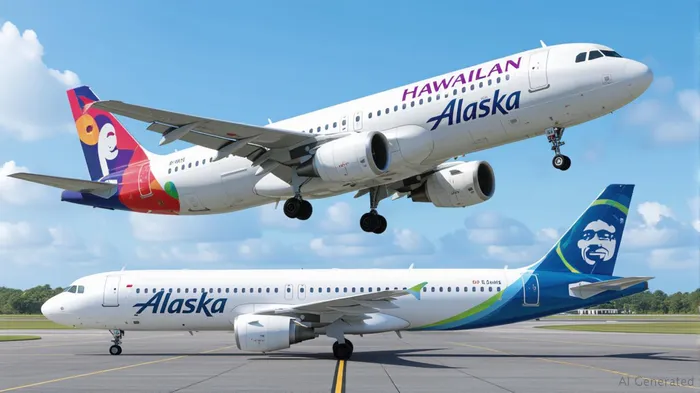
Crucially, the fare's timing—aligned with Alaska Airlines' loyalty program changes—positions Hawaiian as a critical node in a broader ecosystem. Alaska's VisaV-- cardholders can now use their companion fare on Hawaiian flights, expanding the reach of their loyalty benefits. This synergy not only deepens customer loyalty but also strengthens Hawaiian's relevance beyond its island markets.
Alaska Airlines: Building a Loyalty Empire
Alaska's 2025 loyalty program overhauls underscore its ambition to become the “go-to” for travelers seeking seamless, cross-carrier experiences. By merging its Mileage Plan with HawaiianMiles, Alaska creates a program with over 30 million members, offering:
- Expanded Companion Fares: Access to Hawaiian flights for cardholders meeting spending thresholds.
- Elite Status Unification: Status recognition across both airlines, with benefits like priority boarding and free bags now applicable on Hawaiian-operated flights.
- Enhanced Redemption Flexibility: Miles remain liquid, with 1:1 transfers allowed until the programs fully merge later this year.
These changes are a direct counter to competitors like DeltaDAL-- and United, which have yet to replicate such deep cross-carrier integration. Alaska's move not only retains high-value elites but also positions it to capture a disproportionate share of premium travelers' wallets.
Competitive Landscape: Where Do Others Stand?
While Alaska and Hawaiian are leading the charge, peers are scrambling to adapt. Delta's AI-driven dynamic pricing—targeting 20% of domestic flights by year-end—is a bold move, but its execution remains unproven. Meanwhile, JetBlue and United's partnership (Blue Sky) focuses on loyalty reciprocity but lacks Alaska's pricing precision.
Valuation and Risks: Alaska's current valuation metrics—EV/EBITDA of 5.66 and a forward P/E of 12.47—suggest it's undervalued relative to peers. Analysts project a $65.80 average price target, implying 21% upside from current levels. However, risks persist: Hawaiian's June 2025 cybersecurity incident and Alaska's Horizon Air labor costs could pressure margins.
Investment Thesis: Bet on Ecosystem Builders
The airlines that dominate the next decade will be those that marry dynamic pricing (to optimize yield) with sticky loyalty ecosystems (to reduce churn). Alaska's integration with Hawaiian ticks both boxes, while Delta's AI experiments add a layer of risk.
Recommendations:
1. Buy Alaska Airlines (ALK): Its undervalued multiples, combined with the Mileage Plan-HawaiianMiles merger's accretive potential, make it a prime investment.
2. Monitor Delta (DAL): Its AI ambitions could pay off, but execution is key.
3. Avoid Laggards: Airlines relying on legacy pricing models (e.g., static fare tiers) or fragmented loyalty programs face margin erosion.
Conclusion: The Future Belongs to the Flexible
In an industry where customer attention spans are fleeting, Hawaiian and Alaska's innovations set a new bar. By turning loyalty programs into cross-carrier engines and pricing into a value lever, they're not just surviving disruption—they're owning it. For investors, this is more than a sector play; it's a bet on the airlines that understand that in travel, the best price isn't always the cheapest—it's the one that keeps customers coming back.
Action Items:
- Consider adding ALKALK-- to a portfolio for exposure to loyalty-driven growth.
- Track Delta's Q3 earnings for AI pricing rollout updates.
- Avoid airlines with high debt levels and no clear loyalty/pricing roadmap.
The skies are getting smarter—and the winners will be those who fly with both brains and heart.

Delivering real-time insights and analysis on emerging financial trends and market movements.
Latest Articles
Stay ahead of the market.
Get curated U.S. market news, insights and key dates delivered to your inbox.




Comments
No comments yet