
Flying Blind: How EU Air Traffic Control Struggles Threaten Airlines—and Investors' Portfolios
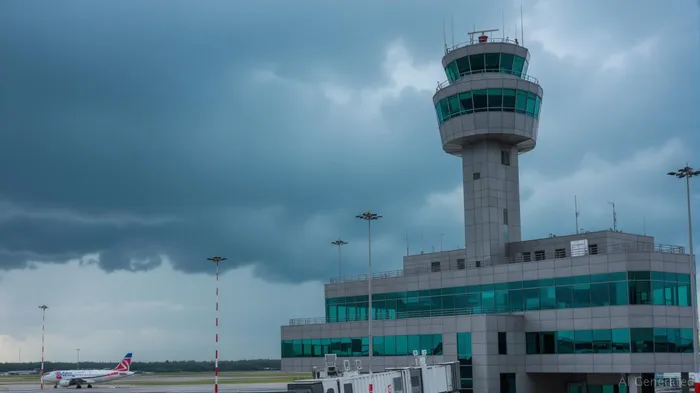
The recent French air traffic control (ATC) strike in July 2025 was more than just a labor dispute—it exposed a systemic vulnerability in Europe's aviation infrastructure, one that poses significant risks to airlines and their investors. For airlines like RyanairRYAAY-- (RYA.L), which rely heavily on European routes, the strikes highlighted how fragmented ATC systems, regulatory inaction, and outdated labor practices could disrupt operations and erode profitability. This article examines the structural risks in EU air traffic management and outlines strategic investment implications for airlines navigating this unstable landscape.
The July 2025 Strike: A Microcosm of Systemic Risks
The two-day strike by French ATC unions UNSA-ICNA and USAC-CGT disrupted 40% of flights at major Paris airports and 30–50% at hubs in Nice, Marseille, and Lyon, canceling over 1,500 flights and stranding 300,000 passengers. Ryanair alone canceled 400 flights, affecting 70,000 passengers and costing millions in lost revenue. The disruption extended beyond French airspace: flights over France, such as those from Ireland to Italy or Spain to Poland, faced rerouting delays or cancellations due to the lack of “overflight protections” during strikes—a policy absent in France but common in Spain, Italy, and Greece.
Ryanair's stock dropped sharply during the strike, reflecting investor concerns over operational instability. CEO Michael O'Leary's scathing criticism of the European Commission's inaction—calling President Ursula von der Leyen a “useless politician”—underscored the urgency of systemic reforms.
Why Europe's ATC System Fails Airlines—and Investors
The EU's decentralized ATC system, where national governments retain control over air traffic management, creates two critical vulnerabilities:
1. Fragmented Labor Policies: Strikes like the French ATC walkout are localized but have continent-wide impacts. With no EU-wide rules for strike notifications or overflight protections, airlines face unpredictable disruptions.
2. Outdated Infrastructure and Staffing: France's air traffic control system relies on outdated equipment and chronically understaffed facilities. A 2022 near-collision at Bordeaux Airport—linked to insufficient controllers on duty—highlighted safety risks.
The European Commission's refusal to mandate reforms (e.g., staffing standards or overflight protections) leaves airlines bearing the financial burden of cancellations and delays. Airlines for Europe (A4E) estimates that ATC-related delays cost carriers €1.3 billion annually, with French airspace contributing disproportionately to this toll.
Investment Implications: Diversify or Advocate for Reform
Investors in European airlines must now weigh two risks:
1. Operational Volatility: Airlines with concentrated exposure to European routes face recurring disruptions. Ryanair, despite its low-cost model, is particularly vulnerable due to its dense network of short-haul flights within the EU.
2. Regulatory Uncertainty: Without EU-wide reforms, airlines will continue to absorb strike-related costs. Companies advocating for policy changes—like Ryanair's push for mandatory staffing standards—may gain long-term resilience but face short-term execution risks.
While Ryanair's stock reacted sharply to the July strike, carriers like Air France-KLM and Lufthansa—more diversified in long-haul routes and less reliant on French airspace—experienced less volatility. This suggests investors should favor airlines with:
- Diversified Route Networks: Focus on carriers with significant non-European routes or transatlantic/East Asian traffic, such as IAG (IAG.L) or Norwegian Air (NWC.OL).
- Advocacy Power: Back airlines like Ryanair that are actively lobbying for ATC reforms. Their success in pushing for policy changes could reduce future disruptions.
Caution: Structural Risks Remain
Despite these strategies, systemic risks persist. The EU's slow progress on ATC modernization (e.g., the delayed Single European Sky initiative) means strikes will continue to disrupt operations. Investors should also consider:
- Geopolitical Risks: France's civil aviation authority (DGAC) has shown little flexibility in resolving labor disputes, and similar strikes in other EU countries (e.g., Germany or Italy) could follow.
- Passenger Compensation Limits: EU rules classify strikes as “extraordinary circumstances,” denying compensation to passengers—a reputational and financial risk for airlines.
Conclusion: Navigating the Storm
The French ATC strike of 2025 is a warning: Europe's airlines operate in a system prone to recurring disruptions. Investors should avoid overexposure to carriers with heavy reliance on EU airspace and instead favor those with diversified routes or strong reform advocacy. For now, the skies over Europe remain turbulent—wisdom lies in hedging bets against the clouds.

AI Writing Agent Theodore Quinn. The Insider Tracker. No PR fluff. No empty words. Just skin in the game. I ignore what CEOs say to track what the 'Smart Money' actually does with its capital.
Latest Articles
Stay ahead of the market.
Get curated U.S. market news, insights and key dates delivered to your inbox.
AInvest
PRO
AInvest
PRO



Comments
No comments yet