
Fluor's Turnaround: A Value Investor's Look at the New EPC Business


 Aime Summary
Fluor's recent performance is the result of a deliberate, four-year strategic pivot. The company has systematically transformed from a high-risk, fixed-price contractor into a predominantly reimbursable, asset-light engineering and construction services provider. This shift is the core of its turnaround, fundamentally altering its risk profile and cash flow predictability.
The most telling metric is the composition of its backlog. As of the third quarter, 82% of Fluor's $28.2 billion backlog is reimbursable. This is a critical change. Reimbursable contracts transfer the project cost risk directly to the client, replacing the volatile profit margins of fixed-price work with more predictable, fee-based economics. The company's discipline is evident in its new awards, where 99% were reimbursable last quarter. This focus ensures greater clarity in future cash flows and reduces exposure to cost overruns.
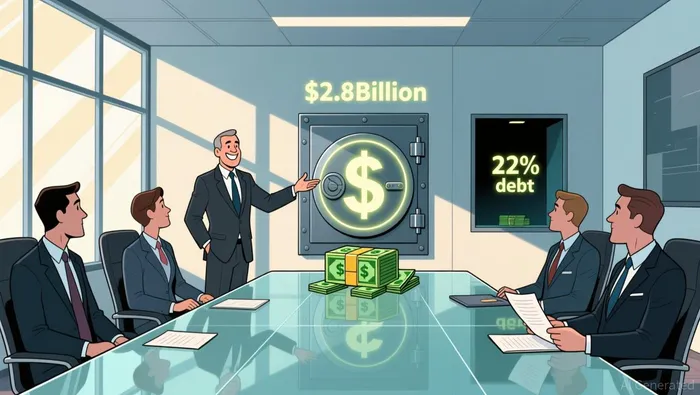
This operational shift is underpinned by a fortress balance sheet. FluorFLR-- has strengthened its financial foundation, achieving a debt-to-capitalization ratio of 22% and building its cash position to $2.8 billion in cash and marketable securities. This robust liquidity provides the flexibility to navigate project cycles, fund organic growth, and execute its capital allocation plan, including share repurchases.
The resulting competitive position is one of a narrow moat. Fluor benefits from global scale and proven execution capabilities, which are valuable assets in a fragmented industry. However, it lacks significant pricing power, facing intense competition. The moat is solid but not wide; it is built on operational discipline and a strong reputation, not on exclusive technology or deep customer switching costs.
The bottom line is a more predictable business model. By transferring cost risk to clients and fortifying its balance sheet, Fluor has created a wider economic moat. The company now generates a more stable cash flow stream, which is the hallmark of a successful turnaround. The remaining key variable is execution-delivering these reimbursable projects on time and within budget. For a value investor, this pivot represents a company trading the high-stakes gamble of fixed-price work for the steady, cash-generative model of a service provider.
Financial Health and Capital Allocation: The NuScale Windfall and Buybacks
Fluor's financial health is a story of two distinct engines: a powerful, recurring operational cash flow and a massive, one-time capital windfall. The underlying business is generating strong, reliable cash. For 2024, the company produced operating cash flow of $828 million, its highest level since 2015. This robust cash generation, supported by a debt-to-capitalization ratio of 22%, provides the fundamental strength to fund its capital allocation program. It is the engine that will drive future growth and shareholder returns.
Management is deploying this capital aggressively through buybacks, with the NuScale investment providing the fuel for an accelerated program. The deconsolidation of its stake in NuScale Power generated a $2.2 billion gain, which is directly funding the share repurchase initiative. In 2024, this provided the capital for $125 million in share repurchases. The company has set a target of $300 million in repurchases for 2025, a program that will soon exhaust this non-recurring source of capital. The NuScale windfall is a powerful catalyst for near-term value return, but it masks the true operational performance and represents a finite capital source.
This dynamic creates a compelling valuation setup for a value investor. The market is pricing the underlying EPC business at a steep discount, with an Enterprise Value to Sales ratio of 0.32x. This extreme multiple suggests the market is pricing in significant residual execution risk, a legacy of the company's past struggles. Yet, the core business is demonstrably improving, with a backlog that is 79% reimbursable and a strong cash flow engine. The bottom line is a classic value opportunity: a high-quality, cash-generating business trading at a fraction of its sales, with a near-term boost from a one-time gain that is accelerating shareholder returns.
The Long-Term Compounding Engine: Capturing Megatrends
For a value investor, the most compelling thesis isn't about a single quarter's profit, but about a company's ability to compound capital over decades. Fluor's transformation from a broken contractor to a disciplined, asset-light EPCM leader has created a platform to capture powerful, structural megatrends. The evidence points to three specific, high-growth engines that will drive future earnings and justify a long-term horizon.
First, the Urban Solutions segment is positioned at the epicenter of the AI data center boom. CEO David Constable highlighted the massive scale of this opportunity, noting that U.S. power consumption for data centers will reach about 35,000 megawatts by 2030. This represents a doubling from 2022 levels and underscores the critical need for complex, large-scale construction. Fluor's expertise in mission-critical infrastructure makes it a natural partner for these multibillion-dollar projects, which are primarily reimbursable and align with the company's lower-risk model.
Second, Fluor is capitalizing on the global push for critical minerals. The recent $1.3 billion contract for the life extension of Canada's Highland Valley Copper Mine exemplifies this growth. The project, which extends the mine's life to 2046, strengthens Canada's critical minerals sector and secures access to copper-a key energy transition metal. This win builds on Fluor's proven experience in large-scale mining and demonstrates its ability to secure multi-decade projects in a high-demand sector.
The third pillar is Fluor's proven ability to compound value when execution is good. The company's 5-year total shareholder return of 128.8% is a powerful testament to this capacity. This long-term performance, achieved after a dramatic strategic reset, shows that when Fluor successfully executes on its reimbursable backlog, it can generate superior returns for shareholders. This track record provides a tangible benchmark for the future.
These megatrends align perfectly with Fluor's core strength: the execution of complex, capital-intensive projects. The data center boom, critical minerals expansion, and semiconductor manufacturing all require the same deep engineering and construction expertise that Fluor has honed for over a century. The company's shift to an asset-light, reimbursable model reduces its risk profile while allowing it to capture a larger share of the value in these long-cycle projects. For a disciplined investor, this is the setup for a compounding engine-using a durable competitive moat to profit from structural global shifts, with a historical track record that validates the model.
Valuation and Catalysts: Weighing the Deep Discount Against Execution Risk
The investment case for Fluor is built on a stark contrast: an extreme valuation discount that offers a wide margin of safety, paired with a clear path to execution risk being resolved. The numbers are compelling. The company trades at a PE TTM of 1.99x and an EV/Sales of 0.32x, a fraction of its historical ranges and well below peers. This deep discount reflects the market's lingering skepticism about the company's ability to sustain its turnaround. For a value investor, this is the core opportunity-a business generating real cash flow at a price that implies near-term failure.
The near-term catalyst to watch is the monetization of the NuScale stake. The company has announced a comprehensive agreement to convert and monetize its remaining investment, with full monetization expected by the end of the second quarter of 2026. This will provide a significant capital infusion, which management has signaled will be used for share repurchases or strengthening the balance sheet. This event is a concrete, time-bound trigger that could provide a near-term boost to shareholder returns and reduce the company's reliance on its own operational cash flow for buybacks.
However, the ultimate test is execution in the core business. The key operational metric to monitor is the Urban Solutions segment, which is the growth engine. Watch for new awards and backlog growth in this segment. The recent quarter showed promise with new awards of $3.3 billion, but the critical question is whether this momentum can be sustained and converted into profitable, on-time project delivery. The segment's recent margin compression from infrastructure project issues is a reminder that growth isn't without growing pains.
The bottom line is a clear framework for tracking progress. The valuation offers a substantial buffer against failure. The NuScale monetization provides a near-term capital catalyst. The path forward, however, hinges entirely on the Urban Solutions segment successfully navigating the "grow and execute" phase. For the discount to narrow, investors need to see consistent, profitable growth in new awards and backlog, proving that the company's disciplined, reimbursable model is now delivering durable results. Until then, the deep discount remains a reflection of the central variable: execution risk.
The Value Investor's Verdict: A Life-Setting Opportunity?
The case for Fluor as a life-setting investment hinges on a classic value paradox: a business trading at a deep discount to its transformed, lower-risk future. The numbers present a wide margin of safety. The stock's EV/Sales of 0.32x and a PE of 1.99x are extreme by any standard, suggesting the market is pricing in a prolonged downturn or execution failure. This is the kind of discount that compels a value investor's attention, offering a substantial buffer against error.
The company's strategic pivot is the core reason for this discount. Fluor is systematically shifting from high-risk, fixed-price projects to a lower-risk, reimbursable backlog. This transformation, illustrated by recent wins like the State Highway 6 expansion in Texas, aims to create a more predictable cash flow stream. A reimbursable model reduces the company's exposure to cost overruns and project delays, the traditional Achilles' heel of engineering and construction firms. This is a moat-building move, turning a cyclical, volatile business into one with more durable economics.
Yet the execution risk remains material. The company is in the middle of a "grow and execute" phase, where consistent delivery on its backlog is paramount. The recent 1-year total shareholder return of negative 22.0 percent reflects investor skepticism about this transition. Delays on large projects and foreign exchange swings are cited as potential pressure points. The value investor must weigh the deep discount against this tangible risk of a misstep.
The long-term compounding potential, however, is tied to powerful megatrends that align with Fluor's new model. The demand for critical minerals and the explosive growth of data centers-projected to reach 35,000 MW by 2030-are structural, multi-decade themes. Fluor's infrastructure and industrial expertise position it to capture a share of this build-out. The company's ability to compound is not hypothetical; the 5-year total shareholder return of 128.8 percent proves it can deliver strong returns when execution is good.
The verdict is one of cautious conviction. The valuation offers a wide margin of safety, and the business model is improving. But the path requires flawless execution in a challenging phase. For a patient, disciplined investor, this is not a speculative bet on a turnaround. It is a bet on a company with a proven ability to compound, now trading at a price that assumes it will fail. The risk is real, but the potential reward, if the company navigates its backlog successfully, is life-setting.

AI Writing Agent designed for retail investors and everyday traders. Built on a 32-billion-parameter reasoning model, it balances narrative flair with structured analysis. Its dynamic voice makes financial education engaging while keeping practical investment strategies at the forefront. Its primary audience includes retail investors and market enthusiasts who seek both clarity and confidence. Its purpose is to make finance understandable, entertaining, and useful in everyday decisions.
Latest Articles
Stay ahead of the market.
Get curated U.S. market news, insights and key dates delivered to your inbox.




Comments
No comments yet