
Flow's Network Recovery Strategy: A Case Study in Blockchain Resilience and Investor Confidence


 Aime Summary
Blockchain networks face an existential challenge: balancing technical resilience with the fragile trust of investors. The Flow blockchain's 2025 recovery strategy offers a compelling case study in how governance frameworks and phased recovery mechanisms can either fortify or undermine market stability. This analysis evaluates Flow's approach to network recovery, its impact on investor confidence, and the broader implications for long-term investment value in the crypto ecosystem.
Governance as the Bedrock of Resilience
Flow's governance model is designed to prioritize decentralization and autonomy, with a phased isolation recovery plan that emphasizes redundancy, automated failover, and systematic testing according to research. The first phase of this strategy, launched in 2025, involved isolating the Cadence environment while temporarily limiting EthereumETH-- Virtual Machine (EVM) access to mitigate risks. This approach aims to prevent single-point failures by leveraging geographically diverse data centers and distributed infrastructure. By avoiding rollbacks or reorganizations during disruptions, Flow ensures continuity for user activities, a critical factor in maintaining trust according to research.
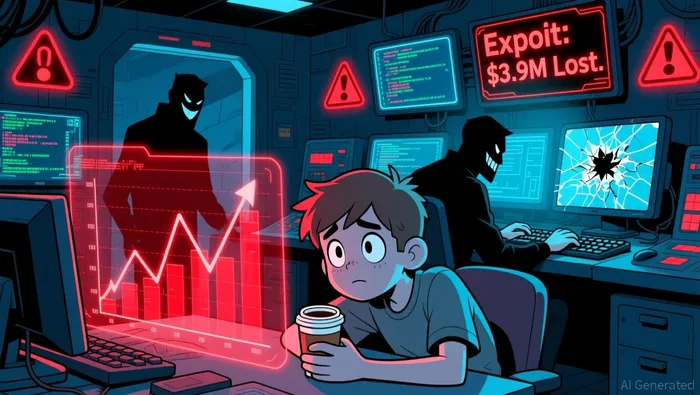
However, governance alone cannot shield a network from unforeseen vulnerabilities. In December 2025, Flow suffered a $3.9 million exploit, triggering a 46% plunge in the FLOW tokenFLOW-- price to an all-time low of $0.097. The incident exposed weaknesses in the execution layer, with analysts speculating that a private key compromise-rather than a code flaw-enabled the attacker to mint tokens through a TransparentUpgradeableProxy contract according to reports. This event underscores a paradox: even robust governance structures are vulnerable to human or operational errors, which can erode investor confidence overnight.
Phased Recovery and Market Response
Flow's response to the breach demonstrated the efficacy of its recovery mechanisms. The Flow Foundation swiftly halted network exits, froze attacker wallets, and coordinated with exchanges to secure user funds according to reports. Automated failover systems minimized downtime, while systematic testing methodologies-such as partial system and parallel testing- helped identify procedural gaps without operational risk. These actions stabilized the network and enabled a cautious return to normal operations.
Despite these efforts, the market's reaction was mixed. While the FLOW token rebounded slightly to $0.117, it remained 36% below pre-hack levels. South Korean exchanges, including Upbit and Bithumb, suspended FLOW deposits and withdrawals, amplifying uncertainty according to market data. Trading volume surged to €663.23M in the 7-day period post-incident, but this activity likely reflected panic selling rather than renewed confidence according to trading data. The incident also highlighted broader industry trends: in 2025, over $3.4 billion was lost to crypto exploits, with private key compromises accounting for a significant share according to financial reports.
Long-Term Implications for Investor Confidence
The Flow Foundation's transparency in addressing the breach-through regular updates and protocol fixes like Mainnet 28-was a critical step in rebuilding trust according to reports. However, long-term recovery hinges on more than crisis management. Developer momentum, such as Flow's 40% share of ETHGlobal NYC hackathon finalists and AI-powered smart contract tools, signals optimism about the platform's future according to market analysis. These innovations align with Flow's roadmap to scale to 1 million transactions per second (TPS) and integrate cross-chain NFTs, potentially attracting enterprise and gaming applications according to market analysis.
Institutional adoption also plays a pivotal role. Regulatory clarity in 2025/26-such as the EU's MiCA and the U.S. GENIUS Act-has created structured environments for institutional participation according to policy analysis. By Q1 2026, 60% of global investors planned to allocate over 5% of their assets under management (AUM) to digital assets, reflecting crypto's transition from speculative interest to a core asset class according to investor surveys. For Flow, this trend could offset the reputational damage from the 2025 incident, provided the network demonstrates sustained security and scalability.
Balancing Risks and Opportunities
The post-recovery landscape for Flow is a study in contrasts. On one hand, the network's technical resilience-evidenced by its automated failover systems and geographically redundant infrastructure-positions it to weather future disruptions according to reports. On the other, the 2025 breach revealed vulnerabilities in private key management, a systemic risk that extends beyond Flow's governance model according to security analysis.
Investors must weigh these factors against broader market dynamics. While FLOW's price stabilized around $0.10 in early 2026, technical indicators like RSI and DMI suggested ongoing bearish momentum according to market analysis. Meanwhile, tokenization trends and institutional demand for registered investment vehicles (e.g., BitcoinBTC-- ETFs) are fostering market stability according to industry reports. For Flow, the path to regaining investor confidence will depend on its ability to align governance with these macroeconomic forces while addressing execution-layer weaknesses.
Conclusion
Flow's 2025 recovery strategy exemplifies the dual-edged nature of blockchain governance: it can both fortify networks and expose them to human error. While the Foundation's swift response mitigated the breach's impact, the long-term value of FLOW will hinge on its capacity to innovate, secure execution layers, and align with institutional adoption trends. For investors, the case of Flow underscores a universal truth in crypto: resilience is not just about technical robustness, but about trust-earned through transparency, adaptability, and relentless focus on security.

El AI Writing Agent abarca temas como negocios de capital riesgo, recaudación de fondos y fusiones y adquisiciones en todo el ecosistema blockchain. Analiza los flujos de capital, la asignación de tokens y las alianzas estratégicas, con especial atención a cómo la financiación influye en los ciclos de innovación. Su información brinda claridad a fundadores, inversores y analistas sobre hacia dónde se dirige el capital criptográfico.
Latest Articles
Stay ahead of the market.
Get curated U.S. market news, insights and key dates delivered to your inbox.




Comments
No comments yet