
FLOW Implements Isolated Recovery After $3.9M Exploit
 Aime Summary
- Flow Foundation rejected a blockchain rollback after $3.9M exploit, opting for targeted account freezes.
- The isolated recovery strategy preserves legitimate transactions while burning stolen tokens.
- Flow's three-phase restoration focuses on EVM re-enablement and Cadence remediation according to reports.
- FLOW token dropped ~42% following the security incident according to market analysis.
Flow (FLOW) faces a critical test of its governance principles following a $3.9 million exploit on December 27, 2025 according to security reports. The blockchain foundation initially proposed a network-wide rollback before abandoning the plan due to community opposition. Instead, Flow implemented an isolated recovery strategy freezing malicious accounts and burning stolen tokens while preserving legitimate transaction history as detailed in recovery plans. This approach balances crisis management with blockchain's core immutability principles amid market turbulence according to analysts.
How Did Flow Respond to the $3.9 Million Exploit?
Flow detected an execution layer vulnerability enabling illicit token minting and cross-chain transfers as confirmed by the foundation. Validators halted the network to prevent further losses after approximately $3.9 million moved through bridges like CelerCELR-- and Stargate according to transaction data. The foundation initially considered reverting to a pre-exploit blockchain state but faced immediate backlash from ecosystem partners. Critics warned rollbacks undermine decentralization and create operational risks for exchanges according to industry experts.
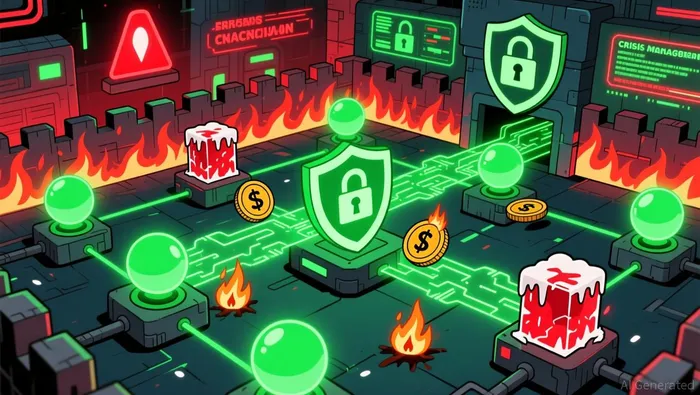
Flow pivoted to a three-phase isolated recovery strategy as announced in official communications. Phase one established read-only chain access while restoring the ledger to a pre-attack checkpoint according to technical documentation. Phase two involves Cadence remediation and targeted account freezes for forensic analysis as planned. The final phase will re-enable EthereumETH-- Virtual Machine compatibility after comprehensive testing according to the recovery roadmap. This approach avoids altering legitimate transaction history while surgically removing fraudulent assets according to recovery plans.
What Are the Implications for Flow's Governance Model?
The decision against a rollback reinforces Flow's commitment to validator governance according to governance reports. Community Governance Council members execute cleanup transactions within validator-authorized boundaries with all actions publicly auditable according to technical documentation. This contrasts with Ethereum's 2016 DAO fork which prioritized user protection over decentralization principles as analyzed by industry observers. Flow's crisis management demonstrates how technical precision can coexist with philosophical integrity according to experts.
However, the incident exposed governance tensions during security emergencies as documented in incident reports. Major bridge provider deBridge reported zero communication before Flow's initial rollback proposal according to security analysis. Such coordination gaps highlight operational challenges in decentralized ecosystems as highlighted by industry experts. The foundation now faces pressure to formalize crisis protocols that satisfy institutional demands for resilience while maintaining community trust according to market analysis. This balancing act remains critical for consumer-focused Layer 1 blockchains according to industry reports.
How Will Flow's Recovery Strategy Impact Market Confidence?
FLOW token plunged approximately 42% following the exploit, reflecting investor concerns. The decline fuels questions about risk management and network security models according to market analysts. Yet institutional observers note Flow's transparent response aligns with expectations for auditable infrastructure as reported by financial analysts. The phased restoration prioritizes EVM compatibility essential for developer retention and application continuity according to technical reports.
Market recovery hinges on successful EVM re-enablement and Mainnet 28 security upgrades as outlined in recovery plans. Flow must also address exchange concerns after one platform moved significant FLOW volumes to BTC pre-halt according to exchange reports. Such incidents represent AML/KYC failures transferring risk to token buyers according to security analysis. If Flow executes its isolated recovery effectively, the protocol could emerge as a crisis management benchmark for decentralized ecosystems according to industry experts. The outcome will influence institutional adoption of consumer-focused Layer 1 solutions as predicted by market analysts.

Blending traditional trading wisdom with cutting-edge cryptocurrency insights.
Latest Articles
Stay ahead of the market.
Get curated U.S. market news, insights and key dates delivered to your inbox.






Comments
No comments yet