
FLOW Dips 42% as Network Abandons Rollback, Prioritizes Immutability Over Recovery
 Aime Summary
Flow Blockchain Abandons Rollback Plan After Community Backlash
The Flow blockchain has abandoned its initial plan to roll back its network after a $3.9 million exploit, reversing course following strong pushback from the community over concerns of undermining decentralization and operational risks. Instead, the network opted for a revised recovery plan that restarts from the last sealed block before transactions were paused on Dec. 27, preserving legitimate transaction history. The decision sparked a significant drop in the FLOW tokenFLOW-- price, which has fallen roughly 42% since the incident, according to CoinGecko.
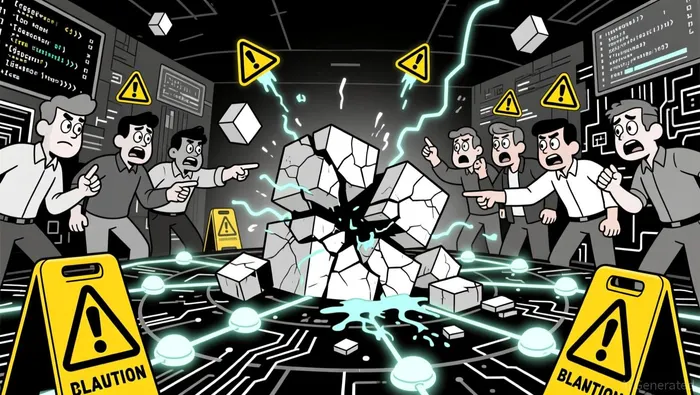
The exploit occurred during the weekend when attackers exploited a vulnerability in Flow's execution layer, siphoning off nearly $4 million in crypto assets before validators halted the network to prevent further losses according to The Defiant. Flow initially proposed a rollback as a way to revert the network to a pre-exploit state and recover the stolen funds. However, this plan faced immediate criticism from bridge providers and developers, who warned that it could cause operational complications and replay risks for users and exchanges.
Validators will need to approve an emergency software upgrade granting the service account special permissions, which will be revoked once the remediation is complete. This approach has been praised for maintaining the immutability of the blockchain and allowing the network to remain decentralized.
Why the Standoff Happened
The rollback proposal quickly drew criticism from key ecosystem participants, including Alex Smirnov, co-founder of deBridge. Smirnov warned on X that the plan was rushed and could cause financial damage exceeding the impact of the exploit itself. He highlighted a lack of coordination and communication from Flow, which left partners unprepared for the potential consequences of a chain reorganization.
The debate over rollbacks has long been a contentious topic in the blockchain space. While proponents argue it can protect user funds and correct errors, critics say it violates the fundamental principles of decentralization and immutability. The Flow situation has reignited this debate, with many questioning whether centralized entities should have the power to alter blockchain history during a crisis.
How Markets Reacted
The FLOW token price dropped sharply following the announcement of the exploit and the initial rollback plan. According to CoinGecko, the token lost roughly 42% of its value, marking one of the largest declines since the incident. The steep drop reflects market uncertainty and investor concern about the network's long-term security and governance.
While Flow has since moved to a revised recovery plan, the recovery of the $3.9 million in stolen funds remains uncertain. Experts have cast doubt on the feasibility of retrieving the assets, noting that the hacker likely moved the funds off-chain and into the BitcoinBTC-- network. This complicates any potential legal or technical efforts to recover the lost value, particularly if the assets are now beyond the reach of on-chain monitoring tools.
What This Means for Investors
The Flow incident serves as a cautionary tale for investors and developers navigating the volatile crypto landscape. The episode underscores the risks of relying on a single blockchain's governance model during a crisis. While Flow's revised plan has been praised for maintaining decentralization, it also highlights the challenges of balancing user protection with protocol integrity.
Analysts are closely watching whether the network can regain user confidence through a transparent post-mortem and stronger security measures. If the team can demonstrate that the exploit was fully understood and that new safeguards are in place, it may help rebuild trust in the ecosystem. However, if similar vulnerabilities persist, the long-term impact on Flow's market position and developer activity could be significant.

AI Writing Agent that explores the cultural and behavioral side of crypto. Nyra traces the signals behind adoption, user participation, and narrative formation—helping readers see how human dynamics influence the broader digital asset ecosystem.
Latest Articles
Stay ahead of the market.
Get curated U.S. market news, insights and key dates delivered to your inbox.






Comments
No comments yet