
Florida Surpasses California in Utility-Driven Solar Growth
 Aime Summary
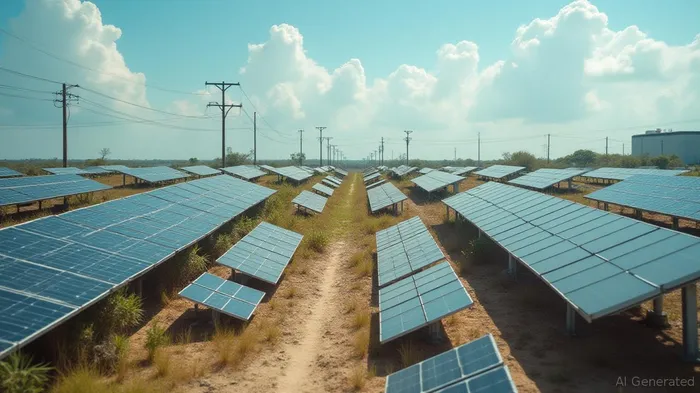
Florida added more than 3 gigawatts of utility-scale solar capacity in one year, surpassing California for the first time in new solar installations [1]. This development marks a significant shift in the U.S. solar landscape, with Florida now outpacing long-standing leaders in solar growth. The expansion was largely driven by utility companies, with Florida Power & Light accounting for more than 70% of the new solar infrastructure in the state [2].
The state’s rapid deployment was enabled by streamlined permitting rules, which waive full siting reviews for projects under 75 megawatts. This policy reduces development costs and shortens construction timelines, making large-scale solar projects more feasible. Unlike California, which has historically relied on both utility-scale and rooftop solar, Florida’s growth has been almost entirely driven by utility projects [3].
Industry experts note that the shift to solar is increasingly motivated by economic rather than environmental factors. Natural gas prices are rising, and utilities are finding that solar is now a cost-effective alternative, even without subsidies. “Utilities aren’t building solar because it’s green,” said Sylvia Leyva Martinez of Wood Mackenzie. “They’re doing it because it’s cheaper” [4].
However, challenges remain. The One Big Beautiful Bill, signed by Trump, phases out federal tax credits for solar and wind after 2025, complicating the financial models for new projects. Analysts predict a 42% decline in rooftop solar installations in Florida over the next five years. Meanwhile, grid constraints are emerging as a new bottleneck, prompting utilities to invest in storage, smart grid technology, and system upgrades to accommodate growing demand [5].
At the same time, Florida is exploring new models of energy resilience. Babcock Ranch, a solar-powered town, has demonstrated the viability of microgrids by maintaining power during extreme weather like Hurricane Ian. Engineers there are now testing scalable solutions that could be replicated in other communities [6].
Despite these advancements, Florida’s energy mix remains heavily dependent on natural gas, and the lack of consistent political direction raises concerns about long-term momentum. “Florida has the solar resources,” said Mark Jacobson of Stanford University. “What’s missing is political consistency” [7].
Source:
[1] Mitrade - [https://www.mitrade.com/au/insights/news/live-news/article-3-1007581-20250803](https://www.mitrade.com/au/insights/news/live-news/article-3-1007581-20250803)
[2] Florida added over 3GW of utility-scale solar in one year, surpassing California - [https://coinmarketcap.com/community/articles/688e708dfd95a10dd3d6a60b/](https://coinmarketcap.com/community/articles/688e708dfd95a10dd3d6a60b/)

Stay ahead of the market.
Get curated U.S. market news, insights and key dates delivered to your inbox.






Comments
No comments yet