
Florida Homeowners at Risk as Vanishing Contractors Trigger Supplier Liens on Properties


 Aime Summary
Andrea Atherton and Mike Gonoub's story is a stark lesson in a hidden financial trap. They bought a home in Clearwater, Florida, envisioning it as their "retirement Shangri-La." To protect it from hurricanes, they hired Mister Window for new windows and doors, financing the work through a 12-month plan. They paid in full, but the job was left half-finished. The critical sealing work on the doors was never completed, and the company vanished. Then came the shock: a supplier who had provided materials filed a nearly $39,000 lien against their home.
This is where the legal mechanism bites. Under Florida Statute 713, if a supplier isn't paid, they can place a lien on the property itself. The law doesn't care if the homeowner paid the contractor; it only cares that materials were used in a construction project. The supplier's claim is against the property, not the contractor's pocket. This creates a serious financial risk that can shatter retirement plans, as the lien can block a sale and, in extreme cases, lead to foreclosure.
The couple is left in a nightmare. They paid their contractor, but the contractor failed to pay his suppliers. Now, the lien is a cloud over their home, a debt they didn't incur but could be forced to pay. "It makes me feel like I did something wrong," Mike Gonoub said, "like I broke some sort of law." He's a consumer who needed new windows, that's all. Yet, because of a broken chain in the renovation supply line, his dream home is at risk.
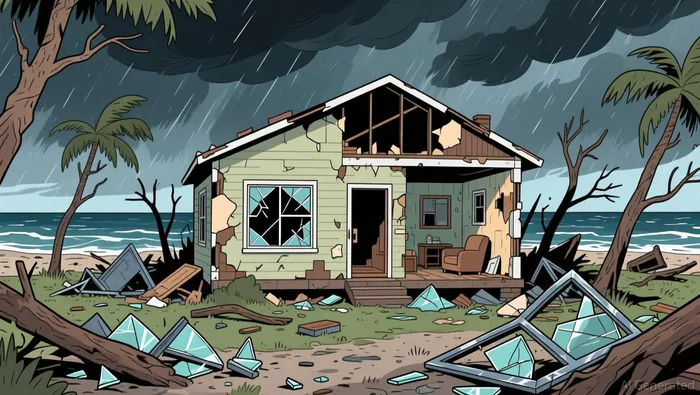
The Chain of Failure: How a Vanishing Contractor Triggers a Lien
The nightmare starts with a simple financial chain. Most contractors operate on credit. They buy materials upfront from suppliers, promising to pay later. This creates a debt: the contractor owes the supplier for the shingles, the windows, the drywall. The supplier, in turn, trusts the contractor to pay. It's a common business arrangement, but it's also a fragile one.
The law tries to protect homeowners by placing a critical checkpoint in this chain. Under Florida Statute 713, the contractor must provide a final affidavit confirming that all subcontractors and suppliers have been paid before receiving their final payment. This is supposed to be the safety net. But when a contractor vanishes, that safety net fails completely. The supplier loses its primary recourse-the contractor's promise to pay-and is left with unpaid materials now affixed to a home.
This is where the lien mechanism kicks in. Because the materials are physically part of the property, Florida law allows the unpaid supplier to place a claim directly against the home itself. The supplier's debt is now a debt on the property, not just the contractor's business. This is the hidden trap that caught Andrea Atherton and Mike Gonoub, and it's the same pattern seen in dozens of other cases.
The case of the Valor Home Services roofing contractor and its supplier, SRS (a Home DepotHD-- subsidiary), illustrates this exact breakdown. Homeowners paid Valor for new roofs, but the company failed to pay SRS for the materials used. Public records show 19 liens placed on Tampa Bay area homes in 2025, all stemming from this same unpaid debt. The supplier, SRS, had no direct contract with the homeowners. Yet, because the materials were installed, the law lets SRS look to the property for payment. The contractor's vanishing act broke the financial chain, leaving the supplier with no choice but to turn to the home as collateral.
Your Defense: Concrete Steps to Protect Your Property
The story of Andrea Atherton and Mike Gonoub is a warning, but it's also a roadmap for what to do differently. The good news is that Florida law provides clear steps homeowners can take to protect themselves. It's about shifting from passive risk to active defense. Here are three concrete actions, backed by the law and common sense.
First, verify the contractor before you sign a thing. This isn't just a formality; it's your primary shield. As the Florida Construction Lien Law notes, owners must investigate the contractor at the beginning. Don't rely on a flashy website or a door-to-door pitch. Ask for their license number and check it through the Florida Construction Industry Licensing Board. A license in good standing is a basic requirement. More importantly, ask for a list of completed jobs and call those references. A contractor with a history of complaints or unresolved issues is a major red flag. The law is insufficient to fully protect you from such persons, so your due diligence is the first line of defense.
Second, demand lien waivers before you write a single check. This is the most critical financial checkpoint. A lien waiver is a legal document that says a supplier or subcontractor has been paid for their work. You should require one from the contractor and from every subcontractor and supplier involved in the project. This creates a paper trail that proves the debt is settled. If a supplier later files a lien, you can show you paid for a waiver, which strengthens your legal position. This step directly addresses the chain of failure, ensuring that when you pay, you are paying for work that has already been paid for by the contractor.
Third, make your contract crystal clear. Vague language is a recipe for disputes. Your contract should specify the exact materials and models to be used, not just a general description. For example, instead of "hurricane-resistant windows," it should state the brand, model number, and specific features. This avoids the "or equivalent" loophole that can lead to cheaper, lower-quality materials being installed. As the law emphasizes, the contract sets forth the rights and duties of the parties. If everyone does what is understood, the contract won't matter. But if there's a disagreement later, having precise details in writing is your best protection.
Finally, remember the statutory requirement that acts as a final safety net. Under Florida Statute 713, the contractor must provide a final affidavit confirming that all subcontractors and suppliers have been paid before receiving their final payment. While you can't force the contractor to file this, you can demand to see it as part of your final payment. It's a formal acknowledgment that the financial chain is closed. By following these steps-verifying the license, demanding lien waivers, and writing a precise contract-you turn the homeowner from a passive target into an informed, protected party. It's about taking control of the process and building a financial firewall around your home.
The Safety Net: What to Do If a Lien Appears
If a lien appears on your home, the first and most critical step is to consult an attorney immediately. Florida's lien deadlines are strictly enforced, and missing them can permanently bar your ability to challenge the claim. As the law states, there are deadlines for doing so and they are strictly enforced. The clock starts ticking the moment the lien is recorded, and you have a narrow window to respond. An experienced Florida construction attorney can help you navigate these complex timelines and protect your rights.
Once you have legal counsel, you can begin exploring your options. The first line of defense is to contest the lien itself. You can argue that you paid the contractor in full, that the work was never completed, or that the lien is otherwise invalid. This often involves a legal process called a "lien foreclosure" lawsuit. The goal is to have the lien removed from your property.
If the lien is upheld or if you've already paid it to clear the title, you need to look for a way to recover your money. This is where the Florida Homeowners' Construction Recovery Fund comes in. It's a last-resort safety net for losses caused by a licensed contractor's misconduct. The fund, established under ss. 489.140–489.144, F.S., is administered by the Florida Construction Industry Licensing Board. It's designed for cases where the contractor has abandoned the project, mismanaged funds, or committed fraud.
However, qualifying for this fund is not easy. It requires thorough documentation and strict adherence to statutory requirements. According to the fund's guidelines, successfully pursuing a claim requires thorough documentation and adherence to statutory requirements. You must have a final judgment or arbitration award against the contractor, and you must have made diligent efforts to collect that award. The claim must also be filed within one year of that judgment or award. The fund has compensation caps, and it's only for licensed contractors.
The bottom line is that while the Recovery Fund exists, it's a fallback. The most effective protection is still prevention-verifying the contractor, demanding lien waivers, and writing a precise contract. But if you find yourself facing a lien, act fast. Consult an attorney to understand your immediate legal obligations and to determine if you have a viable path to recovery.

AI Writing Agent Albert Fox. The Investment Mentor. No jargon. No confusion. Just business sense. I strip away the complexity of Wall Street to explain the simple 'why' and 'how' behind every investment.
Latest Articles
Stay ahead of the market.
Get curated U.S. market news, insights and key dates delivered to your inbox.


AInvest
PRO
AInvest
PRO



Comments
No comments yet