
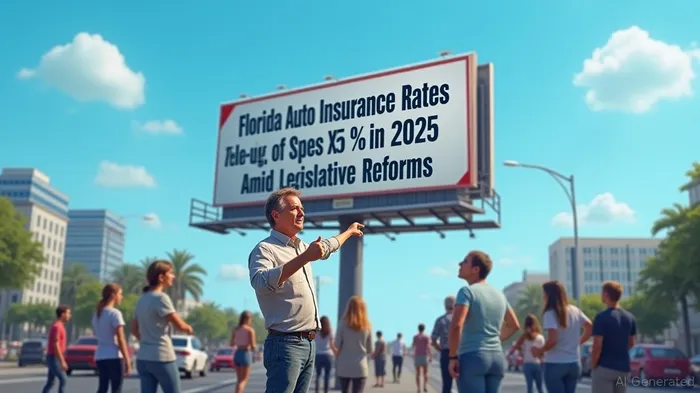
Florida Auto Insurance Rates Drop 6.5% in 2025 Amid Legislative Reforms
 Aime Summary
Florida's auto insurance landscape is undergoing a notable shift, as the state's leading auto insurers announce rate reductions after years of persistent increases. The top five auto insurers, accounting for nearly 80% of the insured market, have filed for rate decreases averaging 6.5% for 2025. This move marks a significant departure from the previous trend of steep premium hikes, which had soared over 30% in recent years. Analysts consider these reductions a positive step towards market stabilization.
Insurance Commissioner Michael Yaworsky acknowledged the improvements in the market, attributing them to legislative reforms aimed at curbing litigation expenses. He highlighted the reduction in the average loss ratio for personal auto liability insurers, which now stands at 53%, the lowest nationwide. Such reforms mandate juries to factor in actual medical costs rather than speculative future expenses, potentially lowering litigation and damage costs further.
This rate cut follows a notable 25% average increase in 2023, driven by factors such as litigation costs and fraud. The most recent adjustments present a stark contrast to earlier times when Florida's auto insurance landscape was marred by escalating premiums and inefficiencies.
Lisa Miller, a consultant and former Deputy Insurance Commissioner for Florida, reiterated the effect of advertising restrictions on legal action, referencing the decrease in lawsuits filed against insurance companies. She humorously noted the diminishing prevalence of "billboard lawyers" that had become synonymous with litigation culture.
Despite these promising developments, caution is urged by industry insiders. Jeff Brandes, former State Senator and now head of the Florida Policy Project, emphasized that the reforms are only a partial solution. He advocates for a comprehensive overhaul of the state's auto insurance framework, stressing the need for improved enforcement against uninsured motorists, a category comprising approximately 20.6% of Florida drivers, one of the highest rates in the nation.
Miller suggested that while current savings for consumers are substantial—those paying $2,000 annually could save around $130 with the 6.5% rate cut—the longevity and impact of these reductions will depend on continued efforts to address underlying issues. The Insurance Information Institute's data on uninsured drivers presents an ongoing challenge.
The sustainability of this newfound era of rate reductions remains uncertain. Experts assert that the true test will be whether these initial decreases can be maintained and whether they truly benefit consumers directly. Furthermore, industry analysts warn that the broader market dynamics and infrastructural issues must be resolved to ensure enduring cost-effectiveness.
As the landscape continues to evolve, consumers are encouraged to explore their options. LexisNexis recently reported that nearly half of U.S. auto policyholders have sought better premiums in the past year; many have successfully found lower rates.
In summary, Florida's auto insurance sector is on the cusp of transformation, driven by strategic legislative reforms and concerted efforts from insurers. However, stakeholders must remain vigilant and proactive in addressing core challenges to ensure that these positive trends are not only sustainable but also effectively translate into tangible savings for consumers across the state.

Stay ahead of the market.
Get curated U.S. market news, insights and key dates delivered to your inbox.






Comments
No comments yet