
Flooded Future: How Rising Waters Are Redrawing the Investment Map
The climate crisis is rewriting the rules of risk—and nowhere is this clearer than in the escalating toll of flood-related disasters. In 2024 alone, global economic losses from floods reached an estimated $84 billion, yet insured losses totaled just $21 billion, leaving a staggering 60% protection gap (per Swiss Re). This widening chasm between the cost of damage and the coverage available is not just a humanitarian concern—it's a market signal. Investors ignoring this trend risk missing out on one of the defining opportunities of the next decade: climate-resilient infrastructure.
The Flood Damage Surge: A Numbers Game
Let's start with the raw data. Floods now account for one-third of all natural disaster economic losses, but only 14% of insured losses, according to WTW's 2024 review. This gap is widening because:
1. Climate amplification: 2024 was the hottest year on record (1.54°C above pre-industrial levels), supercharging rainfall intensity. Europe's Storm Boris, for instance, dumped a year's average rainfall on Spain's Valencia region in 8 hours, triggering €3.7 billion in insured losses.
2. Urban sprawl: Cities like Dubai and Miami—built in flood-prone zones—are now ground zero for damage. In 2024, floods in the Gulf region caused $10 billion in economic losses, with only $2 billion insured (Swiss Re).
3. Underinsurance: In Asia-Pacific, where floods caused $74 billion in economic losses last year, insured losses were a mere $4 billion, highlighting a systemic lack of coverage in emerging markets.
Regulatory and Market Shifts: The New Rules of Risk
Governments and insurers are no longer sitting idly by. Two trends are reshaping the investment landscape:
1. Building Codes Are Evolving
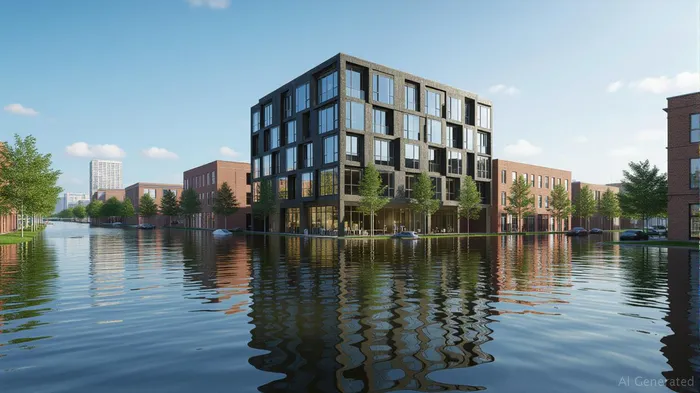
The EU's Flood Risk Directive now mandates flood-resilient construction standards for new developments, while the U.S. Federal Insurance Administration is pushing for elevation requirements in FEMA flood zones. For investors, this means:
- Material science winners: Companies like USG Corporation (USG) and LafargeHolcim (LAFN.SWISS) are developing flood-resistant composites and waterproof concrete.
- Modular construction pioneers: Firms like Katerra and Modular Group are scaling up flood-proof prefabricated structures, which reduce rebuilding costs by 20–30%.
2. Insurance Is Getting Creative
The $3 trillion global insurance industry is struggling to cover today's flood risks. Enter insurance-linked securities (ILS), which pool capital to absorb catastrophic losses. Key plays:
- Catastrophe bonds: Funds like AXA IM Alts' Climate Risk Solutions offer investors exposure to flood resilience projects while earning returns tied to policyholder payouts.
- Parametric insurance: Startups like Nexus Mutual use real-time flood sensors to trigger automatic payouts, reducing administrative costs.
The Investment Thesis: Where to Place Your Bets
The math is simple: rising flood costs + regulatory mandates = structural demand for resilience tech. Here's how to capitalize:
1. Buy the Materials Makers
Flood-resistant materials are no longer niche. USG's “HydroBlock” concrete and LafargeHolcim's “DuraPave” flood-proof asphalt are already being adopted in coastal cities.
2. Invest in Infrastructure Funds
Firms like BlackRock's Resilience ETF (BRRF) or Macquarie's Green Infrastructure Fund are deploying capital into seawalls, drainage systems, and urban flood modeling. These assets are inflation-protected and offer stable returns as governments allocate stimulus to resilience projects.
3. Play the Insurance Innovation Play
ILS and parametric insurance are growing at 15% annually. Investors can access this via ETFs like IQ Hedge Multi-Strategy ETF (QSTR) or direct stakes in insurtechs like Ethos Insurance, which uses AI to price flood risk dynamically.
The Bottom Line: Flood Risk = Flooded Returns
The numbers don't lie: the $84 billion in flood damage in 2024 will balloon to $300 billion+ annually by 2030 (Swiss Re's 1-in-10 risk scenario). For investors, this is a call to action. Back the companies and instruments turning rising waters into rising profits.
The flood-resilient infrastructure sector is no longer a side bet—it's the new bedrock of global capital markets.

Stay ahead of the market.
Get curated U.S. market news, insights and key dates delivered to your inbox.




Comments
No comments yet