
Flight-to-Safety Surge in UK Cash ISAs and the Bond Market's Uneasy Truce
The UK government's delayed reforms to cash Individual Savings Accounts (ISAs) have unleashed a wave of defensive behavior among retail investors, with record inflows into these tax-efficient vehicles. This “flight-to-safety” has not only reshaped savings habits but also sent ripples through the fixed-income market, where UK government bond (gilt) yields hover near 20-year highs. As the Treasury's Mansion House speech looms, investors face a critical question: How should they position portfolios in an era of fiscal uncertainty?
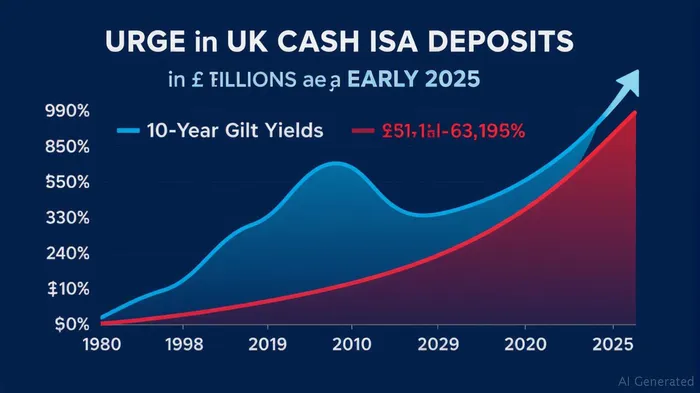
The ISA Surge: A Mirror of Retail Investor Anxiety
The decision to postpone cuts to the £20,000 annual cash ISA limit—originally proposed to nudge savings into riskier investments—has backfired spectacularly. Retail investors, fearing future restrictions, have flooded into cash ISAs. Plum reported a 69% spike in deposits in early 2025, while Leeds Building Society saw a 32% jump in account openings. These numbers reflect a stark reality: savers prioritize capital preservation over growth when policies feel unstable.
This behavior has created a paradox. While the Treasury aims to redirect savings into equities to fuel growth, the opposite is occurring: £300 billion in cash ISA assets remain locked in low-yielding, risk-averse instruments. The Building Societies Association (BSA) warns that this could stifle mortgage funding and housing market liquidity—a warning that has not been lost on bond markets.
Bond Market Jitters: Fiscal Uncertainty vs. Yield Opportunity
The flight-to-safety in ISAs has a twin in the bond market: UK gilt yields are at their highest since the late 1990s, with the 10-year yield hitting 4.8% in late 2024. This reflects investor skepticism about the government's ability to balance fiscal discipline with its spending pledges.
- Fiscal Slippage Fears: The OBR now projects a weaker growth outlook (1% in 2025) and a narrower fiscal buffer. Even a minor shortfall could force tax hikes or spending cuts, worsening gilt risks.
- Political Instability: Speculation about Chancellor Rachel Reeves' tenure—and her fiscal credibility—sent gilt yields soaring by 15 basis points in July alone. The Prime Minister's public reassurance only temporarily calmed markets.
Yet, gilts also offer a yield advantage. At 5.25% for 30-year maturities, they outperform cash and European peers. Morningstar's Nicolo Bragazza notes: “Gilts are historically cheap, but you're paying for the UK's fiscal uncertainty premium.”
Investment Strategy: Navigating the Fiscal Crossroads
The Treasury's upcoming Mansion House speech will clarify the path forward. Until then, investors should adopt a defensive yet opportunistic stance in gilts:
Overweight Short-Term Gilts (2–5 years):
Short-dated bonds offer insulation from rising yields and inflation risks. The BoE's “higher-for-longer” rate stance supports near-term yields, while shorter maturities limit duration risk.Underweight Long-Term Gilts (10+ years):
Avoid locking in yields until fiscal clarity emerges. The OBR's 1% growth forecast and geopolitical risks (e.g., U.S. trade tariffs) could push yields higher.Monitor ISA Policy Signals:
A reversal of the cash ISA limit cut would likely trigger a rotation out of ISAs and into equities or corporate bonds, easing gilt demand. Conversely, a delayed reform could prolong the flight-to-safety dynamic.
Conclusion: Position for Fiscal Reality, Not Rhetoric
The UK's fiscal dilemma is clear: retail savers are voting with their wallets for safety, while bond markets demand fiscal discipline. Investors must balance gilt yields' appeal with the risk of a fiscal U-turn.
Until the Mansion House speech delivers clarity, short-dated gilts are the safest harbor. For the bold, dips in yields (e.g., after policy reassurances) could present buying opportunities—but remember: in a storm, anchoring to short-term maturities keeps the ship afloat.


Stay ahead of the market.
Get curated U.S. market news, insights and key dates delivered to your inbox.


AInvest
PRO
AInvest
PRO



Comments
No comments yet