
Flight 171 Crash Sparks Safety Overhaul: Navigating Airline Investment Risks in a New Regulatory Era
The June 12 crash of Air India Flight 171, which killed all 202 aboard, has reignited a decades-long debate over aviation safety protocols—and investors would be wise to take notice. Revelations from the cockpit voice recorder (CVR) about fuel-control switches being deliberately toggled to “cutoff” have exposed critical gaps in current safety systems, spurring calls for stricter regulations that could reshape airline operational costs, insurance liabilities, and profitability. With stakeholders from regulators to pilot unions locked in a high-stakes battle over cockpit video recorders, airlines face a pivotal reckoning—one that will test their ability to adapt without eroding shareholder value.
The Regulatory Crossroads
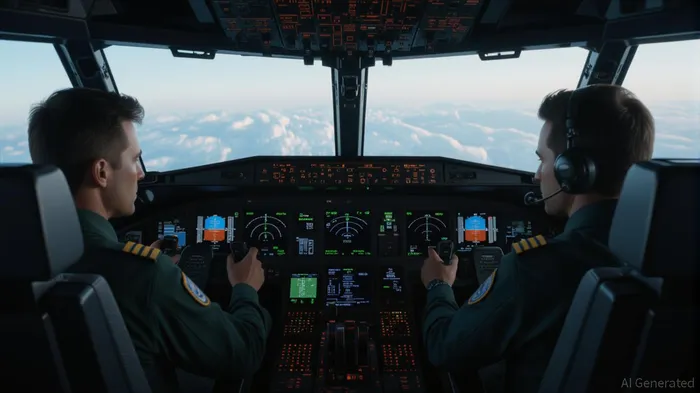
The Flight 171 incident has thrust cockpit video recorders into the spotlight. While existing CVRs capture audio, the lack of visual data left unresolved questions about whether the fuel switches were manipulated intentionally or accidentally. Advocates like the NTSB and IATA argue that video recorders—already used in some training scenarios—could clarify such ambiguities. Opponents, including pilot unions, warn of privacy intrusions and misuse of footage. If regulators side with advocates, airlines could face costly mandates to retrofit fleets or redesign cockpits. The NTSB has pushed for such measures since 2000, but FAA hesitation has delayed action—until now.
The crash has also exposed flaws in voluntary safety advisories. Air India's noncompliance with a 2018 FAA advisory on fuel-control switch inspections—a non-mandatory directive—has galvanized calls to convert critical advisories into binding regulations. This shift could force airlines to absorb higher compliance costs, particularly for older fleets requiring retrofits.
Operational Costs: A Heavy Lift for Struggling Airlines
Airlines already grappling with high debt and thin margins face the most acute risks. Retrofitting fleets with video recorders, retraining crews, and adhering to stricter inspection protocols could add millions to operational expenses. Legacy carriers with aging fleets, such as Delta (DAL) or Air France-KLM, may see costs rise faster than their revenue growth. Meanwhile, low-cost carriers with newer fleets—like JetBlue (JBLU)—might face fewer retrofitting demands but could still suffer from broader industry reputational damage.
The Flight 171 incident also highlights vulnerabilities in safety management systems. Airlines with poor compliance histories, such as Air India (not listed on major exchanges but a key case study), could face punitive fines or route restrictions if regulators tighten oversight. Investors should scrutinize carriers' safety track records and debt levels: those with high leverage (e.g., Spirit Airlines (SAVE)) may struggle to absorb unexpected costs.
Insurance Liabilities: A Premium on Risk
The push for stricter safety protocols could have a silver lining for insurers—provided they price risks appropriately. Airlines' insurance premiums are likely to rise as carriers with weak safety records face higher underwriting costs. This creates an opportunity for insurers with strong risk-assessment tools, such as Allianz (AZSE) or XL Catlin (XL), to capitalize on demand for specialized aviation coverage. However, insurers exposed to high-risk airlines or those without robust underwriting discipline could face claims spikes if accidents increase due to other systemic factors.
Sector-Specific Implications
- Aerospace Manufacturers (BA, EADSF): BoeingBA-- and Airbus may face dual pressures. On one hand, new safety mandates could drive demand for retrofit kits or next-gen cockpit systems. On the other, airlines might delay fleet upgrades or negotiate price concessions, squeezing margins. Investors should watch for R&D investments in safety tech and market share shifts.
- Airlines: Avoid carriers with high debt (e.g., American AirlinesAAL-- (AAL) at 4.2x debt-to-equity) and poor safety records. Instead, favor financially resilient operators with modern fleets and strong compliance histories, such as Emirates or Lufthansa (LHA).
- Insurance: Focus on firms with diversified portfolios and stringent underwriting, like ChubbCB-- (CB), which has reduced aviation exposure after past disasters.
Investment Takeaway
The Flight 171 crash underscores a seismic shift in aviation safety priorities. Airlines lacking financial flexibility or a clean safety record face mounting risks of rising costs and liabilities. Investors should proceed with caution when considering airlines with debt-heavy balance sheets or compliance issues. Meanwhile, insurers and aerospace firms positioned to navigate regulatory headwinds may offer safer bets—if they can balance innovation with profitability.
In this new era, transparency and preparedness will be the hallmarks of survival—and success.

Stay ahead of the market.
Get curated U.S. market news, insights and key dates delivered to your inbox.
AInvest
PRO
AInvest
PRO



Comments
No comments yet