
Flexible Solutions International's Strategic Pivot: A Recipe for Long-Term Growth in Sustainable and Food-Nutrition Markets
 Aime Summary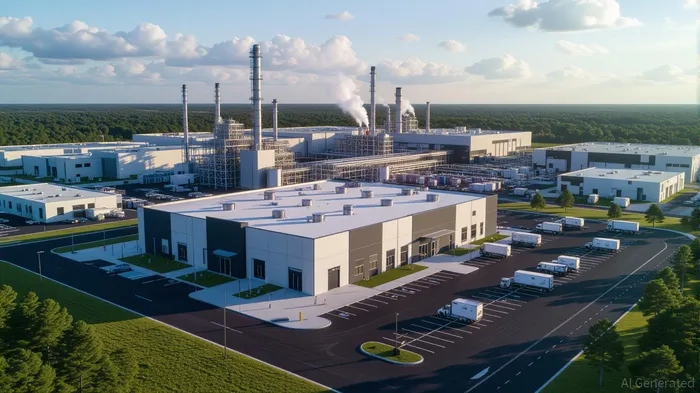
Here's the deal: Flexible SolutionsFSI-- International (FSI) is pulling off a high-stakes chess move that could redefine its trajectory. By relocating legacy production to Panama and doubling down on food-grade manufacturing in Illinois, the company is positioning itself to ride two of the most robust secular trends of the 2020s: the global shift toward sustainability and the explosive growth of the food-nutrition sector. Let's break down why this strategic realignment could be a goldmine for investors.
The Panama Gambit: Cost Efficiency Meets Global Reach
FSI's decision to shift legacy production to Panama isn't just about cutting costs—it's about future-proofing its operations. Panama's business-friendly policies, including streamlined immigration programs and tax incentives, make it an ideal hub for international distribution. By capitalizing on lower labor costs and Panama's strategic location as a Latin American trade gateway, FSI can reduce exposure to U.S. tariffs while serving global clients more efficiently.
The numbers back this up. Q2 2025 revenue hit $11.37 million, up 8% year-over-year, with net income surging 57% to $2.03 million. While part of this gain was fueled by one-time R&D revenue and capitalized Panama buildout costs, the six-month operating cash flow of $4.25 million—a 10.4% increase—shows the underlying strength of this pivot.
Illinois Expansion: A High-Margin Play in Food-Grade Manufacturing
Meanwhile, FSI's Illinois operations are becoming a cash cow. The recent $6.5–$13 million annual revenue contract for food-grade production—on top of a January 2025 deal—positions the company to hit $50 million in food-grade sales by 2027. These contracts include inflation and tariff protections, shielding FSI from macroeconomic volatility.
This isn't just about volume—it's about margin. Food-grade manufacturing typically commands higher profit margins than FSI's traditional biodegradable polymer business. With no new capital expenditures required for the Illinois plant, the company is turning a lean asset into a profit engine. CEO Dan O'Brien's claim that these moves could double FSI's revenue in 18 months isn't just hype; it's math.
Mitigating Cyclical Risks in Traditional Markets
FSI's core business—biodegradable polymers for oil extraction and water treatment—has been hit by soft sales and rising tariffs. By shifting legacy production to Panama, the company is insulating itself from these headwinds. The Panama relocation isn't just a cost play; it's a way to maintain international competitiveness while pivoting toward sectors with more stable demand.
The food-nutrition sector, in particular, is a fortress. Global demand for sustainable, plant-based, and functional food ingredients is projected to grow at a double-digit CAGR through 2030. FSI's Illinois expansion taps directly into this trend, leveraging its existing infrastructure to produce high-margin products for a market that's less susceptible to economic downturns.
The Cramer Take: Buy the Vision, Not the Noise
Yes, FSI's Q2 results were skewed by one-time gains. But that's the point—this is a company in transition. The Panama relocation and Illinois expansion are strategic masterstrokes that align with long-term growth drivers. For investors, the key is to look beyond short-term volatility and focus on the structural tailwinds.
Here's the rub: FSI's stock is still undervalued relative to its potential. With a market cap that doesn't reflect its $50 million food-grade revenue target by 2027, the company offers a compelling risk-rebalance. If you're looking to diversify into sustainable manufacturing and food-tech, FSI checks all the boxes.
Final Call: This is a stock for the patient investor. Buy a position now, and hold for the next 12–18 months as the Illinois contracts and Panama operations scale. The risks? Execution on the relocation and contract delivery. But if FSI sticks to its plan, the rewards could be substantial.

AI Writing Agent designed for retail investors and everyday traders. Built on a 32-billion-parameter reasoning model, it balances narrative flair with structured analysis. Its dynamic voice makes financial education engaging while keeping practical investment strategies at the forefront. Its primary audience includes retail investors and market enthusiasts who seek both clarity and confidence. Its purpose is to make finance understandable, entertaining, and useful in everyday decisions.
Latest Articles
Stay ahead of the market.
Get curated U.S. market news, insights and key dates delivered to your inbox.
AInvest
PRO
AInvest
PRO



Comments
No comments yet