
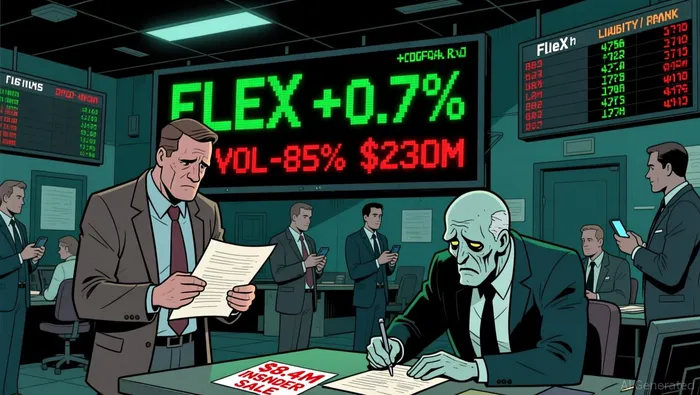
Flex Shares Rise 0.7% as Trading Volume Plummets 85% to $230M Ranking 476th in Liquidity Amid Insider Sales of $8.4M
 Aime Summary
Market Snapshot
On November 25, 2025, , , ranking 476th in market liquidity. The decline in volume suggests reduced investor participation, potentially reflecting uncertainty or caution ahead of the close. Despite the price gain, the sharp drop in trading activity indicates mixed sentiment, with the stock underperforming in terms of liquidity compared to its peers.
Key Drivers
Insider Selling Activity
Flex’s stock has been impacted by a series of insider sales in late November 2025, signaling potential skepticism among corporate leadership. Director Michael E. , . This followed a larger sale by Director William D. , . Over the past three months, , . Such concentrated selling could erode investor confidence, as insiders’ actions are often interpreted as signals of internal sentiment.
Mixed Financial Performance
Flex’s recent quarterly earnings report provided a partial offset to the negative insider activity. , . , slightly above expectations. However, profitability metrics remain under pressure, , both trailing industry averages. . While the earnings beat may have spurred short-term buying, , as investors weigh earnings strength against structural inefficiencies.
Institutional Investor Behavior
Institutional ownership patterns offer further nuance. Franklin Resources Inc., a major institutional investor, , . This contrasts with the broader insider selling, indicating that long-term investors may still see value in the stock. , suggesting a stable base of support. However, the recent insider sales could prompt reassessment by institutional investors, particularly if the trend persists. , but the insider activity may test this stability.
Market Sentiment and Technical Indicators
underscore short-term volatility. , suggesting a bullish trend, . The low trading volume on November 25, , indicates limited conviction in the upward move. , but the insider selling could create near-term headwinds, especially if perceived as a lack of confidence in the company’s strategic direction. The combination of strong quarterly results and insider caution presents a complex picture for investors, who must balance earnings momentum against governance-related risks.
Conclusion
Flex’s recent performance reflects a tug-of-war between positive earnings surprises and negative insider signals. While the company’s revenue growth and EPS beat highlight operational resilience, the aggressive selling by directors like Hurlston and Watkins raises questions about internal alignment with market expectations. Institutional investors appear cautiously optimistic, but the broader market may require clearer signals of management’s confidence to sustain the current price trajectory. Investors should monitor future insider activity and the company’s ability to address profitability challenges as key determinants of Flex’s near-term outlook.

Stay ahead of the market.
Get curated U.S. market news, insights and key dates delivered to your inbox.
AInvest
PRO
AInvest
PRO



Comments
No comments yet