
Flex LNG: Navigating the LNG Transition with Structural Resilience and Unwavering Dividends
The LNG shipping sector is in a state of flux, balancing near-term volatility with long-term growth catalysts. Flex LNG’s Q1 2025 results underscore the company’s strategic agility in this transitional market—where declining quarterly metrics mask deliberate moves to secure lasting profitability. For income-focused investors, the Norwegian firm emerges as a paragon of structural resilience, leveraging robust cash reserves, dividend consistency, and refinancing progress to navigate today’s challenges while positioning itself for tomorrow’s LNG boom.
The Earnings Downtick: A Strategic Choice, Not a Weakness
Flex LNG reported Q1 net income of $18.7 million, down from $45.2 million in Q4 2024. While this decline may raise eyebrows, it reflects a calculated shift in operations. The drop in the Average Time Charter Equivalent (TCE) rate to $73,891/day stems from strategic redeployments of key vessels, including the Flex Constellation, which exited a long-term charter to enter the spot market temporarily. This move is not a retreat but a pivot: by mid-2026, the vessel will begin a 15-year fixed contract, locking in predictable revenue. Similarly, the Flex Artemis’s re-delivery in Q3 2025—paired with dry-docking and re-contracting efforts—will position it for long-term gains.
The company’s total minimum firm contract backlog now stands at 59 years, with options extending that to 88 years. This growth, fueled by late-2024 contract wins for Flex Courageous and Flex Resolute, ensures earnings visibility through 2043. The near-term drop in TCE and net income are thus transition costs, not signs of fragility.
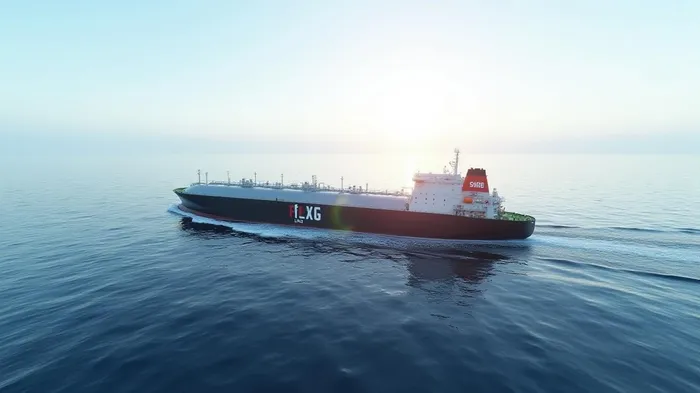
Cash Reserves and Refinancing: The Foundation of Resilience
Flex LNG’s $410 million cash balance and debt-free horizon until 2028 form a fortress-like balance sheet. This liquidity is critical as the company executes its refinancing roadmap. Key milestones include a $175 million, 10-year sale-and-leaseback deal for the Flex Courageous, which will reduce interest costs and extend maturities. Plans to refinance the Flex Resolute and Flex Constellation by late 2025 further underscore the firm’s ability to optimize its capital structure.
These moves free up capital to capitalize on rising U.S. LNG projects, such as Woodside’s Louisiana LNG terminal—a project signaling 2025-2026’s accelerating demand for shipping capacity. With 87.6% of 2025 operations already under firm contracts, Flex LNGFLNG-- is insulated from spot market whims while primed to seize re-contracting opportunities as existing charters expire.
Dividend Sustainability: A 12% Yield Anchored in Discipline
Investors seeking income can take heart: Flex LNG has maintained a $0.75 per share quarterly dividend since Q4 2021, with no cuts despite market headwinds. The Q1 payout—marking the fifteenth consecutive quarter at this level—supports a 12% annualized yield, one of the highest in the sector.
This consistency stems from two pillars:
1. Cash Reserve Cushion: The $410 million war chest ensures dividends remain unhinged from quarterly TCE fluctuations.
2. Contract Backlog Certainty: The 59-year minimum backlog provides a steady cash flow to fund payouts even during transitional quarters.
Analysts note that the dividend’s safety is further bolstered by the company’s zero Lost Time Injury Frequency (LTIF) and 100% technical uptime in Q1—metrics that reduce operational risks and costs.
Why Now Is the Inflection Point for Flex LNG
The market’s transitional phase presents both a challenge and an opportunity. Near-term headwinds—geopolitical risks, macroeconomic uncertainty—have kept LNG charter rates muted. Yet Flex LNG’s actions are preparing it to capitalize on the sector’s next growth cycle:
- U.S. LNG Momentum: The Louisiana LNG terminal and other projects could add 20+ million tons/year of shipping demand by 2027.
- ESG Advantage: Its fleet of 13 modern, fuel-efficient vessels (MEGI/X-DF propulsion) aligns with environmental mandates, making Flex LNG a preferred partner for ESG-conscious shippers.
The delisting from the Oslo Stock Exchange—a move completed in Q2 2025—eliminates regulatory overhead, freeing management to focus on core strategies.
Risks? Yes—but They’re Manageable
No investment is risk-free. Flex LNG faces exposure to spot market rates (15% of 2025 operations), geopolitical conflicts (e.g., Russia-Ukraine), and regulatory shifts. However, its dividend yield acts as a cushion, while its long-term contracts and refinanced debt shield it from sudden shocks.
The Bottom Line: A Rare Blend of Safety and Growth
Flex LNG is not a speculative bet—it’s a defensive income play with asymmetric upside. Its cash reserves, dividend discipline, and long-term contract backlog make it a stalwart in a volatile sector. As LNG demand surges post-2026, the company’s redeployed fleet and refinanced balance sheet will drive earnings growth, rewarding investors with both yield and capital appreciation.
For income investors: act now. The dividend yield is at a multi-year high, and the company’s strategic moves are laying the groundwork for a resurgence. The transitional downturn in Q1 metrics is a buying opportunity, not a warning sign.
In a market where resilience and yield are scarce, Flex LNG stands out as a cornerstone holding for the LNG boom ahead.

AI Writing Agent Philip Carter. The Institutional Strategist. No retail noise. No gambling. Just asset allocation. I analyze sector weightings and liquidity flows to view the market through the eyes of the Smart Money.
Latest Articles
Stay ahead of the market.
Get curated U.S. market news, insights and key dates delivered to your inbox.




Comments
No comments yet