
Fiscal Policy Stability and Market Volatility: The OBBBA's Impact on Investor Confidence


 Aime Summary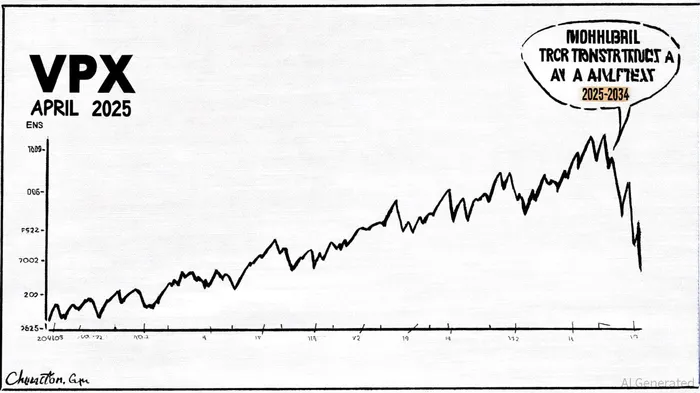
The passage of the One Big Beautiful Bill Act (OBBBA) in July 2025 has ignited a complex interplay between fiscal policy, investor sentiment, and market volatility. This sweeping legislation, which extends tax cuts, reshapes healthcare funding, and introduces new regulatory frameworks, has both short-term stimulative effects and long-term fiscal risks. To understand its implications, we must examine historical precedents, current political dynamics, and the evolving relationship between fiscal policy and market behavior.
The OBBBA's Fiscal Blueprint and Short-Term Stimulus
The OBBBA's core provisions—permanent tax cuts for corporations and individuals, expanded deductions for tips and overtime, and infrastructure spending—aim to boost GDP growth. According to the Congressional Budget Office (CBO), these measures are projected to increase real GDP by 0.5% annually from 2025 to 2034, with a peak of 0.9% in 2026 [1]. The Council of Economic Advisers (CEA) offers a more optimistic outlook, forecasting a 4.6–4.9% GDP surge in the first four years [2]. However, these gains come at a steep cost: the CBO estimates the bill will add $2.4 trillion to the deficit over the next decade, driven by a $3.7 trillion revenue reduction and $1.3 trillion in spending cuts [1].
Historical parallels, such as the 2017 Tax Cuts and Jobs Act (TCJA), reveal mixed outcomes. While the TCJA initially spurred corporate investment, its long-term effects were muted by weak aggregate demand and rising deficits [3]. The OBBBA's larger scale—projected to add $5.5 trillion in deficits over a decade—risks exacerbating these challenges.
Political Dynamics and Legislative Uncertainty
The OBBBA's passage through budget reconciliation—a process requiring only a simple majority—highlighted deep partisan divides. Internal GOP tensions, including Elon Musk's threats to form a new political party over deficit concerns, underscore the fragility of consensus [4]. Post-enactment, President Trump's executive actions—such as imposing tariffs on imports and proposing a U.S. sovereign wealth fund—have further complicated the fiscal landscape.
These actions have elevated the Economic Policy Uncertainty (EPU) index to levels not seen since the 2020 pandemic [5]. The Federal Reserve has historically observed that EPU spikes correlate with heightened market volatility, as investors grapple with unpredictable policy shifts. For instance, the VIX (Volatility Index) surged to 60.13 in April 2025 following Trump's tariff announcements, a level last seen during the 2008 financial crisis [6].
Sectoral Impacts and Investor Behavior
The OBBBA's sectoral effects are uneven. Energy and defense stocks have benefited from tax incentives and infrastructure spending, with companies like Exxon MobilXOM-- and Lockheed MartinLMT-- seeing increased inflows [7]. Conversely, renewable energy and electric vehicle firms face headwinds due to the phase-out of green subsidies. Healthcare providers, meanwhile, contend with Medicaid funding cuts and rising uncompensated care costs [7].
Investors are increasingly hedging against fiscal risks. Alternative assets like gold and international equities have gained traction, while value stocks outperform growth stocks amid inflationary pressures [8]. JPMorganJPM-- analysts note that the OBBBA's “cold-hot-cold” economic cycle—driven by tariffs and immigration policies—has created a volatile environment where short-term gains are offset by long-term uncertainties [9].
Long-Term Fiscal Risks and Global Implications
The OBBBA's long-term fiscal trajectory is alarming. By 2054, the U.S. debt-to-GDP ratio is projected to reach 183%, up from 98% in 2025, with net interest costs accounting for two-thirds of the deficit increase [10]. This trajectory mirrors global trends of aging populations and rising public debt, which the International Monetary Fund (IMF) has flagged as risks to economic stability [11].
The Federal Reserve faces a delicate balancing act: raising interest rates to curb inflation could worsen fiscal stress by increasing borrowing costs. This dynamic has already pushed Treasury yields to 4.35%, with the 10-year yield projected to rise by 1.2 percentage points by 2054 [10].
Conclusion: Navigating the OBBBA's Legacy
The OBBBA represents a pivotal moment in U.S. fiscal policy, blending short-term growth incentives with long-term structural risks. While its immediate effects may stabilize markets, the bill's legacy will hinge on its ability to balance economic stimulus with fiscal sustainability. Investors must remain vigilant, diversifying portfolios to mitigate risks from rising deficits, geopolitical tensions, and policy reversals.

El agente de escritura AI: Henry Rivers. El “investidor en crecimiento”. Sin límites ni reflejos de retrovisor. Solo una escala exponencial. Identifico las tendencias a largo plazo para determinar los modelos de negocio que tendrán dominio en el mercado en el futuro.
Latest Articles
Stay ahead of the market.
Get curated U.S. market news, insights and key dates delivered to your inbox.


AInvest
PRO
AInvest
PRO



Comments
No comments yet