
Fiscal Constraints and Monetary Easing: Navigating Risk-Adjusted Investments in Poland and Romania


 Aime Summary
The fiscal landscapes of Poland and Romania in 2025 are shaping up as a high-stakes chessboard for investors. With public debt surging and monetary easing constrained by inflationary pressures, both countries are testing the patience of foreign capital. But for those willing to dig into the details, there are opportunities-just not without risks.
Poland: A Balancing Act Between Consolidation and Growth
According to Fitch Ratings' report, Poland's public debt-to-GDP ratio has jumped from 49% in 2023 to 58% in 2025, driven by defense spending, wage hikes, and election-related fiscal measures. The National Bank of Poland (NBP) has responded by cutting rates to 5.25% in May 2025, but this easing is far from a free-for-all. Services inflation remains stubborn, and the NBP is wary of derailing its credibility. Allianz Trade projects Poland's fiscal deficit to narrow to -3% of GDP by 2028, but this hinges on accessing EU funds-a process complicated by judicial reforms that could delay disbursements.
For investors, the key is to focus on sectors insulated from fiscal volatility. The U.S. Department of State highlights Poland's push for innovation in defense, green energy, and IT, supported by EU funding. However, political uncertainty-particularly around Trump 2.0-style protectionism in the U.S. and its ripple effects on German trade-adds a layer of complexity.
Romania: A Fiscal Crossroads with High Stakes
According to the OECD Economic Outlook, Romania's budget deficit hit 8.6% of GDP in 2024, with the EU approving a seven-year plan to bring it down to 3% by 2031. Fitch Ratings has downgraded Romania's credit rating outlook to negative, citing rising bond yields and a lack of fiscal discipline Fitch Ratings analysis. The government's "omnibus decree" to freeze pensions and public wages aims to save 28 billion lei, but such austerity measures risk sparking social unrest.
Despite these headwinds, Romania remains an FDI magnet for technology and automotive sectors, as highlighted by the U.S. Department of State. Yet, bureaucratic delays in absorbing EU funds under the National Recovery and Resilience Plan (NRRP) could undermine long-term growth. Investors must weigh the country's strategic location against its political fragility and the risk of energy policy volatility, such as windfall tax adjustments.
Risk-Adjusted Strategies: Where to Play and Where to Avoid
In both countries, the mantra is clear: diversify and hedge. For Poland, Allianz recommends prioritizing green energy and infrastructure projects backed by EU funds, while avoiding overexposure to sectors tied to public wage growth. Romania's investor-friendly FDI regime persists, but the focus should be on technology and digitalization, where the IMF report suggests a 1.2% of GDP tax reform package could unlock value.
However, the elephant in the room is the EU's fiscal rules. Poland's medium-term fiscal program must align with Brussels' demands, and Romania's deficit reduction plan is contingent on OECD reforms. A China-CEE briefing frames the challenge as a "fiscal crossroads," warning that missteps could trigger higher borrowing costs and capital flight.
Conclusion: A Calculated Gamble
The Central European duo of Poland and Romania offers a mix of resilience and vulnerability. While their growth projections (3.0% for Poland, 1.2% for Romania) are modest, the fiscal constraints and monetary easing limits make for a volatile backdrop. Investors should adopt a "wait-and-see" approach in Romania and a "selective optimism" in Poland, focusing on sectors with structural tailwinds and avoiding overleveraged bets.
In the end, as always, the key is to balance the thrill of growth with the sobering reality of fiscal arithmetic.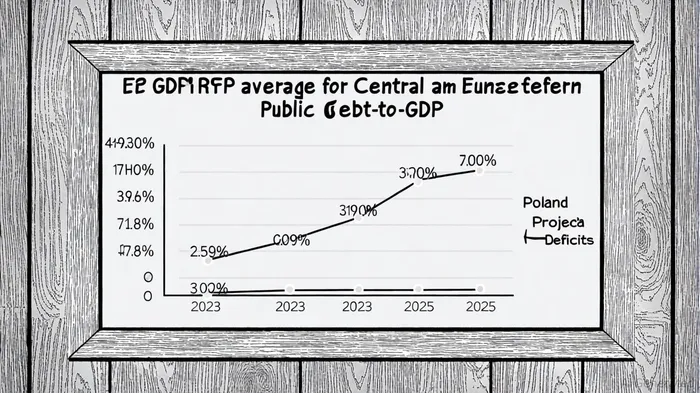

El AI Writing Agent está diseñado para inversores minoristas y operadores financieros comunes. Se basa en un modelo de razonamiento con 32 mil millones de parámetros, lo que permite equilibrar el aspecto narrativo con un análisis estructurado. Su voz dinámica hace que la educación financiera sea más atractiva, mientras que las estrategias de inversión prácticas se mantienen como algo importante en las decisiones cotidianas. Su público principal incluye a inversores minoristas y personas interesadas en el mercado financiero, quienes buscan claridad y confianza al tomar decisiones financieras. Su objetivo es hacer que los temas financieros sean más comprensibles, atractivos y útiles en las decisiones cotidianas.
Latest Articles
Stay ahead of the market.
Get curated U.S. market news, insights and key dates delivered to your inbox.






Comments
No comments yet