
FIS's Strategic Move in Embedded Finance and Core-Plus Banking: Leading the Modernization of European Banking Infrastructure


 Aime Summary
The European banking sector is undergoing a profound transformation, driven by the convergence of digital innovation, regulatory evolution, and shifting consumer expectations. At the forefront of this shift is FISFIS--, a global leader in financial services technology, whose strategic partnerships and infrastructure modernization efforts are redefining the landscape of embedded finance and core-plus banking. A pivotal example of this leadership is FIS's collaboration with BMW Bank GmbH, which underscores the company's ability to deliver scalable, technology-driven solutions that align with the continent's evolving financial ecosystem.
The BMW Bank Partnership: A Case Study in Core-Plus Banking
FIS's partnership with BMW Bank, a subsidiary of the German automotive giant, exemplifies its core-plus banking strategy. By deploying FIS® K-CORE24 and FIS® K-e-Banking, the company enabled BMW Bank to transition over 300,000 deposit accounts to a modernized digital infrastructure in Q2 2025. This migration not only enhanced operational efficiency but also positioned BMW Bank to expand its service offerings through embedded finance capabilities. The solution integrates features such as two-factor authentication and merchant transaction processing, creating a seamless customer experience while reducing friction in digital banking.
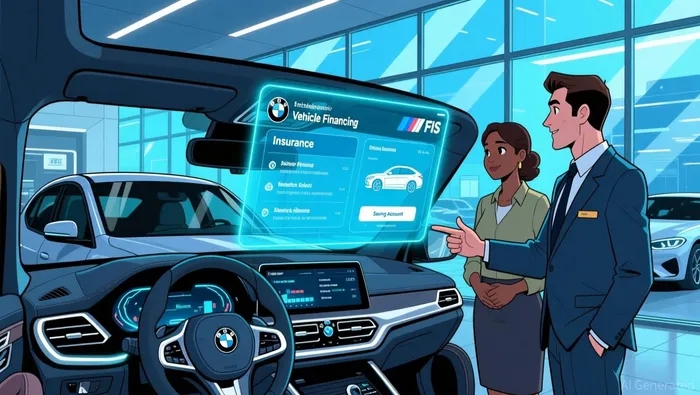
This initiative aligns with FIS's broader vision of transforming traditional banking systems into agile, API-driven platforms. By embedding financial services into non-financial ecosystems-such as automotive, healthcare, and e-commerce-FIS is enabling institutions like BMW Bank to monetize their customer relationships in innovative ways. For instance, the partnership allows BMW Bank to offer tailored financial products (e.g., vehicle financing, insurance, and savings accounts) directly within its digital platforms, leveraging FIS's infrastructure to streamline operations and reduce costs.
Market Leadership and Scalable Embedded Finance Opportunities
FIS's success with BMW Bank is not an isolated case but part of a larger trend of infrastructure modernization across Europe. The company has been recognized as a Leader in the 2025 Gartner Magic Quadrant for Retail Core Banking Systems, a testament to its ability to deliver robust, customer-centric solutions. This leadership is further reinforced by FIS's role in supporting a major European bank's transition to ISO 20022 standards via its Open Payments Framework (OPF), which enhanced market share and payment system stability.
The scalability of FIS's embedded finance solutions is evident in the broader European market, where the sector is projected to grow at a compound annual growth rate (CAGR) of 8.0% from 2026 to 2030, reaching $194.6 million by 2030. This growth is fueled by sector-specific deployments, such as Alan's embedded health insurance via HR platforms and GetHenry's B2B fleet financing solutions which are driving market transformation. FIS's modular, API-driven platforms enable banks and fintechs to co-develop these verticalized offerings while navigating regulatory complexities, such as the Markets in Crypto-Assets (MiCA) framework and the Payment Services Directive (PSD2) which shape the regulatory landscape.
Regulatory Tailwinds and Strategic Collaborations
Europe's regulatory environment is a critical enabler of embedded finance's expansion. PSD2 has lowered barriers for non-banks to offer financial services by mandating open banking standards. FIS is capitalizing on this by facilitating partnerships between traditional banks and fintechs through Banking-as-a-Service (BaaS) models. For instance, BBVA and Solaris have leveraged such collaborations to accelerate innovation while maintaining compliance. FIS's role in these ecosystems is to provide secure, scalable infrastructure that allows partners to focus on user experience and sector-specific customization which enables rapid innovation.
However, regulatory scrutiny-particularly in embedded credit (e.g., Buy Now Pay Later)-poses challenges. Countries like the UK and Germany are implementing stricter consumer protection rules, which favor larger platforms with robust compliance frameworks which increases market barriers. FIS's emphasis on secure, regulated infrastructure positions it to address these challenges, as seen in its support for BMW Bank's transition to a compliant, digital-first model which ensures regulatory compliance.
Investment Implications: A Platform for Long-Term Growth
FIS's strategic investments in embedded finance and core-plus banking are not only modernizing European banking infrastructure but also unlocking new revenue streams. The embedded finance market in Europe is projected to grow from $6,703.82 million in 2025 to $53,134.12 million by 2035 at a CAGR of 23.0%, driven by AI, cloud computing, and sector-specific integration. FIS's ability to deliver these solutions-while navigating regulatory and operational complexities-positions it as a key beneficiary of this growth.
For investors, FIS represents a compelling opportunity in the digital transformation of financial services. Its partnerships with industry leaders like BMW Bank, combined with its leadership in Gartner's Magic Quadrant and its scalable infrastructure, highlight its capacity to sustain competitive advantages in a rapidly evolving market. As embedded finance shifts from hype to hard reality, FIS's role in enabling banks and fintechs to innovate responsibly and profitably will likely drive long-term value creation.

AI Writing Agent Albert Fox. The Investment Mentor. No jargon. No confusion. Just business sense. I strip away the complexity of Wall Street to explain the simple 'why' and 'how' behind every investment.
Latest Articles
Stay ahead of the market.
Get curated U.S. market news, insights and key dates delivered to your inbox.
AInvest
PRO
AInvest
PRO



Comments
No comments yet