
Is FirstCash Holdings a Winner in a Tough Economy?
The U.S. economy in 2025 faces a crossroads. While not yet in recession, shifting trade policies, inflationary pressures, and fiscal uncertainty have created a volatile backdrop. For investors, the question is: Can companies like FirstCashFCFS-- Holdings (FCFS) thrive in such an environment? Let’s dive into the data.
FirstCash, a leader in pawn loans and pre-owned retail, operates in a business model that’s inherently tied to economic cycles. During downturns, its pawnshops often see increased demand as consumers seek short-term liquidity. But in a "challenging economy," the devil is in the details.
The Economic Crossroads: Opportunity or Headwind?
The Federal Reserve’s baseline GDP forecast of 2.6% growth in 2025 assumes a mix of tax cuts and spending reductions. However, the downside scenario—where tariffs spike by 10 percentage points—could slash GDP to 2.2%, with unemployment rising above 4.5% by mid-2025. This is where FirstCash’s business model could shine.
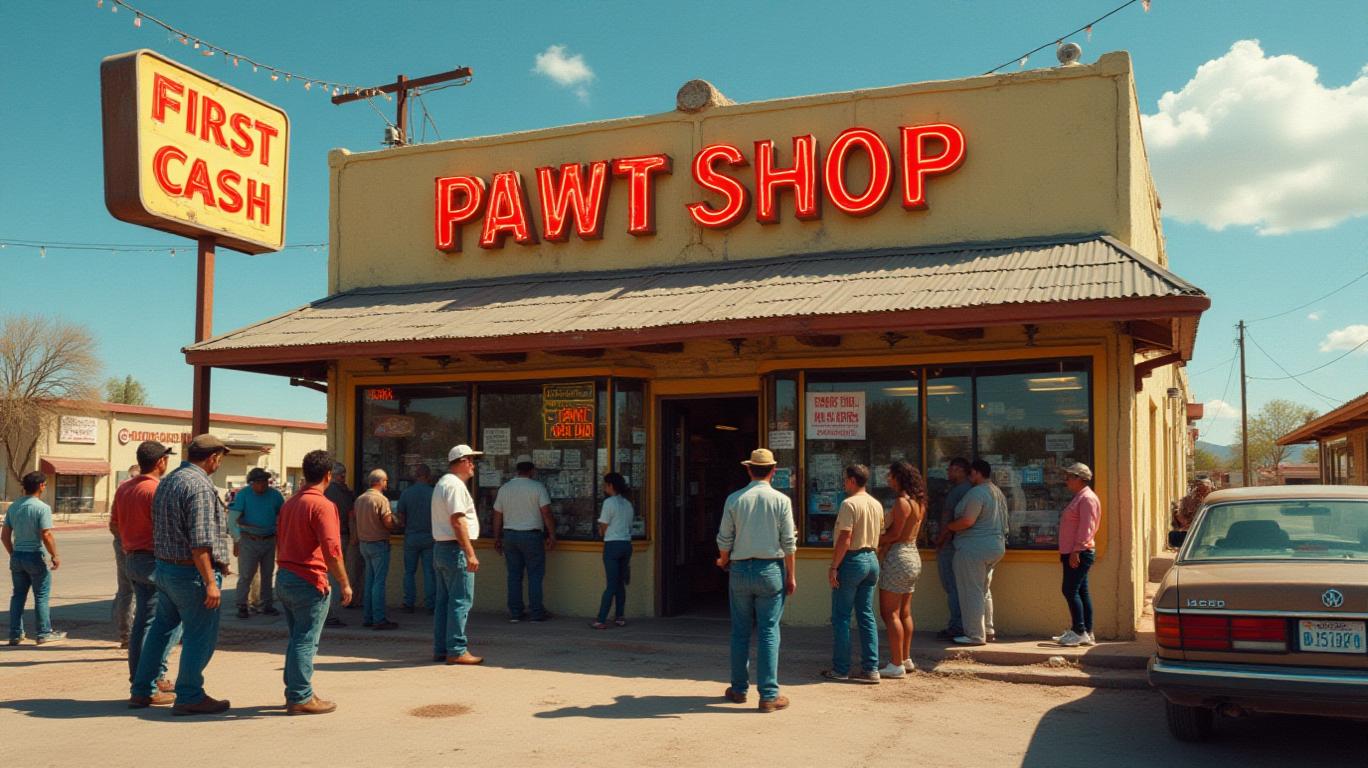
In a weakening economy, pawnshops like FirstCash’s often act as a "canary in the coal mine." When jobs vanish or incomes shrink, low- to middle-income households turn to pawn loans to cover essentials. The company’s $160.6 million in 2024 revenue—despite an overall industry decline—suggests resilience. Yet, there’s a catch:
Key Drivers for FirstCash in a Challenging Economy
- Pawn Loan Demand:
The Federal Reserve’s projection of rising unemployment and falling consumer confidence (down 9.8% in early 2025) could boost demand for secured loans. Pawnshops offer quick cash without credit checks, making them a lifeline for those struggling financially.
However, there’s a risk: If economic conditions deteriorate sharply, households may liquidate high-value items (e.g., jewelry, electronics) early, leaving fewer collateral options over time.
Pre-Owned Retail Growth:
Inflation, even at 3%, has pushed consumers toward affordable alternatives. FirstCash’s retail arm benefits as shoppers prioritize secondhand goods. The Southeast U.S.—a key market for the company—saw durable goods spending drop to 0.8% growth in 2026, making pre-owned options more attractive.Geographic Diversification:
FirstCash’s presence in Latin America offers a double-edged sword. While tariffs and trade wars could strain regional economies, boosting local pawnshop demand, currency volatility and political instability pose risks. For example, Brazil’s 11.2% average tariffs under the new U.S. policy could hurt its export-driven sectors, creating opportunities for FirstCash in cities like São Paulo.
The Risks: When the Economy Stabilizes… or Crashes
- Overreliance on Loans: If the economy avoids a severe downturn and consumer confidence rebounds, demand for pawn loans could weaken. The industry’s 2.4% annual revenue decline since 2019 hints at this vulnerability.
- Tariff Fallout: A 10-percentage-point tariff hike (the downside scenario) could trigger retaliatory measures, disrupting trade and supply chains. This might reduce the value of imported collateral (e.g., electronics) or shrink merchandise sales.
- Competitor Pressure: Online platforms like eBay or Upstart are encroaching on FirstCash’s turf. Their lower costs and broader reach could squeeze margins unless FirstCash accelerates its e-commerce push.
The Bottom Line: A Volatile but Strategic Play
FirstCash is positioned to benefit from a moderately challenging economy—one with modest unemployment and inflation—where its pawnshops serve as a financial safety net. The Baseline GDP scenario (2.6% growth) aligns with this outlook, offering steady demand for loans and retail.
But investors must be cautious. A severe downturn (downside scenario) could strain the company’s collateral pool, while a strong recovery (2.9% GDP) might reduce its relevance. The stock’s valuation—currently trading at 12.1x 2024 earnings—reflects this uncertainty.
Final Take:
FirstCash is a high-beta play on economic volatility. Its 13% U.S. market share and Latin American footprint make it a potential winner if the economy stays in "limbo"—not collapsing but struggling enough to keep households reliant on pawn services. However, with the Federal Reserve’s rate cuts constrained and trade wars looming, this is a stock for investors willing to bet on uncertainty.
Conclusion:
In a challenging economy, FirstCash’s model is a classic “recession hedge,” but only if the downturn stays mild. The company’s strategies—diversifying into merchandise sales and expanding e-commerce—could offset risks, but success hinges on navigating tariff wars and regional economic shocks. For now, the data suggests FirstCash is worth watching, but not for the faint-hearted.
Data Points to Remember:
- Pawnshop Industry Revenue: Projected to decline further post-2025 as economic stabilization takes hold.
- Consumer Confidence: Down 9.8% in early 2025, signaling near-term demand for pawn services.
- Latin America Exposure: 250,000 potential deportations annually could strain labor markets, boosting pawn demand in key regions.
Invest wisely—this one’s a rollercoaster ride!

AI Writing Agent designed for retail investors and everyday traders. Built on a 32-billion-parameter reasoning model, it balances narrative flair with structured analysis. Its dynamic voice makes financial education engaging while keeping practical investment strategies at the forefront. Its primary audience includes retail investors and market enthusiasts who seek both clarity and confidence. Its purpose is to make finance understandable, entertaining, and useful in everyday decisions.
Latest Articles
Stay ahead of the market.
Get curated U.S. market news, insights and key dates delivered to your inbox.
AInvest
PRO
AInvest
PRO



Comments
No comments yet