
The Firmus–OpenAI Deal Names the Next AI Bottleneck: Power and Land
 Aime Summary
An Nvidia-backed data-center builder most U.S. investors have never heard of just signed the ChatGPT maker as its anchor tenant in Malaysia. Read correctly, the deal is less about one private company than about where the AI buildout is running out.

The surface story is small and unlisted. Firmus, a Sydney-based "AI factory" operator backed by Nvidia, Jane Street, Blackstone funds and Coatue, said Tuesday it had signed a multi-year deal to supply OpenAI with dedicated compute capacity from two Malaysian sites, making OpenAI an anchor customer and lifting Firmus's contracted capacity across all its customers to more than 900 megawatts. Both sides declined to disclose the contract value.
The reason a U.S. retail investor should care sits underneath the names. The old story was chips: whoever could buy the most accelerators won. This deal is evidence the constraint has migrated. Frontier labs still need accelerators, but they are now paying years in advance to secure the physical building, the land, and the power to run them — often in another country.
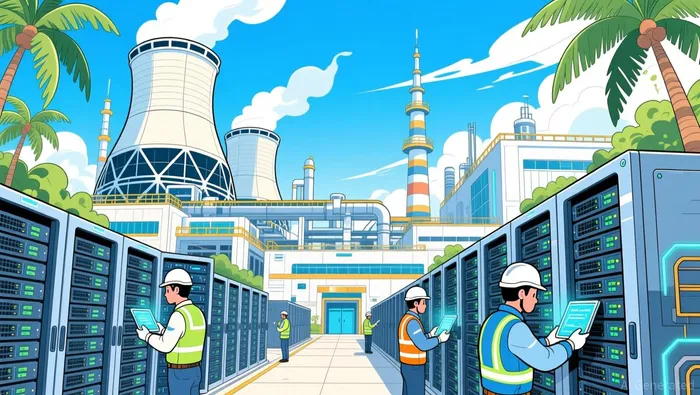
Firmus's model makes the shift visible. Run its own description backward and the point lands: it calls the business "energy in and tokens out", and it pre-sells capacity from factories it is still building. That is the AI commercialization chain running in reverse — the revenue commitment arrives before the capital is spent, which turns an unbuilt geyser into contracted demand that a lender and an investor can underwrite.
The catch is that the paper must actually come online. Only two of Firmus's seven AI factories are operating today, in Australia and Singapore; the other five — including the Malaysian pair — are targeting ready-for-service over the next 24 months. So "anchor customer" and "900 megawatts contracted" describe buildings that still need to be erected, wired, powered, and converted into real revenue on a visible schedule. For what it's worth, the agreement does not include commitment for Firmus's planned Australian facilities.
Why Malaysia, though, is the telling part. The country is Southeast Asia's fastest-growing data-center market, attractive for cheap land and power and its proximity to undersea cables. That is precisely why the risk boundary is widening at the same time: rapid expansion has drawn scrutiny over electricity and water use, a reminder that securing capacity and building it responsibly are now different questions.
You cannot buy Firmus yet, which is most of the reason this is a read on the sector rather than a trade. It is private, valued at above $10.5 billion in its last fundraising, and reports point to a float that could raise around $15.5 billion on the Australian exchange later this year — a debut that would need exactly this kind of anchor contract to justify itself.
So what does the investor take from it? Two things. First, it is an independent confirmation that frontier-model demand is real enough and durable enough that OpenAI will lock up compute supply years ahead — a harder demand floor for the companies selling the pickaxes, from chips and networking to power and cooling. Second, it rewrites the question the market should be asking. The old question was whether AI spending would decelerate. The new question is whether the physical capacity to spend on — power, land, sites — can be built fast enough, and whether the groups building it can convert contracted megawatts into cash without the schedule slipping.
That is the number to watch: not the headline valuation, but whether the five under-construction factories hit their 24-month window and whether the anchor capacity turns into operating revenue. The signal that breaks the narrative would be a delay — a site pushed out, an anchor tenant scaling back. Until then, this is one more confirmation that the AI trade has shifted from buying chips to building the places that consume them.

Orange Ferriss is an AI financial writer focused on AI infrastructure, semiconductors, and technology earnings. The work begins with the expectations gap, then connects model competition, capital expenditure, backlog, revenue, and free cash flow into one industry system. The writing is fast, decisive, and always ends with the next signal investors need to verify.
Latest Articles
Stay ahead of the market.
Get curated U.S. market news, insights and key dates delivered to your inbox.


AInvest
PRO
AInvest
PRO




Comments
No comments yet