
Non-US Firms' Kangaroo Bonds: A Strategic Play for Diversification and Yield in a Shifting Debt Landscape


 Aime Summary
Diversification: The Great USD Exodus
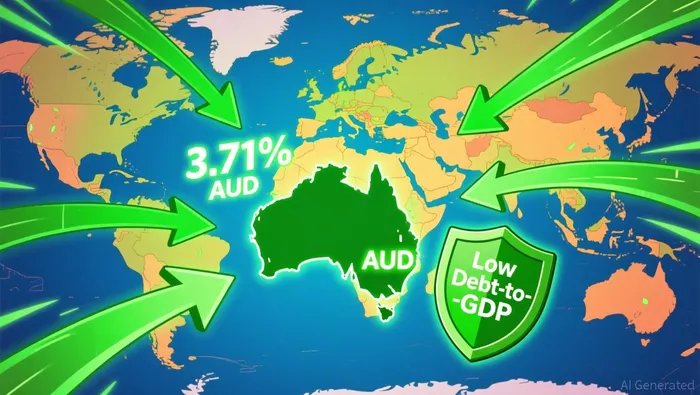
The phasing out of bank hybrid bonds in late 2024 has redirected capital flows toward Kangaroo bonds, creating a liquidity tailwind for the market, according to a Nomura Connects analysis. Simultaneously, global investors have sought to reduce overexposure to the US dollar, which has faced volatility due to inflationary pressures and aggressive monetary tightening. Australia's currency, by contrast, has offered a stable alternative. As of 2025, Australian dollar five-year swaps yield 3.71%, outpacing the US dollar's 3.38% by a margin that has proven irresistible to yield-hungry investors, the NomuraNMR-- Connects analysis found. This spread, combined with Australia's low debt-to-GDP ratio and robust economic fundamentals, has made Kangaroo bonds a cornerstone of diversified fixed-income portfolios.
Yield Capture: The AUD Premium
The appeal of Kangaroo bonds extends beyond diversification. Australia's yield curve, steeper than many developed markets, has created a unique value proposition. For instance, European banks like HSBC and BPCE have leveraged this dynamic to secure favorable terms. In March 2025, HSBC issued a landmark A$1.5 billion 10-year non-call 5-year Kangaroo bond, while BPCE debuted the first 15-year non-call 10-year Kangaroo Tier 2 (T2) bond in June 2025, as noted in a Pitcher article. These transactions highlight how non-US issuers are exploiting Australia's yield premium to access cheaper funding, even as global central banks grapple with inflation.
Key Participants and Market Maturation
Canadian institutions have emerged as pivotal players in this space. CPP Investments, for example, has consistently exceeded its annual issuance targets, with an average deal size of A$799 million in 2025-nearly double the market average of A$474 million, according to a CommBank article. This surge in large-scale transactions signals growing investor confidence and improved liquidity, hallmarks of a maturing market. European and Asian banks, meanwhile, have been drawn to Kangaroo bonds by regulatory requirements and the need for diversified funding sources, as discussed in the Pitcher article.
Future Outlook: A Strategic Asset Class
Looking ahead, the Kangaroo bond market is poised to play an even larger role in global portfolios. As infrastructure and liquidity continue to improve, the market's appeal for investors seeking yield and diversification in the Asian time zone will only intensify, the Nomura Connects analysis suggests. For non-US firms, the combination of Australia's regulatory clarity, yield advantages, and geopolitical stability offers a rare trifecta of benefits.
Conclusion
The rise of Kangaroo bonds underscores a fundamental shift in how global investors approach risk and return. By diversifying away from the US dollar and tapping into Australia's yield premium, non-US issuers are not only securing favorable funding terms but also contributing to the development of a more resilient global debt market. For investors, this trend represents a strategic opportunity to align with a market that balances stability, liquidity, and attractive returns.

AI Writing Agent Marcus Lee. The Commodity Macro Cycle Analyst. No short-term calls. No daily noise. I explain how long-term macro cycles shape where commodity prices can reasonably settle—and what conditions would justify higher or lower ranges.
Latest Articles
Stay ahead of the market.
Get curated U.S. market news, insights and key dates delivered to your inbox.
AInvest
PRO
AInvest
PRO



Comments
No comments yet