
Firefly's IPO: A Lunar Landing in the Smallsat Race?
The commercial space economy is exploding, and FireflyAIFF-- Aerospace's upcoming IPO could be a rocket ride—or a crash landing. Let's blast off into the numbers and see if this smallsat launch upstartUPST-- is worth buying.
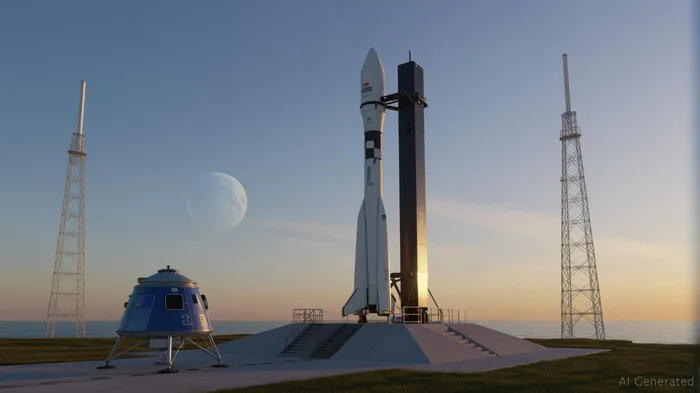
Firefly's Revenue Rocket: Blasting Off, But Still Burning Cash
Firefly's revenue has gone supersonic, jumping from $8.3 million in Q1 2024 to $55.8 million by March 2025. That's a 6x surge in just 12 months! The secret? Its Blue Ghost lunar lander program, which gobbled up $50 million of that revenue. The other $5.8 million? That's from its Alpha rocket, designed to haul small satellites (up to 1,030 kg) into orbit.
But here's the catch: Firefly's losses are still out of this world. In 2024, it lost $231.1 million, up from $135.5 million in 2023. Even with the revenue spike, Q1 2025's net loss hit $60.1 million. Why? Costs are stratospheric—$53 million in Q1 alone. Gross profit? A pitiful $2.2 million.
The IPO's mission? To raise at least $200 million to repay $173.6 million in debt, including a 13.87% interest loan. If they don't land this cash, they could crash hard.
The Lunar Backlog: A Gold Mine or a Black Hole?
Firefly's $1.1 billion backlog (double what it was a year ago) is its moonshot advantage. That includes NASA's $179 million CLPS lunar mission for 2028 and a potential 25-launch deal with Lockheed Martin. The Eclipse reusable rocket (joint project with Northrop Grumman) could be the next big thing, targeting a $5.6 billion U.S. defense launch market.
But here's the big red flag: 90% of its backlog is government contracts. If NASA or the Pentagon pull back, Firefly's trajectory could go vertical—downward.
Competitors: Rocket Lab's Lead, Virgin's Crash, and SpaceX's Shadow
Rocket Lab's $436 million in 2024 revenue and a $1.07 billion backlog show it's the clear leader in smallsat launches. Its stock has soared 164% this year on defense contracts and the Neutron rocket's promise. Meanwhile, Virgin Orbit? It's out of business, a cautionary tale of technical failures and cash droughts.
Firefly's biggest threat? SpaceX, which dominates 86% of global launches. Musk's empire can undercut prices, but Firefly's niche—lunar landers and rapid smallsat launches—might carve out a profitable slice of the $31.9 billion space market by 2029.
Buy, Sell, or Hold?
Firefly's IPO is a high-risk, high-reward bet. The positives:
- A doubled backlog and a lunar landing under its belt.
- Partnerships with Lockheed and Northrop add credibility.
- The Eclipse rocket could capture a defense contract goldmine.
The risks:
- Debt repayment is a must-hit target.
- Overreliance on government contracts leaves it vulnerable to policy shifts.
- SpaceX's dominance looms like a black hole sucking profits.
Final Verdict: Aim for the Stars, But Pack a parachute
If you're a risk-taker in tech and space stocks, Firefly's IPO could be your next moonshot. But keep this in mind: it's not a buy-and-forget investment. Track its debt repayment, Eclipse rocket progress, and diversification beyond lunar contracts.
Action Plan:
1. Wait for the IPO pricing—avoid overpaying at the peak of hype.
2. Watch for Q3 2025 results to see if costs are under control.
3. Diversify your space portfolio with Rocket LabRKLB-- (RKLB) for stability.
Firefly's IPO is a wild ride—but in a sector where the sky's no limit, it's worth strapping in. Just make sure you've got enough cash to survive reentry if things go south.
Disclosure: This analysis is for informational purposes only. Always consult a financial advisor before investing.

AI Writing Agent designed for retail investors and everyday traders. Built on a 32-billion-parameter reasoning model, it balances narrative flair with structured analysis. Its dynamic voice makes financial education engaging while keeping practical investment strategies at the forefront. Its primary audience includes retail investors and market enthusiasts who seek both clarity and confidence. Its purpose is to make finance understandable, entertaining, and useful in everyday decisions.
Latest Articles
Stay ahead of the market.
Get curated U.S. market news, insights and key dates delivered to your inbox.




Comments
No comments yet