
The FIRE Movement's Financial Impact and Investment Implications for Early Retirees
 Aime Summary
The Financial Independence, Retire Early (FIRE) movement has evolved from a niche philosophy to a mainstream strategy for redefining retirement. For those retiring before the traditional age of 65, portfolio sustainability and asset allocation are not just goals—they are lifelines. In 2025, the FIRE movement is no longer about rigidly saving 70% of income or retiring at 30. Instead, it's about crafting a resilient financial framework that adapts to inflation, healthcare costs, and market volatility while preserving long-term wealth.
Portfolio Sustainability: Balancing Risk and Growth
The cornerstone of FIRE is the “Rule of 25,” where investors aim to accumulate 25 times their annual expenses to fund retirement. However, in today's economic climate, this rule has been recalibrated. With inflation eroding purchasing power and healthcare costs rising faster than general inflation, early retirees must adopt a more conservative withdrawal rate—typically 3.25–3.5% instead of 4%. This adjustment means building a larger portfolio to sustain a 30x expense base rather than 25x.
Asset allocation strategies must reflect this shift. A 2025 FIRE investor might allocate 70–80% to equities for growth, 20–30% to bonds for stability, and 5–10% to alternative assets like real estate or dividend-paying stocks. This mix balances the need for compounding returns with downside protection. For example, a portfolio split between the S&P 500 (via low-cost index funds like or ) and high-dividend stocks (e.g., or ) can generate both growth and passive income.
Passive Income: The Unsung Hero of FIRE
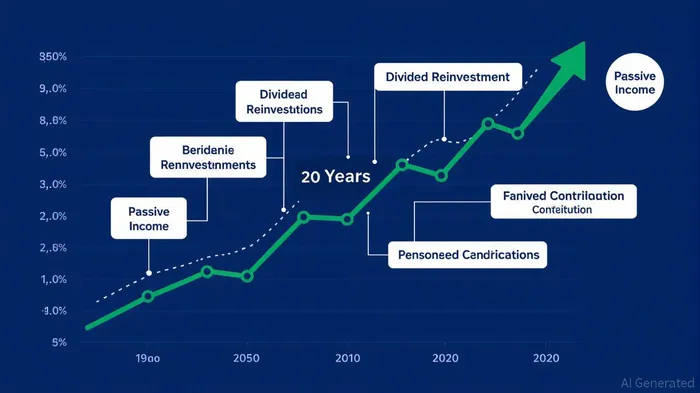
Passive income is no longer a luxury—it's a necessity for early retirees. Traditional FIRE relied heavily on investment returns, but today's landscape demands additional income streams to offset rising costs. Dividend-paying stocks, real estate investments (REITs or rental properties), and side hustles (e.g., remote work, content creation) are now integral to portfolio sustainability.
For instance, a REIT like or can provide steady cash flow while benefiting from long-term appreciation. Similarly, dividend aristocrats like or offer predictable income with lower volatility. These assets act as buffers, reducing the need to liquidate principal during market downturns.
Geographic arbitrage further amplifies passive income potential. By relocating to lower-cost areas (e.g., West Virginia vs. Hawaii), early retirees can stretch their portfolios further. A $100,000 annual portfolio might generate $3,000 in passive income in a high-cost area but $5,000 in a low-cost region, thanks to reduced living expenses.
Risk Management: Navigating the Unknown
Early retirees face unique risks: market crashes, healthcare emergencies, and longevity risk. Mitigating these requires discipline and foresight.
Diversification and Rebalancing: A well-diversified portfolio spreads risk across sectors and geographies. Regular rebalancing (e.g., quarterly or annually) ensures alignment with risk tolerance and goals. For example, after a market downturn, increasing equity exposure can capitalize on undervalued opportunities.
Emergency Reserves: Maintaining 12–24 months of cash reserves in a high-yield savings account (e.g., ) provides a safety net for unexpected expenses. This is critical for early retirees without employer-based insurance or job security.
Healthcare Planning: Medicare is not available until 65, so early retirees must budget for private insurance or health-sharing plans. Allocating 5–10% of the portfolio to healthcare-related investments (e.g., or ) can hedge against rising medical costs.
Tax Efficiency: Utilizing tax-advantaged accounts (401(k)s, Roth IRAs, HSAs) minimizes tax drag. For instance, a Health Savings Account (HSA) offers triple tax advantages—contributions are tax-deductible, growth is tax-free, and withdrawals for qualified expenses are tax-free.
Long-Term Wealth Preservation: Beyond the FIRE Number
Achieving financial independence is not the end but the beginning. Long-term wealth preservation requires a mindset shift from accumulation to stewardship.
- Coast FIRE: For those who have already saved enough to sustain their desired lifestyle (e.g., 30x expenses), the focus shifts to income growth and passive income. Continuing to work part-time or pursuing low-stress jobs (e.g., consulting, teaching) can provide flexibility without sacrificing financial security.
- Barista FIRE: Combining early retirement with part-time work allows retirees to cover healthcare costs and enjoy social engagement. A part-time job generating $20,000 annually could reduce the required portfolio size by 20%, easing pressure on investment returns.
- Geo-Arbitrage and Remote Work: Leveraging remote work to live in low-cost areas while maintaining high-income jobs (e.g., software development, copywriting) accelerates portfolio sustainability. This strategy also insulates retirees from regional economic downturns.
Investment Advice for 2025 and Beyond
- Adopt a Dynamic Asset Allocation: Start with 80/20 equities/bonds and adjust as you near retirement. For example, reduce equity exposure to 60–70% in your 50s to protect gains.
- Prioritize Passive Income: Allocate 10–15% of your portfolio to high-dividend stocks or REITs. Reinvest dividends to compound growth.
- Hedge Against Inflation: Include TIPS (Treasury Inflation-Protected Securities) and commodities (e.g., ) in your portfolio.
- Plan for Healthcare: Use HSAs and allocate to healthcare ETFs like .
- Embrace Flexibility: Consider Coast or Barista FIRE if traditional FIRE feels unattainable. Financial independence is a spectrum, not a binary outcome.
Conclusion
The FIRE movement in 2025 is a testament to adaptability. While the dream of retiring at 30 with $1 million remains aspirational, the reality is a mosaic of strategies tailored to individual circumstances. Portfolio sustainability, passive income, and risk management are no longer optional—they are essential pillars of a resilient financial plan. By embracing these principles, early retirees can navigate economic uncertainties and build a legacy of long-term wealth.

Delivering real-time insights and analysis on emerging financial trends and market movements.
Latest Articles
Stay ahead of the market.
Get curated U.S. market news, insights and key dates delivered to your inbox.


AInvest
PRO
AInvest
PRO



Comments
No comments yet