
How Fintech Leadership is Reshaping Institutional Investment Opportunities in Capital Markets
The fintech revolution has entered a new phase, where entrepreneurial innovation in capital markets is not just disrupting legacy systems but actively creating institutional-grade investment opportunities. From 2023 to 2025, the sector has demonstrated resilience and scalability, with global fintech startups raising $10.3 billion in 2025 alone-a figure that underscores the sector's maturation and institutional appeal, according to a TechCrunch report. This growth is driven by visionary leadership strategies that leverage technology, partnerships, and regulatory agility to unlock value for investors.
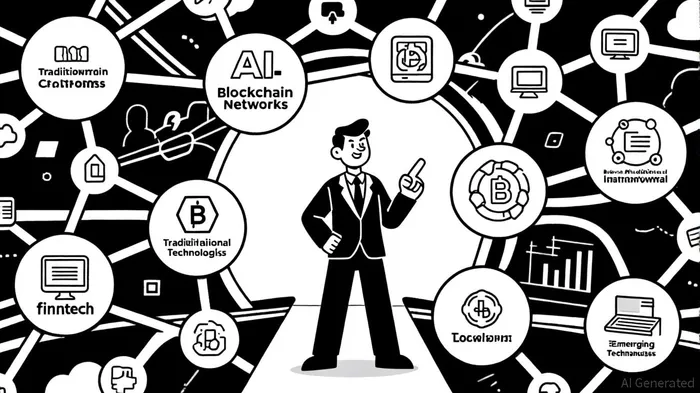
Strategic Partnerships: Bridging Traditional and Digital Finance
One of the most transformative leadership strategies in fintech is the structuring of strategic partnerships to scale institutional-grade solutions. For example, BNP Paribas has partnered with fintechs like Kantox and Fnality International to streamline trade workflows, reduce settlement times, and offer cutting-edge risk management tools, according to a BNP Paribas report. These collaborations enable traditional financial institutions to access fintech-driven efficiencies while mitigating operational risks-a critical factor for institutional investors seeking stable returns.
Embedded finance further exemplifies this trend. By integrating banking services into non-financial platforms (e.g., retail, healthcare, and logistics), fintechs are creating seamless capital access for underserved markets. The embedded finance market is projected to reach $230 billion by 2025, driven by APIs and Banking-as-a-Service (BaaS) models, according to Fintech Magazine. This expansion not only democratizes financial services but also attracts institutional capital by demonstrating scalable, recurring revenue streams.
AI and Blockchain: Enabling Precision and Trust
Leadership in fintech is increasingly defined by the ability to harness artificial intelligence (AI) and blockchain for institutional-grade applications. AI-driven credit analysis, for instance, is expanding access to capital by evaluating alternative data points such as digital footprints and social media behavior. In Latin America, fintechs using these tools have increased credit accessibility for small businesses and individuals previously excluded from traditional banking, according to a Delphos blog.
Blockchain-based asset tokenization is another game-changer. Platforms enabling fractional ownership of real estate, corporate bonds, and private equity are democratizing institutional investments. For example, iCapital, a leader in alternative investments, now services $257 billion in assets through a centralized digital platform, offering institutional-grade liquidity and transparency, according to a PitchBook article. Tokenization reduces barriers to entry for investors while enhancing asset utilization for fintechs.
Case Study: Felix and India's UPI-Leadership in Emerging Markets
Institutional-grade opportunities are particularly evident in emerging markets, where fintech leadership is addressing financial inclusion gaps. Felix, a U.S.-based fintech targeting Latino immigrants, raised $75 million in a Series B round in 2025 by leveraging hyper-personalized financial products and cross-border payment solutions, as reported by TechCrunch. Similarly, India's Unified Payments Interface (UPI) processed 19.47 billion transactions in July 2025, showcasing a scalable infrastructure that supports institutional capital raising, according to an Innovate Finance report. These examples highlight how fintechs in emerging markets are structuring partnerships with development finance institutions (DFIs) and private credit funds to secure first-loss capital and expand their reach.
Regulatory Agility and Cybersecurity: Pillars of Institutional Trust
Institutional investors prioritize fintechs that navigate regulatory complexities with agility. Leaders are adopting RegTech 3.0 solutions, which use AI for real-time compliance monitoring and predictive risk analytics, as noted in a Fintech Magazine article. For instance, the U.S. banking agencies' 2024 guidance on bank-fintech arrangements emphasizes robust oversight in third-party collaborations, ensuring compliance with anti-money laundering (AML) and fair lending obligations, as outlined in FDIC guidance. Cybersecurity expertise is equally critical, as fintechs handle sensitive financial data and digital assets. Leaders with skills in zero-knowledge proofs and decentralized identity verification are now in high demand to build trust with institutional stakeholders.
Future Trends: B2B Fintech and Onchain Finance
The next wave of institutional-grade opportunities will emerge from B2B(2X) fintech and onchain finance. B2B fintech solutions, which capture 60% of the largest payments investments in Q2 2025, offer sticky revenue models by embedding financial services into enterprise workflows, according to a BCG analysis. Meanwhile, onchain finance-leveraging blockchain for transparent, programmable capital markets-is projected to reduce transaction costs by 12.5% in international money transfers by 2030, according to Deloitte predictions. These innovations align with institutional investors' demand for efficiency, transparency, and diversification.
Conclusion
Fintech leadership is redefining capital markets by blending technological innovation, strategic partnerships, and regulatory foresight. As institutional investors seek scalable, high-impact opportunities, fintechs that prioritize profitability, AI-driven personalization, and blockchain-based trust mechanisms will dominate the landscape. The sector's projected growth-fintech revenues to expand at 15% annually from 2023 to 2028, according to a McKinsey analysis-underscores the urgency for investors to align with leaders who can navigate this dynamic ecosystem.

The AInvest News Editorial Team consists of experienced financial journalists and editors who oversee all published content. While our newsroom leverages advanced AI tools to assist in data gathering and draft generation, every article is reviewed, fact-checked, and approved by human editors to ensure accuracy, clarity, and transparency.
Latest Articles
Stay ahead of the market.
Get curated U.S. market news, insights and key dates delivered to your inbox.


AInvest
PRO
AInvest
PRO



Comments
No comments yet