
FinTech Innovation 2026: How AI and Strategic Hiring Are Shaping the Future
 Aime Summary
- AI and IoT integration is enabling real-time personalization, fraud detection, and operational resilience in fintech according to industry analysis.
- Strategic hiring in 2026 emphasizes product, regulatory, and commercial capabilities rather than volume .
- Regulatory developments in 2026, particularly in the EU and US, are focused on digital finance governance, AI, and cybersecurity as fintech reports indicate.
- Smaller, task-specific AI models are gaining traction due to their security and governance advantages over general-purpose models according to industry experts.
- Fintech and credit unions are challenging traditional banks by offering better terms, customer service, and digital-first experiences .
In 2026, fintech is evolving rapidly. Artificial intelligence and the Internet of Things are no longer just buzzwords but core components of financial services. From real-time fraud detection to conversational banking, AI and IoT are reshaping how consumers and businesses interact with money. At the same time, hiring and regulatory strategies are becoming more strategic, signaling a maturing industry that's less about scaling fast and more about building sustainable, compliant innovation.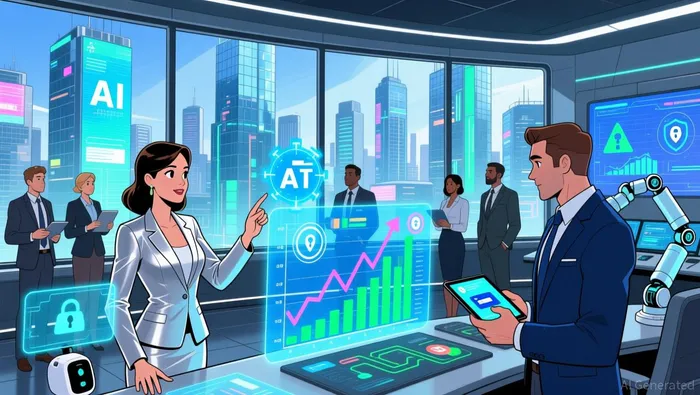
This is the year where fintech is not just adapting to change but driving it. And for investors, understanding the interplay between AI adoption, regulatory clarity, and talent strategy is key to identifying the next big opportunities.
How Is AI and IoT Reshaping FinTech in 2026?
AI and IoT are no longer peripheral to fintech—they are central. In 2026, leading firms are embedding these technologies into their core workflows to deliver real-time personalization and fraud detection. For example, Oracle Financial Services is using AI-infused applications to reimagine retail banking, enabling conversational AI and predictive analytics as industry analysis shows. IoT, meanwhile, is enabling smart devices to collect real-time data, improving decision-making in embedded finance and other areas according to market reports.
But the benefits of AI and IoT go beyond operational efficiency. These technologies are also helping fintech firms respond to regulatory demands for digital finance governance and cybersecurity. PwC highlights that those with enterprise-wide AI strategies are outpacing competitors, as these strategies align with business goals and drive transformation according to industry research. In a sector where regulatory agility is as important as product innovation, AI and IoT are proving to be strategic differentiators.
Why Is Strategic Hiring a Priority for Fintech in 2026?
Fintech hiring is no longer about speed. In 2026, companies are shifting from volume-based recruitment to strategic, outcomes-driven hiring, emphasizing product development, regulatory compliance, and commercial operations . This trend reflects a broader industry focus on building long-term capabilities rather than chasing short-term gains. The shift also signals that fintech firms are becoming more mature and investor-ready, prioritizing sustainability over scale.
This change in hiring strategy is particularly important given the growing complexity of fintech. With AI, IoT, and digital assets reshaping the industry, firms need talent that can navigate regulatory changes, manage cross-sector partnerships, and innovate responsibly. The result is a more disciplined and capable workforce, which is critical for companies aiming to lead in this transformation.
What Does the Regulatory Landscape Look Like in 2026?
Regulatory clarity is a key theme in 2026. In the EU, the European Insurance and Occupational Pensions Authority (EIOPA) released a report on the use of in insurance, while the European Securities and Markets Authority (ESMA) updated guidelines for assessing knowledge and competence under as regulatory analysis shows. In the US, the Digital Commodity Intermediaries Act has granted the CFTC new authority over digital commodities, and the SEC and CFTC re-launched to modernize blockchain regulations according to regulatory updates.
Asia is also seeing significant developments. Hong Kong plans to introduce virtual asset regulation aligned with the , and the Cayman Islands Monetary Authority (CIMA) has introduced new rules for virtual asset service providers as regional developments indicate. These regulatory updates reflect a global push for digital finance governance and operational resilience. As a result, fintech firms that can navigate these evolving rules will have a competitive edge.
What Trends Are Shaping Consumer Banking Preferences in 2026?
Consumer banking is being reshaped by fintech and credit unions. These institutions are offering better terms, improved customer service, and increased accessibility for commercial lending. Credit unions, in particular, are gaining traction due to their nonprofit model and community-focused approach. According to the Federal Reserve, credit unions have grown their household portfolio lending faster than U.S. banks since 1990 .
Meanwhile, digital-first banks like Acorns, Ally, and Chime are gaining traction, especially among younger generations. Legacy banks are adapting by integrating digital services and partnering with fintech startups, such as Stride Bank's collaboration with Affirm . These trends reflect a broader shift in consumer preferences toward digital-first, community-focused financial services.
What Are the Key Opportunities for FinTech in 2026?
2026 is a pivotal year for fintech. Opportunities are emerging in several key areas. First, AI and IoT adoption is enabling more personalized, real-time financial services. Second, regulatory clarity in the US, EU, and APAC is creating a more supportive environment for innovation, particularly in digital assets and AI governance. Third, strategic hiring and cross-sector partnerships are helping fintech firms build long-term capabilities and investor-ready models.
For investors, the key is to focus on firms that are not just leveraging technology but doing so in a way that aligns with regulatory and market trends. This includes companies that are integrating AI and IoT strategically, navigating regulatory changes with agility, and building sustainable business models. As the fintech landscape continues to evolve, these firms will likely outperform their peers and lead the next wave of innovation.

Stay ahead of the market.
Get curated U.S. market news, insights and key dates delivered to your inbox.


AInvest
PRO
AInvest
PRO



Comments
No comments yet