
Fintech crypto groups urge Trump to defend open banking as banks escalate legal pushback
 Aime Summary
A coalition of trade groups representing fintech865201--, crypto, retail, and restaurant industries861170-- has urged Donald Trump to defend open banking rules, as major banks escalate legal and financial efforts to block their implementation. In a July 23 letter, organizations including the Blockchain Association and the Financial Technology Association argued that banks are stifling innovation by imposing “stunning” data fees and challenging regulations that grant consumers control over their financial information. The letter emphasized that “financial data belongs to the American people, not the banks,” framing open banking as a cornerstone of free markets and personal liberty [1].
The dispute centers on rules finalized in October 2024, which enable consumers to share bank data with third-party apps via secure APIs. These regulations, hailed as critical for stablecoins, DeFi platforms, and crypto on-ramps, faced immediate legal resistance from the Bank Policy Institute—a group representing institutions like JPMorgan ChaseJPM--, Wells FargoWFC--, and Bank of AmericaBAC--. Banks argue the rules pose security risks and unfairly burden incumbents, while advocates stress they enhance competition and consumer choice.
The banks’ pushback includes direct financial tactics. JPMorganJPM--, for instance, announced plans to charge fintech firms fees for accessing customer data, with higher rates for payment platforms. Pricing structures sent to clients vary based on data usage, signaling a strategic attempt to limit third-party access [1]. Meanwhile, traditional banks are paradoxically deepening their involvement in crypto. In May 2024, MastercardMA-- and major U.S. banks participated in a tokenization pilot for blockchain-based settlements. JPMorgan further filed a trademark application for “JPMD,” a stablecoin for institutional use, reflecting the sector’s dual approach: resisting open banking while embracing crypto infrastructure [1].
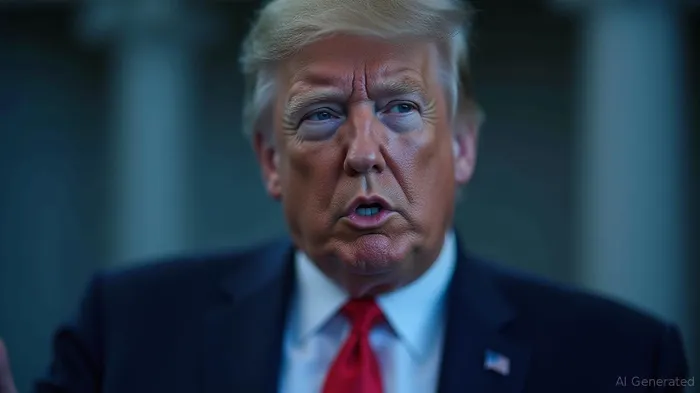
Trump’s administration has become a focal point of this conflict. Known for his pro-crypto stance, Trump has positioned the U.S. as a “crypto capital,” signing the GENIUS Act in July with rhetoric underscoring his commitment to innovation. However, his deregulatory leanings align more closely with banks’ preferences, creating tension with fintech and crypto advocates who view open banking as essential for technological progress. The coalition’s letter requests a legal brief by July 29 to affirmAFRM-- consumer ownership of financial data, arguing that the outcome will shape access to crypto exchanges, stablecoin wallets, and payment apps [1].
The debate highlights a broader ideological divide in finance. Proponents of open banking cite global precedents, such as the U.K. and EU, where such frameworks have driven innovation and reduced costs. Critics, however, warn of risks to data privacy and systemic stability. Analysts note that the U.S. market’s concentration of large banks complicates adoption, as incumbents seek to preserve their dominance. If open banking faces regulatory rollbacks, stablecoins and DeFi platforms could lose critical integration with traditional banking systems, hindering their utility [2].
As the 2024 election approaches, the issue has taken on heightened political significance. Trump’s allies in banking have long lobbied for reduced oversight, while fintech and crypto groups increasingly align with progressive agendas to protect open banking. The resolution of this conflict will depend on balancing innovation with risk management—a challenge central to the future of finance. For now, the pressure on Trump’s administration underscores the interconnectedness of regulatory policy and financial innovation, with implications for how digital finance evolves in the coming years.
Source: [1] [title: Fintech, crypto groups press Trump to protect open banking amid bank pushback] [url: https://cointelegraph.com/news/fintech-groups-trump-open-banking-banks-crypto] [2] [title: Fintech and cryptocurrency industry groups have intensified pressure...] [url: https://cointelegraph.com/news/fintech-groups-trump-open-banking-banks-crypto]

Stay ahead of the market.
Get curated U.S. market news, insights and key dates delivered to your inbox.
AInvest
PRO
AInvest
PRO



Comments
No comments yet