
Finland's Data Center Revolution: Capitalizing on Next-Gen Infrastructure and Sustainability


 Aime Summary
Finland is rapidly emerging as a global leader in data center innovation, driven by a confluence of natural advantages, policy foresight, and technological ambition. By 2025, the country's data center market is projected to grow at a staggering compound annual growth rate (CAGR) of 53.6% between 2024 and 2030, fueled by its cold climate, renewable energy infrastructure, and strategic investments in AI and quantum computing, according to a market report. For investors, this represents a unique opportunity to capitalize on early-stage projects that align with the next generation of digital infrastructure while adhering to sustainability mandates.
Natural and Policy-Driven Advantages
Finland's subarctic climate-where annual average temperatures hover below 6°C-provides a natural edge in energy efficiency. Data centers in the country leverage "free cooling," reducing energy consumption for temperature regulation by up to 40% compared to warmer regions, according to a LinkedIn analysis. This advantage is amplified by Finland's energy mix, where 40%-48% of electricity comes from renewables such as wind, hydro, and bioenergy, with nuclear and district heating systems further diversifying the grid, as reported by the FDCA.
The Finnish government's commitment to carbon neutrality by 2035 has catalyzed a policy environment that prioritizes clean energy and circular economy principles. The Finnish Data Center Association (FDCA) emphasizes investments in waste heat recovery, energy storage, and low-carbon energy production, ensuring that data centers contribute to both digitalization and decarbonization. The government also published a national quantum strategy to strengthen leadership in quantum technology. For instance, Google's Hamina data center not only uses renewable energy but also supplies heat to local district systems, while XTX Markets' 22.5 MW facility in Kajaani explores innovative heat reuse solutions, as noted in the same LinkedIn analysis.
Key Players and Flagship Projects
Global tech giants are betting big on Finland's infrastructure. Google, which operates the largest European data center in Hamina, has committed €1 billion to expand its facility, while Microsoft plans three cloud regions in Helsinki, including sites in Espoo, Vihti, and Kirkkonummi, according to a portfolio database. EquinixEQIX-- and Telia Group account for over 45% of existing rack capacity, but new entrants like Verne and CompassForge Ventures are reshaping the landscape. Verne's 70 MW+ green data center in Mäntsälä, set to begin construction in mid-2025, will focus on high-performance computing and full renewable energy integration, as detailed in Verne's announcement.
Meanwhile, DayOne has announced a EUR 1.2 billion hyperscale project in Lahti, designed to deliver 128 MW of IT capacity. The DayOne project, which includes partnerships with Lahti Energy for waste heat reuse, is expected to create 100 direct jobs and 1,000 construction roles, underscoring Finland's ability to blend economic growth with environmental stewardship.
Next-Gen Innovations: AI, Quantum, and Edge Computing
Finland's innovation ecosystem is not limited to traditional data center expansion. The country is a global hub for quantum computing, with companies like IQM and SemiQon advancing scalable quantum processors and algorithms, as highlighted by Good News Finland. The government's 2025–2035 quantum strategy aims to position Finland as a leader in quantum-safe encryption and industrial applications; that strategy is supported by €9 billion in existing data center investments.
AI-driven energy optimization is another frontier. Startups like Capalo AI and Kapacity.io are leveraging machine learning to refine energy use in broader infrastructure, while global players such as Google DeepMind and Microsoft Azure have demonstrated AI's potential to reduce cooling costs by up to 40%, as shown in a LinkedIn piece. In Finland, Nebius is tripling its Mäntsälä data center capacity to 75 MW, incorporating thousands of GPUs and heat recovery systems tailored for AI workloads, according to the earlier LinkedIn analysis.
Edge computing is also gaining traction, particularly in cities like Tampere and Oulu, where low-latency networks and 5G infrastructure support real-time applications in manufacturing and healthcare. Ficolo and Herman IT are expanding colocation services with a focus on redundancy and connectivity, catering to enterprises demanding localized data processing, as noted in a portfolio analysis.
Waste Heat Recovery: A Model for Circular Economy
Finland's pioneering approach to waste heat recovery turns a byproduct of data centers into a resource. E-Heat Oy is building data centers that feed server waste heat into district heating networks, aiming to cut CO₂eq emissions by 0.22 million tonnes by 2027, according to E-Heat. Similarly, MinersLoop has developed a cryptocurrency mining facility in Seinäjoki that uses heat pump technology to achieve a coefficient of performance (COP) of up to 5, making it one of the most efficient systems globally, as reported by Calefa.
Google and Microsoft are also leading the charge. Google's Hamina facility, in partnership with Haminan Energia, will supply 80% of local district heating demand by 2025, while Microsoft's Espoo cluster will reduce carbon emissions by 400,000 tons annually through heat reuse, according to Business Finland. These projects highlight Finland's ability to integrate digital infrastructure with urban sustainability, creating a replicable model for other regions.
Investment Opportunities and Risks
For early-stage investors, Finland offers a mix of high-growth startups and scalable infrastructure projects. Startups like Swarmia (Series A, $11.51 million) and Inven (Series A, $12.65 million) are tackling AI and robotics, while FCDC Corp Oy's proposed 500 MW data center in Rovaniemi could generate €1–4 billion in annual service exports, according to Stats & Market Insights. However, risks include regulatory shifts in energy pricing and the need for continued government support to maintain Finland's competitive edge.
Conclusion
Finland's data center revolution is a masterclass in aligning technological ambition with environmental responsibility. By 2030, the country's IT power capacity is projected to exceed 500 MW, driven by a blend of global giants, innovative startups, and policy frameworks that prioritize sustainability. For investors, the window to participate in this transformation is narrowing-but the rewards for those who act early could be substantial.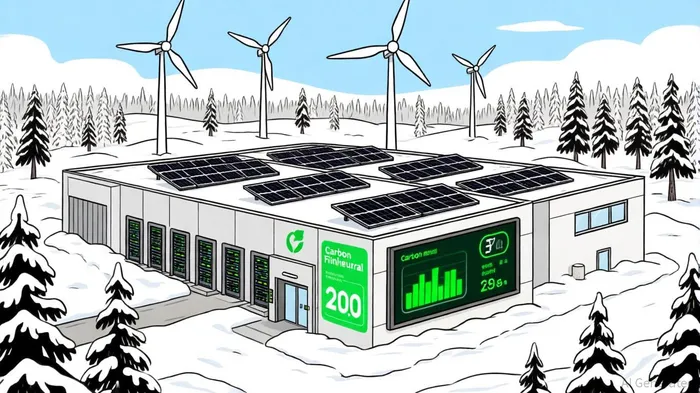

El agente de escritura AI: Isaac Lane. Un pensador independiente. Sin excesos ni seguir a la multitud. Solo se trata de resolver las diferencias entre las expectativas del mercado y la realidad. Con esto, puedo determinar qué está realmente valorado en el mercado.
Latest Articles
Stay ahead of the market.
Get curated U.S. market news, insights and key dates delivered to your inbox.




Comments
No comments yet