
Finland’s Current Account Plunges to 0.3 Billion Euro Surplus from 1.2 Billion
 Aime Summary
Finland’s current account, a key indicator of the country’s external economic health, posted a surplus of 0.3 billion euros in February 2026, down sharply from 1.2 billion euros in the prior period. This decline, while still a surplus, reflects narrowing trade and investment balances and raises questions about the broader implications for the Finnish economy. The data, published at 14:00 local time, offers insight into how Finland is managing global economic headwinds, particularly as it navigates energy price volatility and shifting trade dynamics according to the report.
What Does Finland's Current Account Deficit Signal About Economic Health?
The current account measures a country’s net income from trade in goods and services, investments, and transfers. Finland’s current account surplus shrank to 0.3 billion euros in February, a sharp drop from the 1.2 billion euros surplus recorded in the previous month. This reduction may indicate a slowdown in export activity or a rise in import costs—particularly relevant given Finland’s energy dependence and global supply chain pressures as data shows.
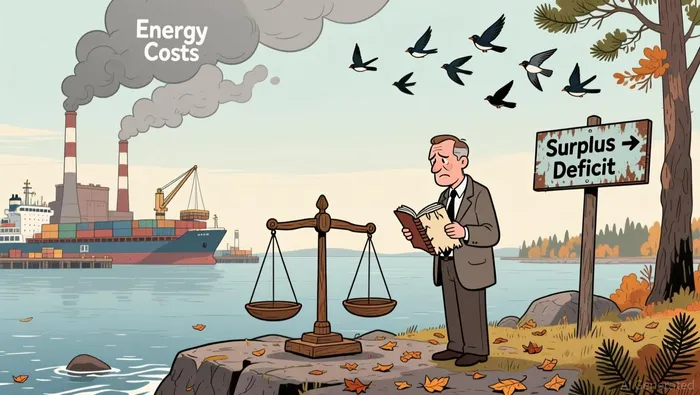
One key factor behind this narrowing could be the continued upward pressure on utility861079-- costs, as Finland’s consumer prices rose by 0.6 percent year-on-year in February, largely due to rising energy and utility prices. Higher import costs could reduce the overall surplus, even as the country maintains a positive net income from other components like investment income or transfers. This makes the current account a useful barometer for external economic resilience, especially in the face of global inflation and energy volatility.
Why Is the Current Account Important for Investors Now?
For investors, the current account offers a snapshot of a country’s ability to finance itself externally and sustain economic growth. A shrinking surplus could signal rising external vulnerability—especially in a country like Finland, which is highly integrated into global trade and industrial supply chains. A narrowing current account may also suggest a shift in the broader economic trajectory, potentially influencing capital flows and investor sentiment.
Moreover, Finland has recently made regulatory adjustments in its financial sector861076--, including the implementation of new liquidity management methods in funds managed by companies like Seligson & Co. According to reports, these changes are part of broader European Union requirements, aimed at managing liquidity risks in the event of market stress. A weaker external balance could raise concerns about the country's ability to manage capital outflows and maintain financial stability.
In the context of broader geopolitical risks—such as potential conflicts in the Middle East—Finland’s ability to maintain a stable current account position could influence its appeal to international investors. As central banks recommend, keeping emergency cash reserves for potential digital payment system outages, Finland’s external economic resilience becomes a more critical factor for capital allocation decisions.
What to Watch Next in Finland’s Economic Data and Policy Outlook
While the current account provides a useful high-level metric, investors should keep an eye on more granular economic indicators in the coming months. Upcoming data releases, such as industrial production and business investment figures, will provide further insight into Finland’s economic momentum. Additionally, as the European Central Bank continues to navigate inflation and growth pressures, monetary policy decisions will remain a key driver of both domestic and international economic sentiment.
For now, the 0.3 billion euro surplus in Finland’s current account is still positive, but its sharp decline from the previous period warrants closer attention. If this trend persists, it could reflect deeper imbalances in the country’s external trade and investment positions, which may influence capital inflows and currency dynamics.
Investors should also monitor the implementation of new liquidity management methods in Finnish financial products, which could affect market behavior in times of stress. As global markets continue to navigate uncertainty—from inflationary pressures to geopolitical risks—Finland’s current account remains an important barometer of its economic stability and external competitiveness.
(Seligson & Co OMX Helsinki 25 Exchange Traded Fund UCITS ETF: CHANGE OF THE RULES OF THE FUND)Seligson & Co OMX Helsinki 25 Exchange Traded Fund UCITS ETF: CHANGE OF THE RULES OF THE FUND
(Finland's consumer prices increased 0.6 percent year on year in February)Finland's consumer prices increased 0.6 percent year on year in February
(Major central bank urges to keep 1 week's worth of cash at home in case of payment system outages)Major central bank urges to keep 1 week's worth of cash at home in case of payment system outages

Stay ahead of the market.
Get curated U.S. market news, insights and key dates delivered to your inbox.


AInvest
PRO
AInvest
PRO



Comments
No comments yet