
The Fine Print Trade: Why Nongshim RedForce’s 43% Price Against T1 Is a Rules Bet, Not Just a Win Bet
 Aime Summary
Lead
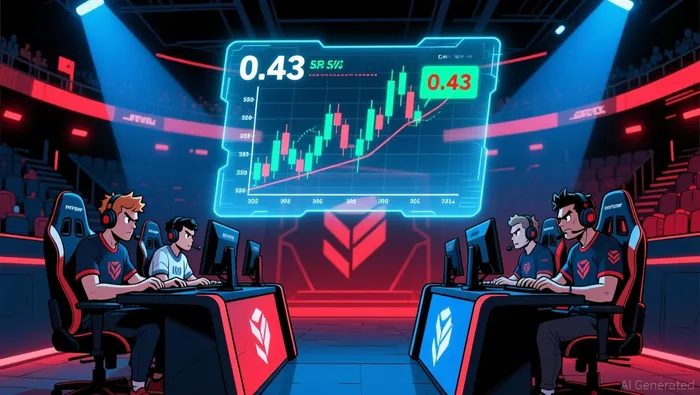
The KeSPA Cup Last Chance Qualifier market between Nongshim RedForce and T1 is trading at 0.43, pricing RedForce as a slight underdog in a matchup where legacy brand power typically commands a premium. This article examines why the current price reflects more than just head-to-head power rankings. It disentangles genuine information from a low-catalyst news environment, analyzes how specific resolution rules—particularly around forfeits and data source delays—create embedded tail risks, and assesses whether recent short-term price momentum is backed by genuine volume or thin-air volatility.
Event Definition
The Polymarket contract asks: who will win the best-of-three League of Legends match between Nongshim RedForce and T1 in the KeSPA Cup Last Chance Qualifier? The settlement trigger is straightforward—the winning team—but the resolution mechanics introduce nuance. The core disagreement is not simply about on-stage performance but about whether the market is correctly pricing the probability of a T1 victory given the structural risks embedded in the contract’s fine print.
News & Information Increments
The information environment surrounding this specific KeSPA Cup qualifier is remarkably quiet. No recent roster moves, scrim leaks, or meta-shifting patch notes tied directly to these two rosters have surfaced in the immediate run-up. The broader news cycle is dominated by unrelated corporate earnings and regulatory filings—PostNL’s flat revenue, ServiceTitan’s narrowing losses, and Planet Fitness securities litigation—none of which carry any weight for esports pricing.PostNL's flat revenue.
This absence of catalysts is itself a market condition. In a low-information regime, prices tend to anchor on historical priors—in this case, T1’s institutional legacy and RedForce’s reputation as a less consistent LCK organization. Without fresh fundamental inputs, the 0.43 price point likely reflects a slow drift of sentiment rather than a sharp repricing triggered by news. The risk is that thin catalysts amplify noise: any sudden rumor or lineup speculation could cause outsized swings simply because the market lacks a firm informational anchor.
Market Resolution Rules Analysis
The market resolves to the team officially declared the winner. If the match is canceled, tied, or delayed beyond seven days without a result, it settles at 50-50. The critical distinction lies in forfeiture timing. If a team forfeits, is disqualified, or walks over after the match has begun, the remaining team is deemed the winner. If a team withdraws before the match starts, resulting in a forfeit, the contract resolves to 50-50. The primary resolution source is gol.gg, with a fallback to credible consensus reporting if results are not published within two hours of the match’s conclusion.
Rule Risk Points & Disputed Scenarios
Two main risks lurk in the contract language. First, a timing mismatch between the scheduled start and gol.gg’s publication cadence could trigger the fallback clause, introducing subjective interpretation of what constitutes “credible reporting.” Second, the forfeit distinction—pre-start versus post-start—creates a binary settlement cliff. A last-minute withdrawal due to technical issues or player illness before the game clock begins would resolve to 50-50, wiping out any directional bet, while the same issue occurring seconds after the match starts would settle to the opponent. This edge is not academic; it means the 0.43 price embeds a small but non-zero probability of a rule-driven 50-50 outcome that has nothing to do with in-game skill.
Market Overview
At a last trade price of 0.43, the market implies approximately a 43% probability that Nongshim RedForce wins outright under the contract’s terms. The bid-ask spread sits at a tight 0.42–0.43, suggesting efficient price discovery for a mid-tier esports event. However, the one-day price change of +0.055 and one-hour change of +0.06 indicate a short-term bullish tilt toward RedForce, despite the flat one-week price change of zero. This pattern points to a recent burst of positioning rather than a sustained re-rating. With a 24-hour volume of roughly 138,000 and liquidity depth near 194,000, the market shows moderate structural support, though it remains a single-event pool without broader cross-market context.
Market Dynamics: Volatility & Volume
The one-day price swing of 5.5 cents stands in sharp contrast to the negligible one-week, one-month, and one-year changes, all of which are effectively zero. This suggests that the market was largely dormant until very recently, with most price discovery compressed into the final hours before the match. The identical longer-period figures indicate that no sustained trend existed—this is a market waking up at the last moment.
Crucially, the 24-hour volume of approximately $149,600 does back the recent price move with genuine trading activity, falling in the upper range of moderate interest. The price increase is not merely a function of a few large orders moving a thin book; it reflects a real shift in positioning. Still, traders should recognize that in a single-event esports market with concentrated late liquidity, prices can become fragile. If volume dries up post-match start, the last traded price may lag behind rapidly changing on-stage realities, creating a window where the quoted price is more artifact than signal.
Trading Judgment & Follow-up Observation Points
The 0.43 price for Nongshim RedForce is a composite bet: it reflects the team’s perceived win probability plus a premium for rule-specific tail risks, particularly the pre-match forfeit clause that would force a 50-50 settlement. The key variables to track going forward are official lineup confirmations minutes before the match—any substitution or delay flag directly activates the forfeiture timing risk—and the speed of gol.gg’s result publication. If the match ends and gol.gg does not update within two hours, the market enters a resolution gray zone where consensus reporting takes over, introducing potential for dispute. Monitor whether the tight bid-ask spread holds through the match start; a sudden widening would signal that liquidity providers are repricing the very rule risks outlined here.

Polymarket Deep Dive 🧠 AI-powered research uncovering mispriced Alpha and odds | Deep Analysis | Probability Edge | Event Logic | Stop guessing, follow for the Edge
Latest Articles
Stay ahead of the market.
Get curated U.S. market news, insights and key dates delivered to your inbox.


AInvest
PRO
AInvest
PRO




Comments
No comments yet