
Financial Wellness and Investment Behavior: How Personal Financial Health Drives Market Participation and Long-Term Wealth


 Aime Summary
The Dimensions of Financial Wellness and Their Impact on Investment Behavior
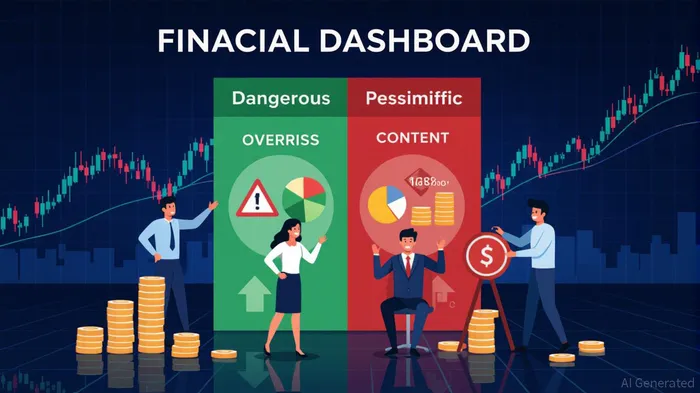
Financial wellness is not merely a static state but a dynamic construct that shapes how individuals engage with financial markets. A 2025 study categorizes financial wellness into four quadrants: dangerous (low financial health, low well-being), overconfident (low financial health, high well-being), pessimistic (high financial health, low well-being), and content (high financial health, high well-being). Only 38% of individuals fall into the ideal content quadrant, underscoring systemic gaps in both objective and subjective financial health according to the Financial Planning Association.
For instance, millennials-a demographic pivotal to future market dynamics-exhibit a paradoxical blend of hope and anxiety. Only 11% rate their financial wellness as "very healthy," while 47% feel "somewhat healthy" according to a 2025 Banking Journal report. This tension is exacerbated by stagnant wages, rising living costs, and student debt, which collectively erode confidence in long-term financial planning. Such fragility manifests in investment behavior: younger investors increasingly rely on social media and finfluencers for guidance, often embracing high-risk strategies like meme stock trading despite limited understanding of core financial concepts such as margin and short selling as research shows.
Conversely, high-net-worth individuals, while more confident in their investment decisions, are not immune to behavioral pitfalls. An exploratory study found that 84% of affluent investors seek further financial education, and 84% value working with financial advisers to mitigate emotional biases according to a Financial Planning Association study. This highlights a universal truth: even among the financially secure, overconfidence and emotional decision-making remain pervasive challenges.
Behavioral Finance and the Role of Investor Education
Behavioral finance provides a framework to understand how psychological biases distort investment decisions. Overconfidence, for example, acts as a mediator between financial literacy and investment behavior. A 2025 empirical study in Palestine demonstrated that higher financial literacy correlates with more prudent investment choices, particularly in developing markets according to research published in Frontiers in Behavioral Economics. This aligns with global trends, where gaps in financial education amplify the risks of speculative behavior.
The FINRA Investor Education Foundation's 2025 report underscores this issue: young investors, influenced by viral trends, often lack foundational knowledge of risk management. For instance, many struggle to grasp the mechanics of margin trading or the implications of short selling as research shows. Such deficiencies are not merely academic; they directly impact long-term wealth accumulation. Without a robust understanding of risk, investors are more likely to overexpose themselves to volatile assets, leading to suboptimal returns or catastrophic losses.
Investor education, however, offers a corrective. Research indicates that financial literacy programs improve budgeting, debt management, and savings behavior, all of which are prerequisites for sustainable investment success according to a 2025 study. For example, Vanguard found that employees with emergency savings of three to six months of expenses reported a 34% increase in financial well-being (21% from having $2,000 in savings, plus an additional 13% for larger reserves) according to Vanguard's 2025 report. This stability reduces the likelihood of dipping into retirement accounts during emergencies-a behavior that has risen from 2.7% in 2018 to nearly 5% in 2024 according to a 2025 Payroll Integrations report.
The Synergy Between Financial Resilience and Long-Term Investment Success
Financial resilience-a concept encompassing budgeting, debt management, and strategic planning-is a cornerstone of long-term investment success. The OECD defines financial resilience as the ability to endure economic shocks without long-term damage, emphasizing the importance of emergency funds and disciplined budgeting according to a NerdWallet study. These practices are particularly critical in high-cost environments, where automation of savings and debt repayment can ensure consistent progress toward financial goals according to a Dunca Group report.
The correlation between emergency savings and retirement savings growth is striking. Data from the Federal Reserve shows that 55% of U.S. adults had emergency savings covering three months of expenses in 2024, up from 54% in 2023 according to the Federal Reserve's 2025 report. Meanwhile, Vanguard's research reveals that emergency savings reduce 401(k) leakage by 17 percentage points and increase retirement contributions by 2.2 percentage points according to Vanguard's 2025 research. This synergy is not accidental: emergency savings act as a buffer, enabling investors to avoid premature withdrawals and maintain compounding growth.
Debt reduction programs, meanwhile, present a double-edged sword. While eliminating high-interest debt can free up disposable income for retirement savings, the resumption of federal student loan repayments in 2023 has strained many households. A 2025 report found that 75% of student loan borrowers expect this to affect their retirement savings, with 22% planning to reduce contributions according to a 2025 Plan Sponsor report. This underscores a critical challenge: debt reduction must be balanced with long-term planning to avoid sacrificing future wealth for present solvency.
Policy and Employer Implications
The findings above have profound implications for policymakers and employers. Financial wellness programs are expanding rapidly, with the global market projected to reach $1.21 billion by 2029 according to Research and Markets. Employers, in particular, are adopting innovative tools like earned wage access (EWA) and personalized financial planning to reduce reliance on high-interest borrowing according to Enrich's 2025 trends report. These initiatives not only enhance short-term stability but also foster habits that support long-term investment success.
However, systemic barriers persist. Lower-income households, for instance, face geographic and institutional disparities in access to employer-sponsored retirement plans. Automatic enrollment in such plans has increased participation by 28 percentage points in the lowest income quintile, yet financial literacy remains a bottleneck according to a 2025 ScienceDirect study. Targeted education programs, integrated into school curricula and workplace benefits, are essential to address these gaps.
Conclusion
Financial wellness is the bedrock of sustainable investment behavior. By fostering resilience through emergency savings, prudent debt management, and behavioral education, individuals can navigate market volatility with greater confidence. The data is unequivocal: those who prioritize financial wellness are more likely to participate in markets, avoid costly mistakes, and achieve long-term wealth. Yet, the path to universal financial health requires collective action-governments, employers, and educators must collaborate to build systems that empower individuals to thrive in an increasingly complex financial landscape.

Blending traditional trading wisdom with cutting-edge cryptocurrency insights.
Latest Articles
Stay ahead of the market.
Get curated U.S. market news, insights and key dates delivered to your inbox.


AInvest
PRO
AInvest
PRO



Comments
No comments yet