
The Financial Wellness Dimension and Its Impact on Long-Term Investment Behavior


 Aime Summary
Risk Tolerance and Saving Habits: The Behavioral Pillars
Risk tolerance and saving habits are two pillars of financial wellness that directly shape long-term portfolio outcomes. A longitudinal study from 2025 reveals that financial risk tolerance is a relatively stable personality trait, influenced more by enduring psychological factors than situational changes. However, external events-such as shifts in household size or the termination of financial planning services-can slightly alter risk tolerance over time. This stability suggests that investors must align their portfolios with their inherent risk profiles to avoid reactive decisions during market volatility.
Saving habits, meanwhile, are driven by financial literacy, self-control, and macroeconomic conditions according to research. Research indicates that individuals with higher financial literacy and self-control exhibit disciplined saving behaviors, which contribute to more stable portfolio performance over time. For instance, those who systematically invest in diversified portfolios, rather than making impulsive purchases, tend to achieve superior risk-adjusted returns according to a 2025 study. A 2025 study of young investors in India further demonstrates that financial literacy correlates with greater participation in market-linked products and diversified asset allocations according to findings. These findings emphasize that saving habits are not merely about income but about behavioral discipline and cognitive understanding of financial tools.
The Interplay of Financial Education and Emotional Intelligence
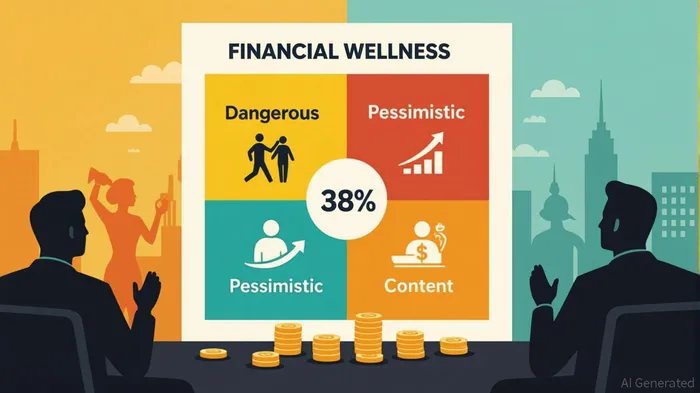 Financial education and emotional intelligence (EI) are increasingly recognized as critical enablers of sustainable investment strategies. Financial literacy directly influences investment behavior, with risk tolerance acting as a partial mediator in this relationship. However, EI moderates this dynamic: individuals with high EI are better equipped to manage emotions during market downturns, reducing the likelihood of panic selling or overtrading according to research. A 2023 study of 674 participants found that EI and financial literacy are strongly correlated, with emotional regulation being the strongest predictor of prudent investment decisions. This synergy between cognitive and emotional skills fosters resilience, enabling investors to adhere to long-term strategies even in turbulent markets.
Moreover, financial education enhances the ability to integrate environmental, social, and governance (ESG) criteria into investment decisions. A 2025 analysis shows that financially literate individuals are more likely to prioritize ESG standards, aligning their portfolios with sustainable goals. At the corporate level, firms with financially literate executives demonstrate improved capabilities in addressing sustainable finance challenges according to findings. This suggests that education not only empowers individual investors but also drives systemic shifts toward responsible investing.
Sustainable Investment Strategies: Mechanisms and Outcomes
The mechanisms linking financial education and EI to sustainable investing are multifaceted. Financial literacy improves economic resilience, particularly in developing economies, by equipping individuals to manage crises and inflation according to research. Simultaneously, EI enhances self-control, encouraging behaviors such as budgeting and systematic saving, which are foundational to sustainable portfolios according to findings. A 2024 study of Turkish mutual fund investors highlights how multidimensional financial literacy-including knowledge and behavior-shapes risk attitudes and ESG preferences. These findings underscore that sustainable investing is not merely a product of ethical values but a result of informed, emotionally intelligent decision-making.
Longitudinal data further reveals that investors with high EI and financial literacy are more likely to maintain their portfolios during downturns, achieving superior risk-adjusted returns according to a 2025 study. For example, a 2025 study found that emotionally intelligent investors make rational, controlled decisions during market fluctuations, reducing portfolio volatility. This aligns with broader behavioral finance research, which identifies over 17 cognitive biases that distort investment choices. By mitigating these biases through education and EI, investors can cultivate strategies that balance growth with sustainability.
Conclusion
The financial wellness dimension-encompassing risk tolerance, saving habits, and the interplay of education and EI-profoundly influences long-term investment behavior. While objective metrics like savings and debt are essential, subjective well-being and psychological resilience are equally vital. As the CFP Board's Financial Planning Longitudinal Study (FPLS) demonstrates, a systemic approach that integrates both objective and subjective elements is necessary to improve financial outcomes. For investors, this means prioritizing financial education, emotional intelligence training, and disciplined saving habits to build portfolios that endure market cycles and align with sustainable goals. In an era of increasing financial complexity, wellness is no longer a peripheral concern-it is the cornerstone of enduring wealth.

Blending traditional trading wisdom with cutting-edge cryptocurrency insights.
Latest Articles
Stay ahead of the market.
Get curated U.S. market news, insights and key dates delivered to your inbox.






Comments
No comments yet