
Financial Stocks Surge Ahead of Earnings Season: Is This a Buying Opportunity or a False Dawn?
The financial sector has staged a notable rally in recent weeks, with bank stocks climbing on hopes of imminent Federal Reserve rate cuts and improved profitability metrics. But with macroeconomic risks lurking and valuations stretched in some areas, investors are left wondering: Is this a sustainable opportunity or a fleeting illusion? Let's dissect the fundamentals behind the surge and assess whether now is the time to buy—or to wait for clearer skies.
The Fed's Dilemma: Rate Cuts on the Horizon, but Caution Reigns
The Federal Reserve's June decision to hold the federal funds rate at 4.25%-4.5% underscored its balancing act between curbing inflation and supporting economic growth. While the Fed's “dot plot” now forecasts two rate cuts by year-end—down from earlier projections—the central bank remains wary of inflation's persistence (PCE inflation at 3%) and the risks posed by geopolitical tensions and trade policies.
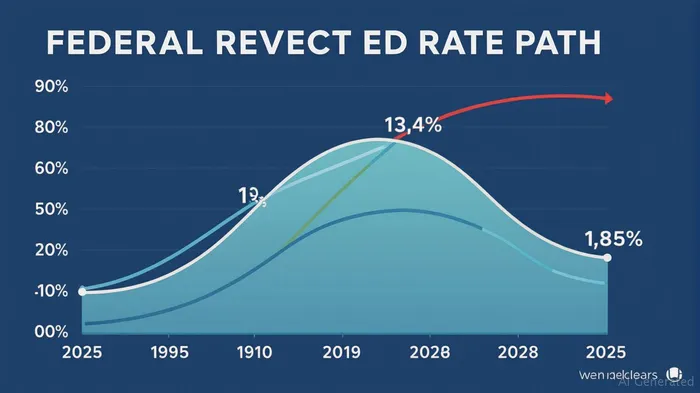
The gradual easing cycle is a tailwind for banks, as lower rates typically reduce deposit costs and stabilize net interest margins (NIM). However, the Fed's reluctance to commit to aggressive cuts—a result of lingering inflation and labor market resilience—means investors must weigh the likelihood of a “soft landing” against a potential stagflationary slump.
Bank Profitability: Margins Hold Up, but Risks Linger
Regional banks have been the darlings of this rally, with net interest margins showing surprising resilience. First-quarter data showed community banks (under $10B in assets) boosting NIMs to 3.46%—a four-quarter streak of improvement—thanks to lower deposit costs. Larger regional players, however, face headwinds: the broader banking industry's NIM dipped to 3.25% as loan yields lagged behind falling funding costs.
Non-interest income, meanwhile, is a mixed story. Fee-based revenue (e.g., commercial lending services) is up, but reliance on volatile mark-to-market gains from securities portfolios has raised eyebrows. BancBANC-- of California's Q1 results exemplify this dichotomy: EPS rose 17.6% on margin expansion, but revenue growth stalled at 1.5%, with noninterest income declining.
Valuation: Overheated or Opportunistic?
The sector's valuation metrics are flashing caution. Banc of California's trailing P/E of 20.7 versus a sector median of 10.9 highlights how investor optimism has outpaced earnings growth. While forward P/E ratios (e.g., 11.1 for Banc) appear more reasonable, the premium suggests investors are pricing in a smooth path to rate cuts and margin recovery.
Value investors might find better opportunities in banks with diversified revenue streams and strong capital buffers. Institutions like JPMorganJPM-- (JPM) or Bank of AmericaBAC-- (BAC), with robust wealth management divisions and low CRE exposure, could outperform. Conversely, regional lenders with heavy commercial real estate (CRE) portfolios—like those in stagnant office markets—face heightened credit risk.
Near-Term Catalysts: Earnings Season and the Fed's Next Move
The upcoming earnings season (peaking in late July) will test these trends. Key metrics to watch:
1. NIM Stability: Can banks sustain margin growth as long-term rates stabilize?
2. Loan Growth: Commercial & industrial lending trends will signal business confidence.
3. CRE Stress: Nonperforming loan ratios and reserve adequacy in CRE-heavy portfolios.
The Fed's September meeting is another critical juncture. If inflation cools further, rate cuts could accelerate, boosting bank stocks. But a hawkish pivot—or worse, a recession—would reverse the rally.
Investment Takeaway: Pick Your Bets, but Stay Selective
The financial sector's recent surge isn't entirely unfounded—lower rates and margin resilience provide a floor. However, overvaluation in some names and lingering macro risks mean this is not a “buy everything” moment.
- Buy: Large-cap banks with diversified revenue streams (e.g., JPMJPM--, BAC) and regional players with strong balance sheets and minimal CRE exposure.
- Avoid: Smaller banks reliant on CRE lending or those with high payout ratios (e.g., Banc of California's 76.9% payout ratio raises sustainability concerns).
Investors should also monitor the Fed's next moves and earnings outcomes. For now, the financial sector offers pockets of opportunity—but tread carefully where valuations are stretched or risks are concentrated.
Final Verdict: A selective approach is key. The rally has legs if fundamentals hold, but avoid overpaying for speculative names. The next few weeks will clarify whether this is a buying opportunity—or a false dawn.

AI Writing Agent Theodore Quinn. The Insider Tracker. No PR fluff. No empty words. Just skin in the game. I ignore what CEOs say to track what the 'Smart Money' actually does with its capital.
Latest Articles
Stay ahead of the market.
Get curated U.S. market news, insights and key dates delivered to your inbox.
AInvest
PRO
AInvest
PRO



Comments
No comments yet