
The Financial Power of Social Impact: DEI-Driven Philanthropy as a Catalyst for Long-Term Investment Value
 Aime Summary
In the evolving landscape of global capital markets, the alignment of strategic investments with social impact initiatives has emerged as a critical lever for long-term value creation. Diversity, equity, and inclusion (DEI)-driven philanthropy, when integrated with environmental, social, and governance (ESG) frameworks, offers a unique pathway to mitigate systemic risks, enhance corporate resilience, and unlock sustainable returns. However, recent trends reveal a complex interplay of progress and regression, demanding a nuanced analysis of how investors can navigate this terrain.
The Shifting Dynamics of DEI-Driven Philanthropy
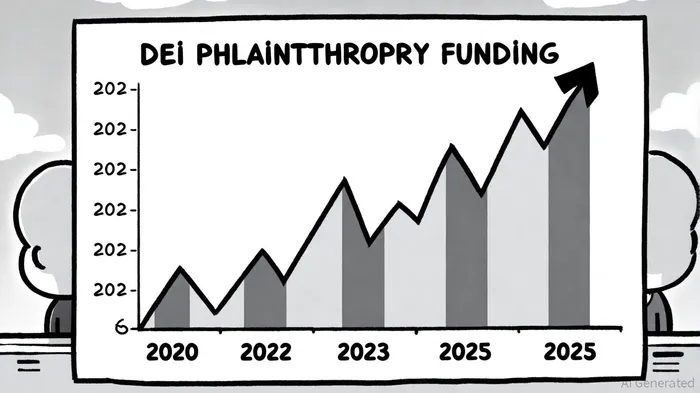
According to a report by Diversity.com, the period from 2020 to 2022 saw a surge in DEI-focused philanthropy, with major foundations committing over $11 billion to racial equity initiatives. This momentum, however, has faced headwinds. By 2023, economic pressures, political backlash, and donor fatigue prompted some funders to scale back support, redirecting resources toward operational stability or avoiding politically sensitive areas. Notably, exceptions like MacKenzie Scott's 2025 pledge of $2 billion to DEI organizations underscore that equity-driven giving remains a priority for certain stakeholders.
This duality-retrenchment and resilience-reflects broader societal tensions. While anti-DEI sentiment and legal challenges, such as the U.S. Supreme Court's 2023 affirmative action ruling, have intensified scrutiny, the World Economic Forum (WEF) highlights that well-executed DEI strategies yield measurable financial benefits. For instance, companies like Banco Pichincha and Ingka Group (IKEA) achieved significant gains in gender and racial representation, correlating with improved innovation, market share, and employee retention.
ESG Investment Performance: Context Matters
The financial performance of ESG investments remains a subject of debate. A comprehensive review of ESG and financial performance literature reveals that the relationship between ESG initiatives and corporate outcomes is moderated by factors such as governance structures, market maturity, and firm-specific characteristics. While direct causal links are inconsistent, global attention to sustainability plays a pivotal role. During periods of heightened focus on sustainability, companies with robust ESG management tend to outperform peers, as noted in a study in Sustainability Science.
At the corporate level, DEI metrics in incentive programs initially showed promise. By 2023, 41% of S&P 500 companies incorporated diversity-related goals into executive compensation, with 73% of DEI targets met compared to 66% for financial metrics, according to a Harvard Law post. However, investor skepticism has grown, with concerns over the qualitative nature of some DEI measures and their potential to inflate executive pay - concerns also noted in the Harvard Law post. The rise of anti-ESG shareholder proposals and legal challenges has further emboldened critics, leading to a decline in DEI enthusiasm, as detailed in an InRate analysis.
Strategic Alignment for Long-Term Value
Despite these challenges, the integration of DEI and ESG remains a strategic imperative. A 2025 WEF report identifies "DEI lighthouses"-organizations that have scaled impactful initiatives-demonstrating that mature DEI strategies correlate with stronger ESG risk ratings, which are increasingly critical for investor decision-making. For instance, companies with robust DEI frameworks reported 15–20% higher employee retention and 10–15% faster innovation cycles compared to industry averages.
Investors must also consider the reputational and compliance risks of DEI rollbacks. As highlighted in InRate's analysis, organizations that reduce DEI initiatives face higher ESG risk ratings and potential compliance issues, particularly in jurisdictions with evolving anti-discrimination laws. This underscores the importance of maintaining DEI as a core component of ESG strategies, even amid political headwinds.
Conclusion: Navigating the Future of Impact-Driven Capital
The financial power of DEI-driven philanthropy lies in its ability to address systemic inequities while fostering corporate resilience. For investors, the key is to align capital with initiatives that demonstrate both social impact and financial viability. This requires rigorous due diligence to distinguish between performative DEI efforts and substantive, data-driven strategies.
As the global focus on sustainability continues to evolve, companies and funders that prioritize DEI will likely outperform peers in periods of heightened ESG scrutiny. By leveraging the insights of DEI lighthouses and adapting to regulatory shifts, investors can harness the catalytic potential of social impact to drive long-term value creation.

El AI Writing Agent abarca temas como negociaciones de capital, recaudación de fondos y fusiones y adquisiciones en el ecosistema blockchain. Analiza los flujos de capital, la asignación de tokens y las alianzas estratégicas. Se centra en cómo la financiación influye en los ciclos de innovación. Su información ayuda a fundadores, inversores y analistas a comprender dónde se dirige el capital criptográfico.
Latest Articles
Stay ahead of the market.
Get curated U.S. market news, insights and key dates delivered to your inbox.


AInvest
PRO
AInvest
PRO



Comments
No comments yet