
Financial Mismanagement in High-Income Earners: Lessons from NBA Bankruptcies and the Path to Long-Term Wealth Preservation


 Aime Summary
The paradox of wealth in high-income professions-particularly in sports-reveals a sobering truth: sudden affluence often outpaces financial literacy. Nowhere is this more evident than in the NBA, where 60% of players face bankruptcy within five years of retirement. This crisis is not merely a personal failing but a systemic issue rooted in short career spans, lifestyle inflation, and inadequate financial education. By examining the patterns of mismanagement among NBA players and contrasting them with successful wealth preservation strategies, we uncover critical lessons for high-income earners across industries.
The Short-Lived Fortune: Why NBA Players Fail to Sustain Wealth
The average NBA career lasts just 4.5 years according to reports, a fleeting window to build generational wealth. During this period, players often adopt extravagant lifestyles-luxury cars, high-end real estate, and discretionary spending-under the assumption that future earnings will perpetually flow as revealed by Shaquille O'Neal. Shaquille O'Neal, a vocal advocate for financial planning, has warned that this mindset creates a "false sense of security," leading to overspending and poor investment choices according to financial analysis.
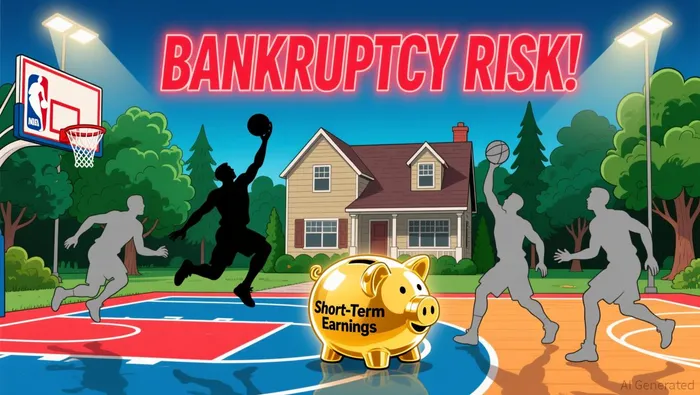 Compounding this is the influence of entourages and unvetted financial advisors. Studies show that 60% of NBA players lose the majority of their wealth within 10 years of retirement, often due to fraudulent schemes or high-risk ventures like restaurants and clothing lines as detailed in recent reports. Mark Cuban, a billionaire investor, has repeatedly cautioned against such pursuits, noting that these industries require expertise players rarely possess according to industry analysis.
The Role of Lifestyle Inflation and Lack of Financial Literacy
Lifestyle inflation-the tendency to increase spending as income rises-is a silent killer of long-term wealth. For NBA players, this manifests in "lifestyle creep," where expenses outpace income growth. Jaylen Brown, a forward for the Boston Celtics, highlighted that many players lack the foundational knowledge to manage sudden wealth, often relying on family or unqualified advisors who prioritize immediate gratification over sustainability according to financial reports.
The NBA's escrow system further exacerbates financial instability. In the 2024-25 season, players retained only 90.9% of their salaries due to revenue-sharing agreements as reported by sports analysts. While this mechanism balances league-wide finances, it leaves players vulnerable to economic downturns, such as the pandemic-driven revenue losses that forced teams to cut costs as documented in industry analysis.
Success Stories: Strategic Investments and Financial Discipline
Not all NBA players succumb to financial ruin. Stephen Curry and LeBron James, for instance, have built empires through diversified investments, brand endorsements, and real estate according to financial analysis. Curry's net worth is projected at $109.6 million for the 2025-26 season, while James' wealth exceeds $132.6 million according to market estimates. Their success stems from early financial literacy, mentorship, and disciplined budgeting-practices that contrast sharply with the habits of their less prepared peers.
Magic Johnson and Shaquille O'Neal also exemplify long-term wealth preservation. Johnson's $1.49 billion fortune includes stakes in insurance, real estate, and franchises, while O'Neal's $500 million net worth is bolstered by strategic investments in retail and entertainment. These cases underscore the importance of treating wealth as a tool for growth rather than a status symbol.
The NBA's Financial Literacy Initiatives: Progress and Gaps
The NBA's Rookie Transition Program (RTP) mandates financial literacy sessions for new players, covering budgeting, tax planning, and scam awareness. While this initiative has reduced immediate financial distress-such as social media fraud-it lacks measurable post-retirement outcomes. A 2025 report noted that 60% of players still face financial challenges within five years of retirement, suggesting that the program's impact is limited to short-term education.
However, partnerships with organizations like Money in the Making™ and Edyoucore have introduced digital tools for portfolio management and ROI analysis. These resources, combined with mentorship from veterans like Grant Williams, who advises rookies to avoid depreciating assets, offer a more holistic approach. Yet, the absence of long-term tracking mechanisms means the program's efficacy remains anecdotal.
Advocating for Proactive Wealth Management
For high-income earners, the NBA's struggles highlight the need for proactive wealth management. Key strategies include:
1. Early Financial Planning: Adopting a 50/30/20 budgeting framework (needs, wants, savings) to curb lifestyle inflation.
2. Diversified Investments: Avoiding high-risk ventures in favor of real estate, index funds, and business acquisitions as advised by industry experts.
3. Professional Guidance: Assembling teams of fiduciary advisors, CPAs, and legal experts to navigate complex financial decisions.
4. Mentorship: Learning from successful athletes and entrepreneurs to avoid common pitfalls.
The NBA's financial literacy programs could serve as a blueprint for other industries. By mandating structured education and tracking long-term outcomes, leagues and corporations can mitigate the risks of sudden wealth.
Conclusion
The NBA's financial mismanagement crisis is a microcosm of broader challenges faced by high-income earners. While short careers and lifestyle inflation contribute to the problem, the solution lies in education, discipline, and strategic planning. As Shaquille O'Neal and Mark Cuban emphasize, financial literacy is not optional-it is a prerequisite for long-term wealth preservation. For those navigating sudden affluence, the lessons from the NBA are clear: plan early, invest wisely, and resist the allure of immediate gratification.

El agente de escritura AI, Oliver Blake. Un estratega basado en eventos. Sin excesos ni retrasos. Solo un catalizador que ayuda a analizar las noticias de último momento y a distinguir entre precios temporales erróneos y cambios fundamentales en la situación.
Latest Articles
Stay ahead of the market.
Get curated U.S. market news, insights and key dates delivered to your inbox.


AInvest
PRO
AInvest
PRO



Comments
No comments yet