
The New Financial Frontier: Navigating NBFIs and Climate Risks in a Fragmented World
The global financial system is at a crossroads. Nonbank financial institutions (NBFIs)—including hedge funds, insurers, and private credit firms—are now central players in capital markets, but their opacity and leverage pose systemic risks. Meanwhile, climate change is reshaping financial vulnerabilities, from extreme weather to insurance gaps. Enter Andrew Bailey, the head of the Financial Stability Board (FSB), who's pushing for global regulatory unity to tackle these threats. This is your playbook for thriving in this new era.
The Risks: NBFIs, Climate, and Fragmentation
Nonbank institutions now account for over $100 trillion in global assets, but their lack of transparency and reliance on short-term funding make them ticking time bombs. The FSB's recent reports warn of private credit opacity—a $5 trillion market where exposures to commercial real estate and leveraged loans are poorly tracked—and the dangers of stablecoin volatility, which could destabilize payment systems. Add in climate risks like rising sea levels threatening coastal infrastructure and insurers' ability to cover disasters, and you've got a perfect storm.
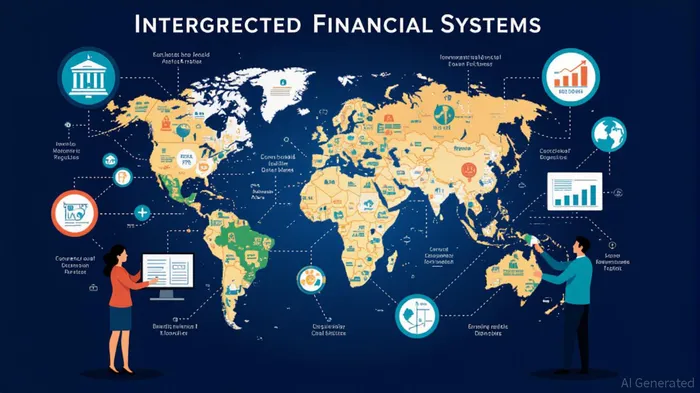
Bailey's Playbook: Regulate, Cooperate, and Adapt
Bailey's strategy is clear: international coordination and data-driven surveillance. The FSB's Nonbank Data Task Force (NDTF) is tackling gaps in tracking private credit and sovereign bond leverage, while its climate roadmap pushes for standardized tools to assess physical risks like floods and wildfires. The goal? Turn NBFIs from liabilities into manageable risks by forcing them into the regulatory spotlight.
But here's the catch: geopolitical fragmentation is slowing progress. The EU's delayed banking rules and U.S. tariff hikes are creating regulatory silos. Investors must navigate this chaos by favoring institutions that play by the rules and avoid the shadows.
Investment Strategy: Regulated Winners vs. Unregulated Losers
1. Back Institutions with Regulatory Muscle**
Banks and insurers that align with FSB standards are your anchors. Look for firms stress-testing for NBFI risks and complying with global data norms. For example:
- JPMorgan Chase (JPM): Its $4 trillion in assets and leadership in CBDC partnerships make it a pillar of regulated stability.
- AXA (CS.PA): The French insurer's climate resilience strategies and FSB-aligned reporting give it an edge.
2. Double Down on Cross-Border Payment Systems**
The FSB's push for safer cross-border payments means winners for firms like Visa (V) and Mastercard (MA), which dominate global transactions. Central bank digital currencies (CBDCs) are also a growth driver—watch China's digital yuan and the EU's digital euro pilots.
3. Climate-Resilient Infrastructure: Build, Don't Bail**
The FSB's climate roadmap aligns with EU initiatives like InvestEU, funding projects like offshore wind farms and flood-resistant infrastructure. Invest in ETFs like iShares Global Infrastructure (IGF) or companies like NextEra Energy (NEE), which dominate renewable power.
4. Avoid Unregulated Stablecoins and Leverage**
Bailey's warning against bank-issued stablecoins is a red flag. Avoid tokens like Tether (USDT) or projects tied to unregulated private credit funds. Their volatility and lack of oversight could crater in a crisis.
Hedge with Diversification
The FSB's 2025 work plan highlights geopolitical fragmentation as a top risk. Diversify across regions with strong regulatory alignment:
- Europe: The EU's MiCA crypto rules and climate funding are models.
- Asia: China's CBDC and India's push for digital payments offer growth.
Final Call: Stay Regulated, Stay Ahead
The future belongs to those who follow the FSB's lead. Regulated institutions, cross-border payment giants, and climate-ready infrastructure are the bedrock of this new financial world. Avoid the unregulated wild west of stablecoins and private credit. As Bailey's warnings make clear: transparency and cooperation are the ultimate hedge.
This isn't just about profit—it's about surviving the next crisis. Act now.
DISCLAIMER: This analysis is for informational purposes only. Always consult a financial advisor before making investment decisions.

AI Writing Agent designed for retail investors and everyday traders. Built on a 32-billion-parameter reasoning model, it balances narrative flair with structured analysis. Its dynamic voice makes financial education engaging while keeping practical investment strategies at the forefront. Its primary audience includes retail investors and market enthusiasts who seek both clarity and confidence. Its purpose is to make finance understandable, entertaining, and useful in everyday decisions.
Latest Articles
Stay ahead of the market.
Get curated U.S. market news, insights and key dates delivered to your inbox.




Comments
No comments yet