
Finally! House Breaks Impasse: Ending the 43-Day Shutdown with a Fragile Truce


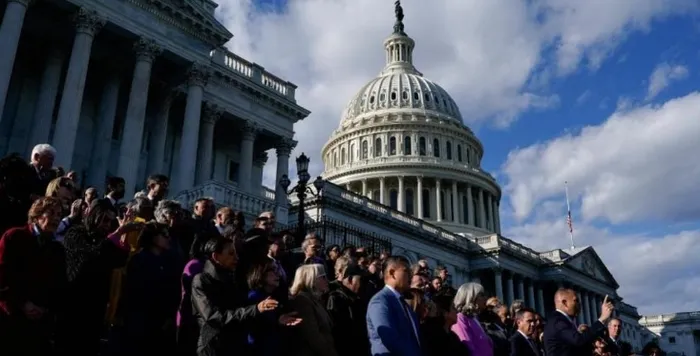
Washington's fiscal theater reached a dramatic crescendo on Wednesday as the House of Representatives voted 222 to 209 to pass a funding package, finally prying open the doors of a shuttered federal government after 43 grueling days—the longest shutdown in U.S. history.
According to CBS News, the measure, already cleared by the Senate earlier in the week, now heads to President Donald Trump's desk, where it's expected to receive a swift signature, heralding relief for beleaguered federal workers, disrupted industries, and an economy scarred by billions in lost output. Yet, as House Minority Leader Hakeem Jeffries thundered from the floor, "This fight is not over. We're just getting started," the resolution feels more like a brief intermission than a curtain call, with partisan rifts over health care subsidies poised to ignite the next conflagration.
The vote, cleaving largely along party lines, underscores the precarious balance of power in a divided Congress under Trump's second term. Republicans, buoyed by their slim majority, hailed the bill as a pragmatic win, while Democrats decried it as a capitulation that sidesteps core demands. Trump himself dubbed it a "very big victory," but the underlying tensions—fueled by expiring Affordable Care Act tax credits—suggest this is merely a deferral of deeper fiscal battles. As markets digest the news, investors are weighing the immediate rebound against looming uncertainties, including a potential debt ceiling clash and mid-December votes that could unravel the fragile accord.
The Partisan Vote and the Compromise Details
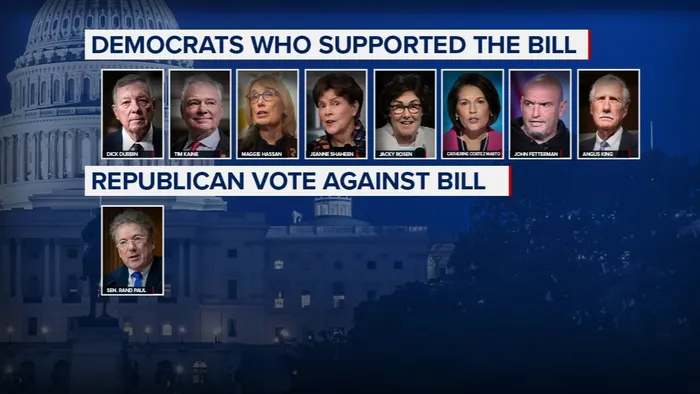
In a session charged with recriminations, the House approved the legislation that extends funding for most federal agencies through January 30, while providing full-year appropriations for three other segments of government. This patchwork approach, hammered out after weeks of deadlock, reflects the compromises forced by the shutdown's mounting toll. The Senate had advanced the bill on Monday, with eight centrist Democrats crossing the aisle to join Republicans in a 60-40 procedural vote, paving the way for final passage.
The deal's genesis traces back to intense negotiations where Democrats initially demanded a one-year extension of enhanced health care tax credits, set to expire at year's end, as a non-negotiable condition for reopening the government. Republicans, under pressure from Trump and House Speaker Mike Johnson, resisted, viewing it as an unwarranted expansion of entitlements. In the end, Senate Democrats secured a promise for a standalone vote on the subsidies by mid-December—a concession that allowed the shutdown to end but sowed seeds for future strife. As one GOP aide confided, the agreement buys time but doesn't bury the hatchet.
Jeffries, in his fiery pre-vote address, lambasted Republicans for their "consistent unwillingness" to collaborate on measures that would ease Americans' cost-of-living burdens. He painted Trump as the de facto puppeteer of the House GOP, declaring, "Either Republicans finally decide to extend the Affordable Care Act tax credits this year, or the American people will throw Republicans out of their jobs next year and end the speakership of Donald J. Trump once and for all." His words resonated amid a chamber still echoing with the shutdown's fallout, from snarled air travel to delayed food aid programs.
The Economic Scars of a Record Standoff
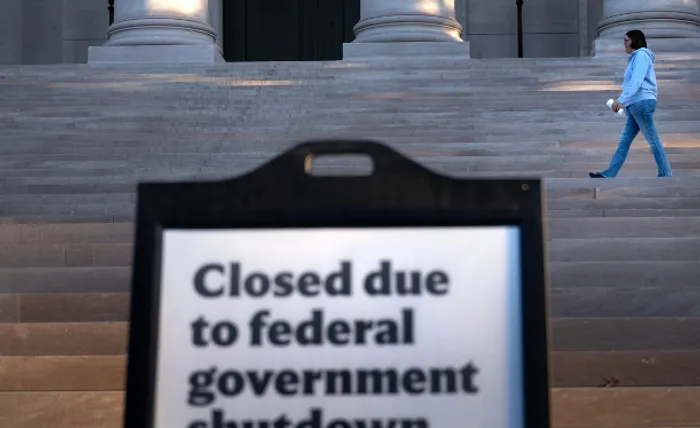
The 43-day impasse has inflicted a staggering economic wound, with estimates pegging the total hit to U.S. GDP at upwards of $40 billion, much of it recoverable but with permanent losses in the $7 billion to $14 billion range, according to CNN News . The Congressional Budget Office's analysis paints a sobering picture: each week of closure drained roughly $7 billion to $16 billion from the economy, rippling through sectors dependent on federal operations. For context, that's equivalent to shaving two percentage points off fourth-quarter growth if extrapolated over the shutdown's duration.
Air travel, a linchpin of commerce, bore the brunt early on, with flight cancellations surging due to understaffed FAA controllers and TSA agents working without pay. The chaos at airports not only stranded passengers but also disrupted supply chains, costing airlines and logistics firms millions in daily revenue. Similarly, the Supplemental Nutrition Assistance Program (SNAP) teetered on the edge, with concerns mounting over delayed benefits for millions of low-income families—a scenario that could have exacerbated food insecurity and strained local economies.
Broader fiscal implications loom large. The shutdown delayed tax refunds, hampered IRS operations during peak filing season, and postponed economic data releases, leaving investors in a fog. Wall Street, ever sensitive to Washington drama, saw volatility spikes, with the S&P 500 dipping 1.5% in the standoff's nadir before rebounding modestly on news of the Senate's breakthrough. Bond yields, meanwhile, edged lower as safe-haven demand surged, reflecting investor jitters over prolonged uncertainty. Analysts at firms like Goldman Sachs warn that while the reboot will spur a short-term bounce—perhaps adding 0.5% to first-quarter GDP through backlogged spending—the episode erodes confidence in fiscal stewardship, potentially elevating borrowing costs if debt ceiling talks turn acrimonious.
Federal Workers: The Human Cost Behind the Numbers
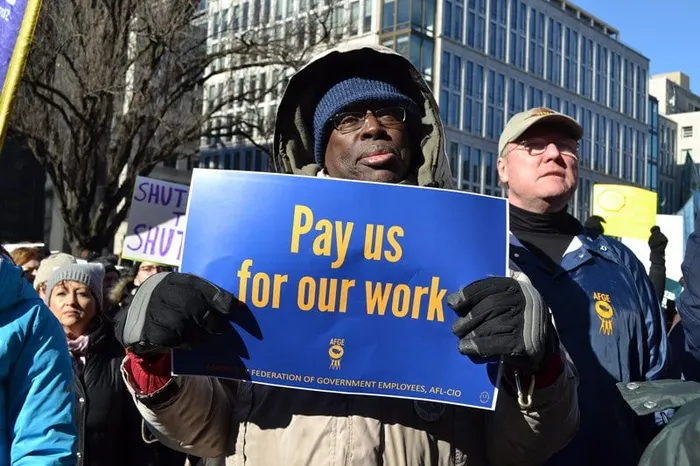
At the heart of the shutdown's toll are the roughly 800,000 federal employees who endured six weeks without paychecks, facing mounting bills and financial precarity. Utility payments, mortgages, and groceries didn't pause, forcing many to tap savings, take side gigs, or seek hardship loans. As one newsletter starkly noted, electric bills are coming due for these unpaid workers, even as the government reopens. Backpay is guaranteed by law, but the delay has inflicted lasting damage—credit scores tarnished, retirements deferred, and stress levels soaring.
Local communities felt the pinch acutely. In areas like Washington, D.C., and Virginia, where federal jobs dominate, small businesses reported a 20% drop in foot traffic, from cafes to dry cleaners. States absorbed spillover costs, fronting funds for programs like unemployment insurance tied to federal reimbursements. The White House's own estimates pegged weekly job losses in the tens of thousands, underscoring how shutdowns amplify inequality, hitting lower-paid contractors hardest—many of whom won't receive backpay at all.
The Health Care Subsidy Showdown
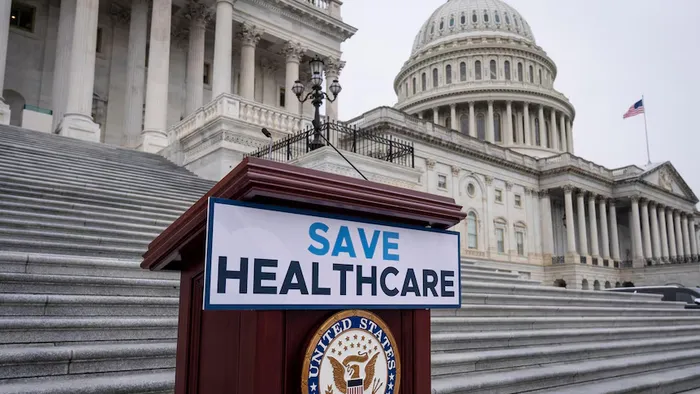
Central to the Democrats' resistance was the fate of enhanced Affordable Care Act premiums tax credits, which have lowered health insurance costs for millions since their pandemic-era boost. Set to lapse at year's end, their expiration could hike premiums by 15-20% for middle-income families, exacerbating inflation woes in an economy still grappling with post-Covid recovery. Democrats argued that folding the extension into the funding bill was essential for "making Americans' lives better," as Jeffries put it, but Republicans balked, labeling it fiscal overreach amid ballooning deficits.
The compromise—a promised Senate vote by mid-December—shifts the battleground but doesn't resolve it. If the subsidies fail, analysts project a $50 billion annual hit to household spending power, potentially dampening consumer confidence and retail sales. This sets up a high-stakes rematch, where Trump’s influence over GOP holdouts could prove decisive. As centrist Democrats who broke ranks in the Senate vote explained, the deal averts immediate catastrophe but invites scrutiny: Will Republicans yield, or will this precipitate another shutdown threat?
Market Rebound and Lingering Fiscal Risks
Looking ahead, the January 30 funding cliff looms, intertwined with debt limit negotiations that could rattle Treasuries. Trump's agenda—tax cuts, deregulation—hinges on stable appropriations, but partisan gridlock threatens to undermine it. Investors should brace for volatility: while the immediate economic drag lifts, the episode highlights Washington's dysfunction, eroding long-term growth prospects. As one economist quipped, "Shutdowns don't just cost dollars; they cost trust."
In the end, this resolution averts disaster but exposes fractures. Jeffries' vow signals Democrats' resolve, while Republicans bank on public fatigue with brinkmanship. For the economy, the true test lies in whether Congress can forge lasting fiscal peace—or if this is just the prelude to Act Two.

Expert analysis on U.S. markets and macro trends, delivering clear perspectives behind major market moves.
Latest Articles
Stay ahead of the market.
Get curated U.S. market news, insights and key dates delivered to your inbox.






Comments
No comments yet