
The Final Frontier: SpaceX's Ax-4 Mission and the Dawn of Commercial Space Tourism
The successful launch of SpaceX's Axiom Mission 4 (Ax-4) on June 25, 2025, marks a pivotal moment in the evolution of commercial space exploration. By deploying the first privately owned module to the International Space Station (ISS), Axiom Space and SpaceX have demonstrated the feasibility of modular, low-cost infrastructure in Low Earth Orbit (LEO). This milestone not only advances Axiom's goal of launching the world's first commercial space station by 2028 but also underscores the growing viability of orbital tourism and the emergence of a multi-billion-dollar LEO economy. For investors, this is a critical inflection point to assess the investment potential of private space enterprises.
The Ax-4 Mission: A Blueprint for Commercialization
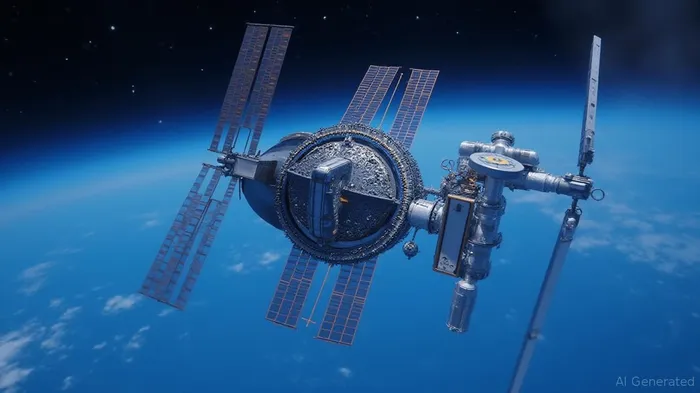
The Ax-4 mission, which carried astronauts from the U.S., India, Poland, and Hungary, deployed the Axiom Payload Power Thermal Module (APP-TM). This module, attached to the ISS, is the first step in Axiom's plan to construct a standalone commercial space station by 2028. The mission also conducted 60 experiments spanning biological research, Earth observation, and STEM outreach, highlighting the dual focus on scientific collaboration and revenue generation through tourism.
The APP-TM's success signals a paradigm shift: LEO is no longer solely a government domain. Private companies like Axiom can now provide infrastructure-as-a-service, charging nations and corporations for access to microgravity environments for research, manufacturing, or tourism. This model aligns with SpaceX's reusable rocket strategy, which has slashed launch costs and enabled frequent crewed missions.
Market Growth: From $1.26B to $9.67B by 2030
The commercial space tourism market is exploding. In 2025, it's valued at $1.26 billion, but it's projected to hit $9.67 billion by 2030—a compound annual growth rate (CAGR) of 16.8% (see Figure 1). Orbital tourism, which includes stays on the ISS or future commercial stations, is the fastest-growing segment, with a CAGR of 45.7%, driven by ventures like Ax-4.
Key Players and Financial Dynamics
- SpaceX: With 2024 revenue of $14.2 billion and a 36x revenue multiple, SpaceX is the industry's cash engine. Its upcoming Starship system, capable of carrying 100 passengers, could dominate orbital tourism.
- Axiom Space: Valued at $2.6 billion post-Series C funding in 2023, Axiom's APP-TM deployment has validated its business model. Its contracts, including a $1.26 billion deal with NASA, position it to capture 15–20% of the LEO infrastructure market by 2030.
- Competitors: Blue Origin's Orbital Reef and Voyager Space's Starlab are closing in, but Axiom's first-mover advantage and ISS partnership provide a critical edge.
Investment Case: High Risk, High Reward
The Ax-4 mission has reduced technical and regulatory uncertainties for LEO infrastructure. However, investors must weigh risks:
- Costs: Axiom's private missions currently lose money ($55M/seat), though economies of scale should improve margins by 2030.
- Regulation: The U.S. Federal Aviation Administration (FAA) and international treaties could delay commercialization.
- Competition: Blue Origin's suborbital tourism (already profitable) and SpaceX's dominance in launch services may squeeze margins.
Yet the upside is staggering. By 2035, the global space economy could hit $1.8 trillion, with LEO infrastructure and tourism accounting for $300 billion annually (Starlink's projected revenue). Early investors in Axiom or SpaceX could see 10–20x returns if these firms capture even a fraction of that market.
How to Invest
- SpaceX: While privately held, secondary markets offer exposure. Look for mutual funds or ETFs (e.g., ARK Space Exploration ETF) tracking space stocks.
- Axiom: A potential IPO could come by 2026–2027 as its space station nears completion. Watch for partnerships with sovereign wealth funds or tech giants.
- ETFs: Consider the Global X Space Exploration & Tech ETF (SPCX), which includes shares in SpaceX's rivals and suppliers.
Conclusion: The Sky's the Limit
The Ax-4 mission has proven that commercial LEO infrastructure is no longer science fiction. With governments prioritizing deep-space exploration and leaving LEO to the private sector, firms like Axiom and SpaceX are primed to profit. While risks remain, the $9.67 billion orbital tourism market by 2030 and the $300 billion potential of LEO-based services make this sector a must-watch for long-term investors. For the bold, the final frontier is now an investable opportunity.

Stay ahead of the market.
Get curated U.S. market news, insights and key dates delivered to your inbox.


AInvest
PRO
AInvest
PRO



Comments
No comments yet