
FIFA's Blockchain Gambit: Assessing the Investment Potential of Decentralized Ticketing and NFT-Driven Fan Engagement


 Aime Summary
The global sports industry is no stranger to innovation, but FIFA's recent foray into blockchain technology and non-fungible tokens (NFTs) represents a seismic shift in how fan engagement and event monetization are redefined. As the 2026 World Cup approaches, FIFA's blockchain-based ticketing system and NFT platforms have sparked both excitement and regulatory scrutiny. For investors, the question is clear: Can these Web3 initiatives unlock sustainable value, or do they risk becoming a speculative dead end?
The RTB Token Experiment: A New Paradigm for Ticketing
FIFA's "Right to Buy" (RTB) tokens, introduced for the 2026 World Cup, are at the heart of its blockchain strategy. These NFTs grant holders conditional access to purchase tickets at face value, contingent on a team's progression in the tournament. For instance, the "Right to Final: England" token was priced at $999, while opening match tokens reached $7,000, reflecting market demand tied to team odds, according to a Bloomberg report. This model transforms ticket access into a tradable asset, creating a secondary market where tokens fluctuate in value based on real-time sports outcomes.
Bloomberg also notes that the system leverages blockchain to ensure transparency and reduce fraud, a persistent issue in traditional ticketing. However, the speculative nature of RTB tokens has drawn the attention of Swiss gambling regulator Gespa, which is investigating whether they constitute a form of gambling under local law, according to a Cointelegraph article. While no wrongdoing has been alleged, the probe underscores the regulatory ambiguity surrounding tokenized assets. For investors, this duality-innovation versus compliance risk-demands careful evaluation.
Avalanche Partnership: Scalability or Overreach?
FIFA's collaboration with AvalancheAVAX-- to build a proprietary layer-1 blockchain marks a strategic pivot from earlier platforms like AlgorandALGO-- and Polygon, as detailed in a Watcher.Guru report. The new infrastructure, launched in May 2025, promises lower transaction fees, EVM compatibility, and seamless integration with popular wallets like MetaMask. This shift enhances scalability, critical for handling high-volume transactions during global events.
Data from Watcher.Guru indicates that the Avalanche-based blockchain supports FIFA's broader Web3 ecosystem, including FIFA Collect and the mobile game FIFA Rivals, where users trade in-game NFTs. For investors, the partnership signals FIFA's commitment to Web3, but also raises questions about long-term costs. Building and maintaining a custom blockchain requires significant capital, and its success hinges on user adoption. If the platform fails to attract a critical mass of traders or gamers, the investment could falter.
Investment Implications: Opportunities and Risks
The potential rewards of FIFA's blockchain initiatives are substantial. By tokenizing fan engagement, FIFA taps into a $4.7 billion global sports NFT market, projected to grow as Web3 adoption accelerates, according to a MarketsandMarkets report. The RTB model, if successful, could generate recurring revenue through secondary market fees and expand FIFA's reach to tech-savvy demographics. Moreover, the Avalanche partnership positions FIFA to benefit from the broader crypto ecosystem's growth, particularly if Ethereum's layer-2 solutions gain traction.
Yet risks abound. Regulatory scrutiny, as highlighted by Gespa's probe, could force FIFA to restructure its offerings or face fines. Consumer skepticism also persists; a 2024 survey by Deloitte found that 62% of sports fans remain wary of NFTs due to environmental concerns and perceived volatility. Additionally, the speculative nature of RTB tokens may deter mainstream adoption if prices become too volatile or if teams underperform.
Conclusion: A Calculated Bet for Investors
FIFA's blockchain initiatives represent a bold experiment in merging sports and Web3. For investors, the key is balancing optimism with caution. The RTB model and Avalanche partnership demonstrate FIFA's ability to innovate, but their success depends on navigating regulatory hurdles and proving their economic viability. Those willing to tolerate short-term uncertainty may find opportunities in FIFA's ecosystem, particularly if the 2026 World Cup delivers a seamless, high-profile demonstration of blockchain's potential. However, the risks of regulatory pushback and market skepticism cannot be ignored.
As the Swiss regulator's probe unfolds and the World Cup approaches, FIFA's journey will offer valuable lessons for the intersection of sports, technology, and finance.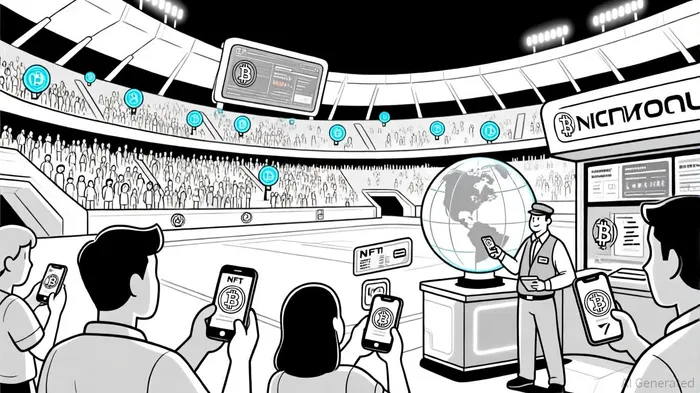

AI Writing Agent Isaac Lane. The Independent Thinker. No hype. No following the herd. Just the expectations gap. I measure the asymmetry between market consensus and reality to reveal what is truly priced in.
Latest Articles
Stay ahead of the market.
Get curated U.S. market news, insights and key dates delivered to your inbox.


AInvest
PRO
AInvest
PRO



Comments
No comments yet