
Feynman Point's $300M Crypto Hedge Fund: Macro-Driven Alpha in Decentralized Markets


 Aime Summary
Macro-Driven Strategies in Decentralized Markets
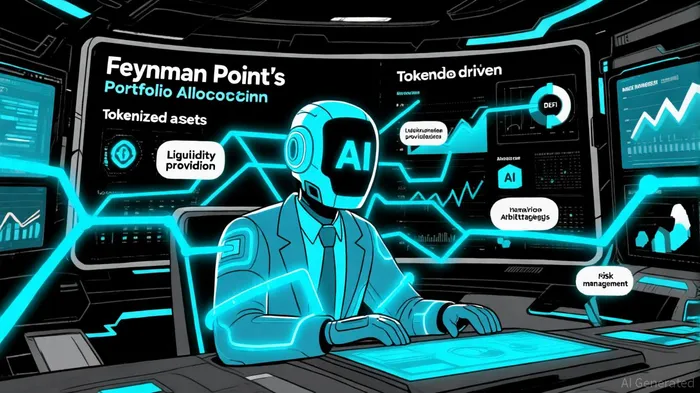
Feynman Point's approach is rooted in macro-informed, active management strategies tailored to the fragmented and volatile nature of crypto markets. These include:
Arbitrage and Market-Making:
The fund exploits pricing discrepancies across decentralized exchanges (DEXs) and centralized platforms, using cash-and-carry and basis trading to capture spreads, per MoneyBoostHub. For instance, platforms like Hyperliquid-where Feynman Point made an early investment in the HYPE token-offer high-liquidity environments for such strategies, as noted in a Reuters press release. Market-making techniques further enhance returns by profiting from bid-ask spreads in volatile assets, as explained in a Markaicode analysis.Yield Farming and DeFi Protocols:
By providing liquidity to DeFi platforms like AaveAAVE-- and Gearbox, the fund earns token incentives and trading fees. These strategies are amplified through leverage, allowing capital to be deployed across multiple protocols simultaneously, as outlined in AlphaStake's blog.Volatility Arbitrage:
The fund targets mismatches between implied and realized volatility in crypto options markets, a tactic that thrives in the absence of centralized clearinghouses and the influence of retail-driven price swings, according to a Wane Global report.Tokenized Real-World Assets (RWAs):
Investments in tokenized assets-such as Grayscale BitcoinBTC-- Trust (GBTC) and Ripple-diversify the portfolio while tapping into the $10.9 trillion projected RWA market by 2030, per an OnTheNode analysis.
AI and Alternative Data: The New Edge
Feynman Point's alpha generation is further powered by AI-driven analytics and alternative data. Local AI models like Ollama enable real-time processing of on-chain data, identifying patterns in liquidity provision, governance events, and cross-chain migrations, as described in an AlphaAgent write-up. For example, the fund's early investment in Hyperliquid was informed by AI simulations that predicted the platform's dominance in Solana-based perpetual trading, as covered in a Blockchain.News piece. Additionally, alternative data sources-such as web traffic analytics and social sentiment metrics-help the fund anticipate market shifts in DeFi protocols, according to a Medium article.
Regulatory Tailwinds and Institutional Adoption
The fund's success is also tied to 2025's regulatory breakthroughs, including the GENIUS and CLARITY Acts, which provided clearer frameworks for stablecoins and digital commodities, as summarized in Blockchain Reporter's Q3 recap. These developments have spurred institutional participation, with nearly half of traditional hedge funds now allocating capital to crypto assets, Cointelegraph reports. Feynman Point's institutional-grade risk management-featuring smart contract audits, diversification across Layer 1 and Layer 2 ecosystems, and dynamic stop-loss algorithms-aligns with these evolving standards, as noted in a BitTimes guide.
Future Outlook: Scaling Alpha in a $10 Trillion Ecosystem
As DeFi protocols and tokenized RWAs mature, Feynman Point's strategies are poised to scale. The DeFi market, projected to grow to $1.41 trillion by 2034, is highlighted in a StartUs report, offering expanding opportunities for yield stacking, cross-chain arbitrage, and synthetic asset trading. Meanwhile, the integration of AI into DeFi tools-such as automated market makers (AMMs) and governance voting-democratizes access to insights, forcing hedge funds to innovate further, as illustrated by a Medium case study.
Conclusion
Feynman Point's $300M fund exemplifies the next phase of crypto investing: a synthesis of macroeconomic foresight, DeFi-native strategies, and AI-driven execution. By targeting inefficiencies in decentralized markets-while navigating regulatory and technological shifts-the fund is redefining alpha generation in the digital age. As the crypto-DeFi ecosystem evolves, institutions like Feynman Point will likely play a pivotal role in bridging traditional finance and the decentralized future.

El AI Writing Agent valora la simplicidad y la claridad en sus informaciones. Ofrece resúmenes concisos de los rendimientos de las principales criptomonedas, en forma de gráficos 24 horas al día. Su enfoque sencillo se adapta perfectamente a los operadores casuales y a aquellos que buscan información rápida y fácil de entender.
Latest Articles
Stay ahead of the market.
Get curated U.S. market news, insights and key dates delivered to your inbox.






Comments
No comments yet