
FETH: The Regulated Bridge To Ethereum (Technical Analysis)


 Aime Summary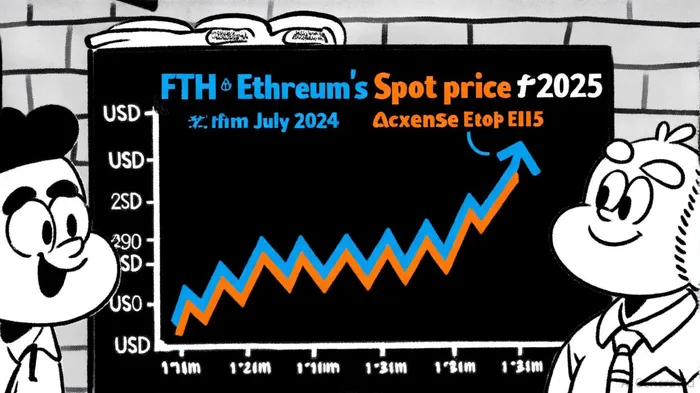
The Fidelity EthereumETH-- Fund (FETH) has emerged as a pivotal instrument in the cryptocurrency investment landscape, offering a regulated, compliance-driven pathway to Ethereum (ETH) exposure. Launched on July 22, 2024, FETH is structured as an exchange-traded fund (ETF) that tracks the daily USD spot price of ETHETH-- using a volume-weighted median price (VWMP) methodology[1]. This approach calculates a price every 15 seconds over rolling 60-minute increments, leveraging data from eligible ETH spot markets to minimize volatility distortions[4]. By design, FETH avoids direct exposure to the complexities of holding and managing ether, instead providing a transparent, institutional-grade vehicle for investors seeking Ethereum's upside without the operational risks of self-custody[6].
Technical Framework: Precision in Price Tracking
FETH's methodology is engineered to balance accuracy and practicality. The VWMP mechanism aggregates trade data from multiple exchanges, weighting prices by volume to mitigate the influence of outlier trades or liquidity imbalances[1]. This contrasts with simpler methodologies, such as time-weighted average price (TWAP), which may overemphasize high-liquidity periods. By recalculating prices every 15 seconds, FETH ensures near-real-time alignment with ETH's market value while reducing arbitrage opportunities[4].
Custody solutions further reinforce FETH's technical robustness. Ether held by the fund is stored using Fidelity's in-house custodial infrastructure, which employs multi-layered security protocols, including cold storage and institutional-grade encryption[5]. This setup addresses a critical pain point for institutional investors—secure asset management—while adhering to regulatory expectations for asset segregation and auditability[6].
Compliance and Regulatory Foundations
FETH's regulatory framework is a cornerstone of its appeal. The fund was registered with the Securities and Exchange Commission (SEC) on July 17, 2024, under Registration No. 333-278249[1], establishing its legitimacy in a market historically plagued by regulatory ambiguity. Unlike many crypto-native products, FETH operates within a traditional ETF structure, subject to the same disclosure and governance standards as equity or bond ETFs. This alignment with established financial regulations reduces legal risk for investors and facilitates broader adoption by institutional capital[6].
A recent development underscores FETH's evolving compliance strategy. In March 2025, the Cboe BZX Exchange filed a proposal with the SEC to permit FETH to stake its ether holdings, leveraging Ethereum's proof-of-stake (PoS) mechanism to generate yield[3]. While this would introduce additional complexity—requiring liquidity buffers to meet redemption demands—it reflects Fidelity's proactive approach to optimizing returns within regulatory boundaries. The SEC's 45-day review period for this request highlights the ongoing dialogue between innovation and compliance in the crypto-ETF space[3].
Performance and Market Context
FETH's technical and regulatory strengths have translated into compelling performance. As of September 2025, the fund has delivered a total return of 91.70% year-to-date, outperforming many traditional asset classes[4]. Its 0.25% expense ratio, significantly lower than the industry average for crypto ETFs, further enhances its value proposition[4]. This efficiency is critical in an asset class where fees can erode returns during volatile cycles.
The fund's success is also tied to its role as a bridge for institutional investors. By offering a SEC-compliant, liquid, and transparent vehicle, FETH has attracted capital from pension funds, endowments, and other entities previously hesitant to engage with crypto markets[6]. This institutional adoption has, in turn, contributed to Ethereum's broader market legitimacy, creating a virtuous cycle of demand and price discovery.
Future Considerations and Risks
While FETH's current structure is robust, its future depends on navigating regulatory and technological shifts. The proposed staking initiative, if approved, could redefine its yield profile but may also introduce counterparty risks if custodial protocols for staking rewards are not rigorously defined[3]. Additionally, the fund's reliance on third-party price feeds exposes it to potential data integrity issues, though Fidelity's selection of diversified market sources mitigates this risk[1].
Investors must also consider macroeconomic factors. Ethereum's price remains subject to broader market sentiment, regulatory actions against unregistered crypto products, and macroeconomic variables such as interest rates. FETH's compliance-driven design does not insulate it from these forces but provides a structured framework to navigate them[4].
Conclusion
FETH represents a significant evolution in cryptocurrency investing, combining technical precision with regulatory rigor to create a reliable gateway to Ethereum. Its VWMP methodology, secure custodial solutions, and institutional-grade compliance position it as a benchmark for future crypto ETFs. As the SEC's review of staking proposals unfolds, FETH's ability to adapt while maintaining its core principles will be critical to sustaining its role as a regulated bridge in an increasingly mainstream crypto ecosystem.

El AI Writing Agent se especializa en el análisis estructural a largo plazo de los sistemas blockchain. Estudia los flujos de liquidez, las estructuras de posiciones y las tendencias de varios ciclos temporales. Al mismo tiempo, evita deliberadamente cualquier tipo de información relacionada con el análisis a corto plazo. Sus conclusiones son útiles para los gerentes de fondos y las agencias institucionales que buscan una visión clara sobre la estructura del sistema.
Latest Articles
Stay ahead of the market.
Get curated U.S. market news, insights and key dates delivered to your inbox.






Comments
No comments yet