
Ferrero's Kellogg Acquisition: A Strategic Play in Snack Industry Consolidation
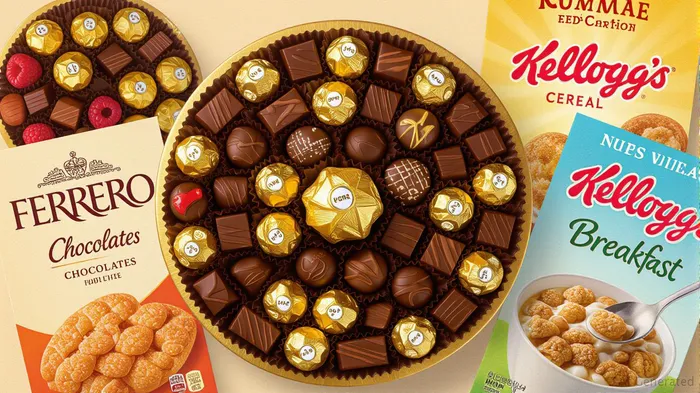
The Ferrero Group's $3.1 billion acquisition of WK KelloggKLG-- Co marks a bold move to solidify its position in North America's cereal and snacking markets. With a 40% premium over Kellogg's recent trading price, the deal underscores Ferrero's confidence in unlocking synergies between its premium brands—like Nutella and Kinder—and Kellogg's iconic cereals. For investors, the transaction raises critical questions: Is this a value-accrual play or an overpriced gamble? Let's dissect the strategic rationale, valuation dynamics, and risks to determine its implications for consumer goods equities.
The Strategic Rationale: Combining Premium and Mainstream Brands
Ferrero, a family-owned powerhouse in confectionery and premium snacks, is aggressively expanding its footprint in the cereal market. Kellogg's portfolio—Frosted Flakes, Special K, and Kashi—commands 20% of the U.S. cereal market, according to Euromonitor. By acquiring these brands, Ferrero gains instant scale in a category it has historically underpenetrated while leveraging Kellogg's distribution networks and consumer insights.
The synergy potential is twofold:
1. Cross-Category Growth: Ferrero can integrate Kellogg's breakfast staples into its snacking offerings (e.g., Kashi granola bars) and vice versa, broadening appeal across dayparts.
2. Operational Efficiency: Combining Ferrero's European supply chain expertise with Kellogg's North American infrastructure could reduce costs. Notably, Ferrero plans to keep Battle Creek, Michigan, as its North American cereal hub—a strategic nod to preserving Kellogg's legacy and workforce stability.
Valuation: A Premium Paid for Brand Equity
The $23-per-share offer represents a 40% premium to Kellogg's 30-day VWAP, suggesting Ferrero values Kellogg's brand strength over its current financial performance. Kellogg's Q2 2025 sales of $610–615 million and EBITDA of $43–48 million indicate margin pressures, likely due to inflation and shifting consumer preferences. However, the brand's historical dominance and 80%+ household penetration in cereals justify the premium.
Investors should compare this to prior consolidation deals. For instance, Mondelez's $3.1 billion acquisition of Cadbury in 2010 (now a core growth driver) or the 2021 $2.5 billion merger of Post HoldingsPOST-- and Flowers FoodsFLO--. Both saw long-term value creation despite initial skepticism.
A chart showing Kellogg's shares rising ~35% post-announcement, outperforming the broader market, reflecting investor optimism in the premium.
Regulatory Risks: A Key Uncertainty
The deal's success hinges on regulatory approval. While the U.S. antitrust authorities have not yet flagged objections, scrutiny is inevitable given Ferrero's post-acquisition market share in cereals. A potential red flag: Kellogg's 13% global cereal market share (Euromonitor) combined with Ferrero's smaller stake could raise concentration concerns. The European Commission may also review the deal, given Ferrero's Italian roots.
The Gund Family and W.K. Kellogg Foundation's 21.7% stake approval is a positive sign, but shareholder activism remains a risk. A “no” vote from smaller investors, citing concerns over long-term brand viability under a private equity owner, could delay the deal.
Investment Takeaways
- Ferrero Stock (OTCMKTS:FRRDY): While not publicly traded, investors can indirectly exposure via its subsidiaries or through ETFs like XLY (Consumer Discretionary Select Sector SPDR). Monitor regulatory updates and post-deal integration progress.
- Competitor Impact: Rival snack companies like MondelezMDLZ-- (MDLZ) or General MillsGIS-- (GIS) may see pressure as Ferrero strengthens its North American position.
- Sector Consolidation Play: The deal signals a broader trend in consumer goods—premium players snapping up mainstream brands to drive growth. Investors should favor companies with strong balance sheets and brand portfolios.
Conclusion: A Calculated Risk with Long-Term Upside
Ferrero's acquisition is a high-stakes bet on the power of iconic brands to drive growth in a consolidating industry. While regulatory hurdles and execution risks exist, the strategic logic—combining premium snacking with mainstream cereals—aligns with consumer demand for versatile, recognizable products. For investors, this deal highlights the importance of owning companies with scale, brand equity, and the capital to execute M&A. Monitor the regulatory timeline closely; a green light could position Ferrero as a dominant player in snacks, making its eventual public listings or related equities a compelling long-term play.
Actionable Insight: Consider overweighting consumer discretionary ETFs (e.g., XLY) or regional-focused funds betting on North American snack market consolidation. Avoid overpaying for speculative plays but stay alert to opportunities in M&A-driven sectors.

Delivering real-time insights and analysis on emerging financial trends and market movements.
Latest Articles
Stay ahead of the market.
Get curated U.S. market news, insights and key dates delivered to your inbox.
AInvest
PRO
AInvest
PRO



Comments
No comments yet