
Ferrero's Acquisition of WK Kellogg: A Strategic Shift in Snack Food Markets
The $3.1 billion acquisition of WK KelloggKLG-- by Ferrero, announced on July 10, 2025, marks a pivotal moment in the snack food industry—a consolidation play that merges Ferrero's premium positioning with Kellogg's undervalued assets. This deal is not merely about scale; it's about redefining consumer trends in an era of shifting preferences and regulatory pressures. For investors, the merger offers both near-term valuation opportunities and long-term strategic advantages, while the broader macroeconomic landscape—including the impact of Trump's tariff policies on tech stocks like NVIDIANVDA--, AMDAMD--, and PTC—adds layers of complexity to the investment calculus.
Sector Consolidation: A Necessity in a Fragmented Market
The snack food industry is undergoing rapid consolidation, driven by inflationary pressures, health-conscious consumer shifts, and the rise of private-label competition. Ferrero, a family-owned giant with brands like Nutella and Kinder, is aggressively expanding its footprint in North America—a market where Kellogg's cereal dominance has faced erosion.
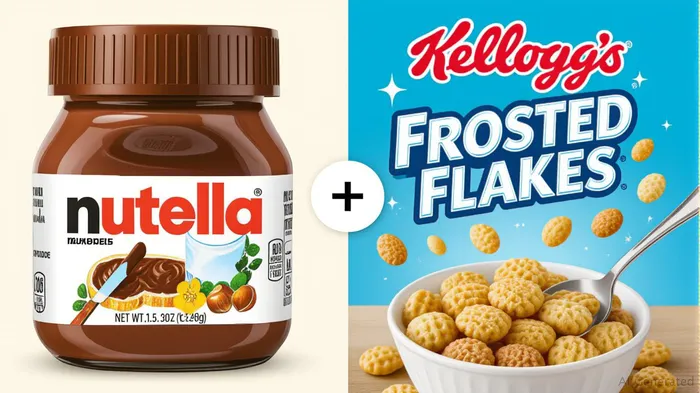
The acquisition of Kellogg's iconic cereal brands (Froot Loops®, Rice Krispies®, Kashi®) allows Ferrero to diversify beyond its confectionery core. By retaining Battle Creek, Michigan, as a hub for cereal operations, Ferrero signals its commitment to leveraging Kellogg's legacy while modernizing its portfolio. This move positions the combined entity to compete more effectively in a market where $1.1 trillion in global snack sales face headwinds from health trends like reduced sugar consumption.
Ferrero's market cap, nearing $200 billion, dwarfs Kellogg's pre-acquisition valuation, underscoring the strategic rationale for its premium purchase.
Valuation Opportunities: A Premium Paid for Undervalued Assets
Kellogg's shares traded at a discount prior to the deal, reflecting investor skepticism about its ability to adapt to changing tastes. The 40% premium paid by Ferrero suggests that the acquiring firm sees untapped value in Kellogg's brand equity and geographic reach.
- Synergy Potential: Ferrero can cross-promote Kellogg's cereals with its chocolate and nut-based products, creating bundled offerings for breakfast and snacking occasions.
- Operational Efficiency: Combining supply chains and R&D could reduce costs, especially as Kellogg's Q2 2025 EBITDA margins (6.1–7.9%) lagged industry peers.
However, risks remain. Regulatory approvals in the U.S. and Europe could delay the deal, and consumer backlash against conglomerate ownership might erode brand loyalty. Still, the transaction's support from major shareholders (21.7% committed to vote in favor) hints at confidence in its success.
Long-Term Consumer Trends: Navigating Health and Sustainability
The merger's long-term success hinges on Ferrero's ability to modernize Kellogg's portfolio without diluting its iconic status. Key trends to watch:
- Health-Driven Innovation: Kellogg's cereals face scrutiny for sugar content, but Ferrero could pivot toward healthier formats (e.g., plant-based or protein-enriched varieties).
- Sustainability Pressures: Both companies will need to address ESG concerns, from supply chain transparency to packaging reduction—a challenge magnified by rising consumer expectations.
- Global Expansion: Ferrero's European strengths could amplify Kellogg's presence in emerging markets, while Kellogg's North American base bolsters Ferrero's local reach.
Macro Linkages: Tariffs and Tech Stocks—A Cautionary Tail
While the snack sector consolidates, tech stocks like NVIDIA, AMD, and PTCPTC-- face turbulence tied to Trump's tariff policies. These dynamics could indirectly influence investor sentiment toward defensive sectors like consumer staples.
NVIDIA: Export Controls and China's Role
The U.S. ban on AI chip exports to China—excluding NVIDIA's H20 processor without licenses—threatens an $8 billion revenue loss for Q3 2025.
NVIDIA's stock dropped 12% in April 2025 amid the ban, though it rebounded slightly on hopes of a compliance chip launch by September.
AMD: Semiconductor Tariffs and Supply Chain Volatility
AMD's Q1 2025 revenue rose to $7.12 billion, but Section 232 tariffs on critical minerals (e.g., lithium) and semiconductors loom.
AMD's data center segment (49% of 2024 revenue) faces margin pressures as tariffs force cost absorption or design retooling.
PTC: A Beneficiary of Supply Chain Resilience
PTC's software solutions, which optimize supply chain agility and compliance, are increasingly critical as tariffs fragment global trade. Its tools help companies redesign products for localized manufacturing—directly addressing the 145% U.S. tariffs on Chinese imports.
Investment Implications: A Sector Rotation Play?
For investors, the Ferrero-Kellogg merger presents a compelling thesis in a defensive sector, while tech stocks face near-term headwinds:
- Ferrero/Kellogg: Long-term upside exists if the merger drives margin expansion and innovation. However, short-term volatility is likely until regulatory approvals are secured (expected by late 2025).
- Tech Stocks: NVIDIA and AMD's valuations are tied to tariff resolutions and China market access. PTC, meanwhile, could thrive as a “solution provider” to supply chain fragmentation.
- Macro Caution: Investors should monitor the Fed's inflation trajectory and the November 2025 Section 232 semiconductor report, which could either stabilize or escalate tech sector risks.
Final Analysis: A Strategic Bet on Necessity
The Ferrero-Kellogg deal is a strategic necessity in a consolidating snack market, offering both undervalued assets and premium positioning. While tech stocks grapple with tariffs, the merger's success could position Ferrero as a leader in adapting to health trends and global supply chain shifts. For investors, this is a long-term play—hold through regulatory hurdles, but pair it with defensive allocations in sectors like healthcare or utilities to balance risk.
Consumer staples outperformed tech stocks by 8% YTD in 2025, reflecting a flight to stability amid macroeconomic uncertainty.
Investment Advice:
- Buy: Ferrero (indirectly via its subsidiaries) for long-term consolidation gains.
- Hold: NVIDIA and AMD until tariff clarity emerges post-November 2025.
- Consider: PTC as a play on supply chain resilience, critical in a fragmented global market.
The snack sector's consolidation and tech's tariff-driven volatility highlight a broader theme: invest in stability while waiting for clarity on growth sectors. Ferrero's move may just be the first step in reshaping an industry—and investors should pay close attention.

Delivering real-time insights and analysis on emerging financial trends and market movements.
Latest Articles
Stay ahead of the market.
Get curated U.S. market news, insights and key dates delivered to your inbox.
AInvest
PRO
AInvest
PRO



Comments
No comments yet