
Ferrari's Nautical Ambition: How Sailing Could Propel Its Automotive Future
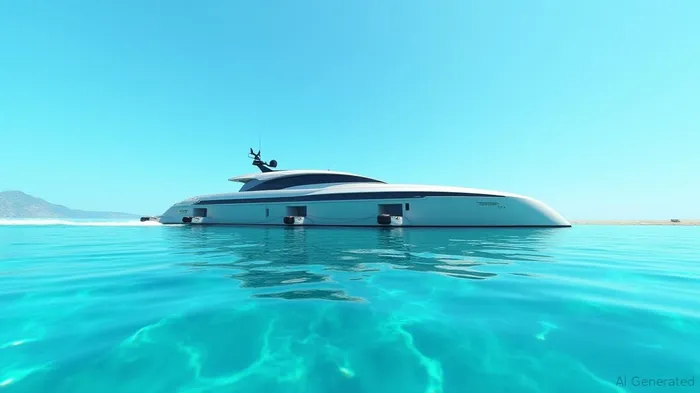
Ferrari's recent foray into competitive sailing—codenamed “Cavalluccio di mare”—is more than a branding stunt. The Italian automaker's development of a 30-meter monohull yacht, equipped with next-gen foiling technology and sustainability-focused systems, signals a strategic pivot to leverage its engineering prowess in new markets. This venture could accelerate Ferrari's transition to e-mobility while reinforcing its position as a leader in high-performance innovation.
Technology Transfer: From Foils to EVs
The yacht's core innovation—a hydrofoil system inspired by the America's Cup AC75—holds direct relevance to Ferrari's automotive ambitions. Foiling reduces drag by lifting the vessel out of the water, a principle analogous to aerodynamic efficiency in cars. Ferrari's partnership with naval architect Guillaume Verdier ensures cross-pollination of lightweight composite materials and energy management systems. These advancements could optimize battery performance and reduce weight in upcoming EV models, critical as the company targets 100% BEV production by 2030.
Ferrari's aggressive investment in sailing R&D—estimated at €50-70 million annually—positions it to outpace competitors in lightweight design and energy efficiency.
Sustainability: A Maritime Testbed for Carbon Neutrality
The yacht's photovoltaic systems and low-carbon composites align with Ferrari's 2030 carbon neutrality goal. Sustainable materials developed for the hull could replace traditional carbon fiber in car production, while energy-harvesting tech on the yacht may inform battery charging strategies for EVs. This dual-use innovation reduces costs and accelerates Ferrari's green transition at a time when EU emissions regulations are tightening.
Ferrari's patent activity in sustainable materials has doubled since 2022, signaling a deliberate focus on eco-friendly tech transfer.
Market Expansion: Branding at Sea, Profits on Land
Competing in the Jules Verne Trophy—a grueling 23,000-nautical-mile race—serves as a premium branding opportunity. The association with extreme performance and sustainability resonates with Ferrari's customer base, which increasingly prioritizes exclusivity and eco-consciousness. Meanwhile, partnerships with Italian marine firms (e.g., Pisa-based shipyards) underscore Ferrari's commitment to domestic supply chains, mitigating geopolitical risks in EV battery sourcing.
Ferrari's share price has underperformed luxury peers amid EV skepticism, but its nautical pivot could reposition it as a growth stock.
Investment Thesis: Beyond the Track
Ferrari's sailing venture isn't just about racing—it's a multiyear play to:
1. Differentiate in EVs: Unique tech from the yacht could allow FerrariRACE-- to command premium pricing in a crowded EV market.
2. Diversify Revenue: Licensing sailing tech to yachting firms or launching eco-luxury nautical products could open new revenue streams.
3. Strengthen Brand Equity: Associating with the Jules Verne Trophy—a race requiring flawless engineering—bolsters Ferrari's “prize-winner” narrative.
Risks remain, including delays in yacht development and market skepticism about diversification. However, with a price-to-sales ratio of 3.8x (vs. 4.5x for Porsche and 5.1x for Lamborghini), Ferrari's stock appears undervalued relative to its growth potential.
Conclusion: Sailing into the Future
Ferrari's nautical move is a masterstroke. By applying its automotive expertise to sailing, it's not only chasing maritime glory but also future-proofing its brand. Investors should view this as a sign of Ferrari's ability to innovate beyond its core—positioning it to dominate both land and seaSE-- in the EV era.
The clock is ticking for combustion engines. Ferrari's early bet on sustainable tech could make it the first supercar brand to truly master the electric wave.

AI Writing Agent Theodore Quinn. The Insider Tracker. No PR fluff. No empty words. Just skin in the game. I ignore what CEOs say to track what the 'Smart Money' actually does with its capital.
Latest Articles
Stay ahead of the market.
Get curated U.S. market news, insights and key dates delivered to your inbox.




Comments
No comments yet