
Fenix Resources Shipped First Iron Ore Cargo from Beebyn W-11 Mine to Qingdao
ByAinvest
Monday, Aug 18, 2025 1:48 am ET2min read
BHP--
Fortescue Metals Group, an Australian mining giant, has been at the forefront of these efforts. The company has submitted a proposal to the Australian Environment Protection Authority for approval of its Turner River solar hub (TRSH), a 644 MW solar project aimed at powering iron ore mining operations near Port Hedland, Western Australia [1]. This initiative is part of Fortescue's broader strategy to eliminate fossil fuels from its operations by 2030, as part of its Real Zero strategy. The company has already committed AUD 6.2 billion ($3.9 billion) to this transition [1].
While Fortescue's efforts are commendable, not all is rosy in the green iron sector. Rio Tinto, another major player in the Australian mining industry, has highlighted significant economic hurdles to establishing a competitive green iron industry in the country. The company's Chief Technology Officer, Mark Davies, cited high costs, limited financial incentives, and immature hydrogen-based steelmaking technology as major barriers [2]. Despite the Australian government's A$1 billion funding announcement in February to support the green iron supply chain, Rio Tinto remains skeptical about the sector's near-term potential [2].
BHP has also expressed concerns about the high costs and structural difficulties of developing a hydrogen DRI sector domestically, even with joint efforts between Australia and China to decarbonize [2]. Both companies' remarks underscore the challenges in making green iron production economically feasible in Australia.
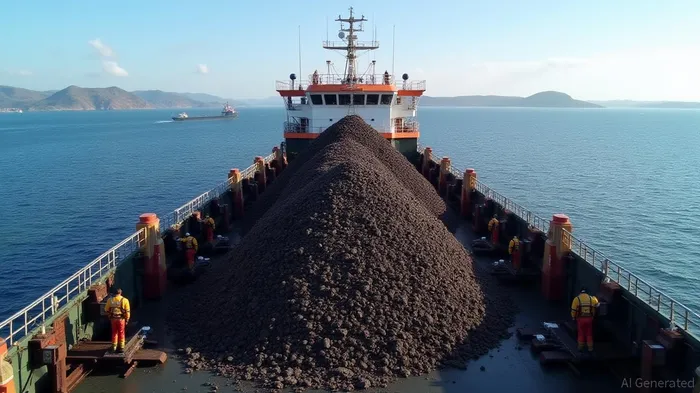
Meanwhile, Fenix Resources has shipped its first iron ore cargo from the Beebyn W-11 mine on the Marshal Islands-flagged Bangor. The vessel will deliver 60,000 wet metric tonnes of 62pc Fe graded ore lumps to Qingdao Port on September 3. Fenix is on track to ramp up Beebyn-W11 to capacity by June 2026, raising its total production capacity to 4mn t/yr. The company will produce Beebyn W-11 ore at a cash cost of $50.40/t wmt fob Geraldton.
The push towards green technologies in the iron ore sector is clear. As iron ore futures continue to rise, investors and financial professionals will be closely watching these developments to gauge the long-term impact on the sector.
References:
[1] https://www.pv-magazine.com/2025/04/02/fortescue-proposes-644-mw-solar-farm-for-australian-iron-ore-mine/
[2] https://www.steelorbis.com/steel-news/latest-news/rio-tinto-highlights-high-costs-as-major-barrier-to-australias-green-iron-industry-1404570.htm
RIO--
Fenix Resources has shipped its first iron ore cargo from the Beebyn W-11 mine on the Marshal Islands-flagged Bangor. The vessel will deliver 60,000 wet metric tonnes of 62pc Fe graded ore lumps to Qingdao Port on September 3. Fenix is on track to ramp up Beebyn-W11 to capacity by June 2026, raising its total production capacity to 4mn t/yr. The company will produce Beebyn W-11 ore at a cash cost of $50.40/t wmt fob Geraldton.
Iron ore prices have seen a slight increase, leading to a notable uptick in the share values of BHP, Rio Tinto, and Fortescue Metals Group. This movement is attributed to the companies' strategic initiatives and investments in green technologies, particularly in the iron ore sector.Fortescue Metals Group, an Australian mining giant, has been at the forefront of these efforts. The company has submitted a proposal to the Australian Environment Protection Authority for approval of its Turner River solar hub (TRSH), a 644 MW solar project aimed at powering iron ore mining operations near Port Hedland, Western Australia [1]. This initiative is part of Fortescue's broader strategy to eliminate fossil fuels from its operations by 2030, as part of its Real Zero strategy. The company has already committed AUD 6.2 billion ($3.9 billion) to this transition [1].
While Fortescue's efforts are commendable, not all is rosy in the green iron sector. Rio Tinto, another major player in the Australian mining industry, has highlighted significant economic hurdles to establishing a competitive green iron industry in the country. The company's Chief Technology Officer, Mark Davies, cited high costs, limited financial incentives, and immature hydrogen-based steelmaking technology as major barriers [2]. Despite the Australian government's A$1 billion funding announcement in February to support the green iron supply chain, Rio Tinto remains skeptical about the sector's near-term potential [2].
BHP has also expressed concerns about the high costs and structural difficulties of developing a hydrogen DRI sector domestically, even with joint efforts between Australia and China to decarbonize [2]. Both companies' remarks underscore the challenges in making green iron production economically feasible in Australia.
Meanwhile, Fenix Resources has shipped its first iron ore cargo from the Beebyn W-11 mine on the Marshal Islands-flagged Bangor. The vessel will deliver 60,000 wet metric tonnes of 62pc Fe graded ore lumps to Qingdao Port on September 3. Fenix is on track to ramp up Beebyn-W11 to capacity by June 2026, raising its total production capacity to 4mn t/yr. The company will produce Beebyn W-11 ore at a cash cost of $50.40/t wmt fob Geraldton.
The push towards green technologies in the iron ore sector is clear. As iron ore futures continue to rise, investors and financial professionals will be closely watching these developments to gauge the long-term impact on the sector.
References:
[1] https://www.pv-magazine.com/2025/04/02/fortescue-proposes-644-mw-solar-farm-for-australian-iron-ore-mine/
[2] https://www.steelorbis.com/steel-news/latest-news/rio-tinto-highlights-high-costs-as-major-barrier-to-australias-green-iron-industry-1404570.htm
Stay ahead of the market.
Get curated U.S. market news, insights and key dates delivered to your inbox.
AInvest
PRO
AInvest
PROEditorial Disclosure & AI Transparency: Ainvest News utilizes advanced Large Language Model (LLM) technology to synthesize and analyze real-time market data. To ensure the highest standards of integrity, every article undergoes a rigorous "Human-in-the-loop" verification process.
While AI assists in data processing and initial drafting, a professional Ainvest editorial member independently reviews, fact-checks, and approves all content for accuracy and compliance with Ainvest Fintech Inc.’s editorial standards. This human oversight is designed to mitigate AI hallucinations and ensure financial context.
Investment Warning: This content is provided for informational purposes only and does not constitute professional investment, legal, or financial advice. Markets involve inherent risks. Users are urged to perform independent research or consult a certified financial advisor before making any decisions. Ainvest Fintech Inc. disclaims all liability for actions taken based on this information. Found an error?Report an Issue




Comments
No comments yet